Sal Ferriero
Fictional. Generated by AI — not a real person, and no likeness of one is intended.
34, construction foreman in New York · rolled by @ramon.cardenas · card — no film
History
who has worn him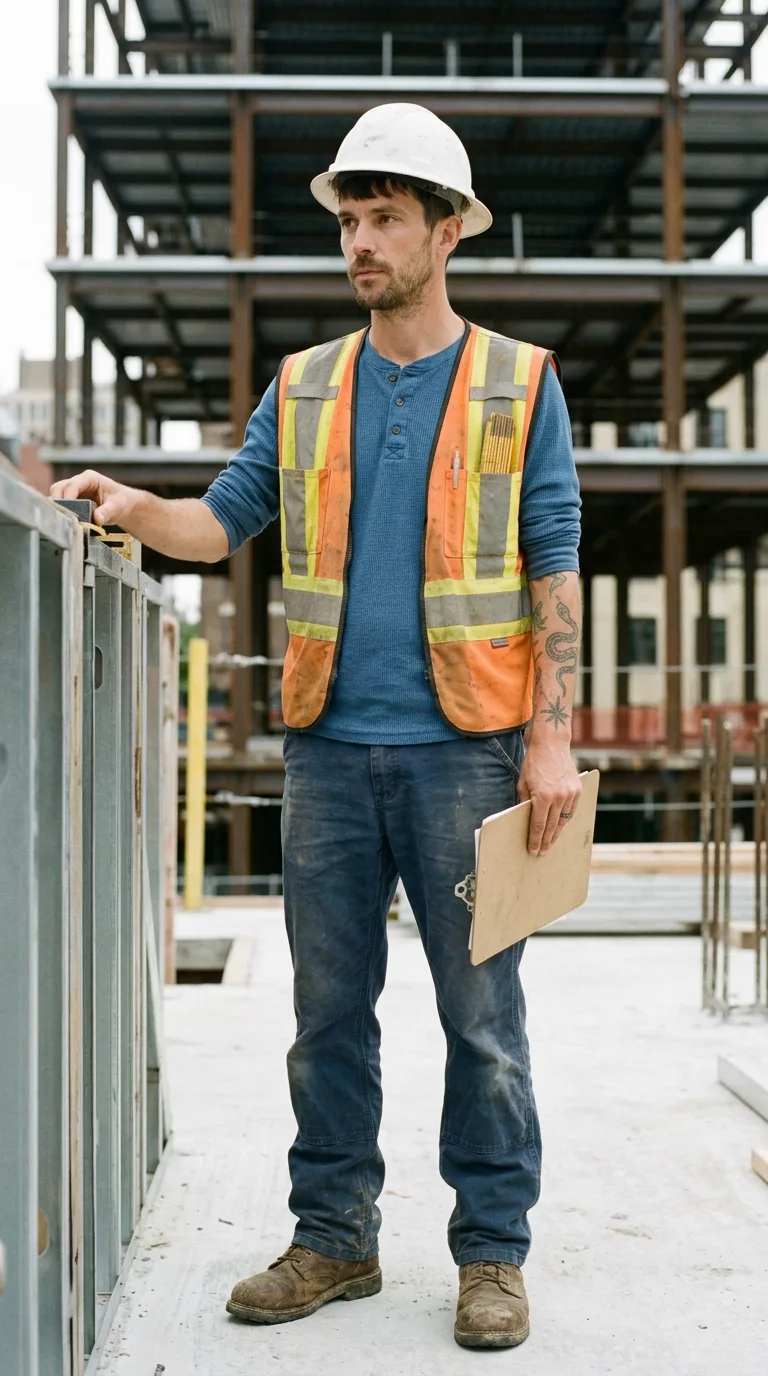
Rarest thing about him: Vapes socially — common, 1 in 44
Season 1seed 870842674 · engine v11
Character card
lineage GAM5PT
His body-swap story
@ramon.cardenas, wearing Ramon Cardenas, rolled the wheel on and woke up as Sal Ferriero
Ramon Cardenas's coffee has gone cold on the cruiser dash, and you have been staring at it for eleven minutes instead of drinking it. Small-town Ohio at midday looks the way it looked yesterday and the day before: the same four-way stop, the same bell at the diner, the same dispatcher's voice calling you Ramon like it's a name that means something to you. It doesn't. Eighteen days ago it was a stranger's name in a stranger's mouth and now it just sounds like weather. His knees ache going up the station steps. His wife calls at lunch and you say the right things back because you learned them off her, off pictures, off the smell of her shampoo on his pillow, and none of it costs you anything and none of it is yours. That's the trouble with him — he was fine. He was more than fine, he was a good man doing a good job in a place that trusted him, and you have worn good men down to the studs before and found there wasn't much else underneath the good. You want something with more grip on it. You take out your phone under the dash, the cursor already blinking on vessel.cards from three nights of not-quite-deciding, and Ramon Cardenas's thick, capable fingers — knuckles you have cracked without meaning to a hundred times these eighteen days — tap the wheel and let it spin.
The steel goes up gray against a gray sky and you are holding a length of angle bracket wrong, off by a fraction, and your hand — no, his hand — corrects itself before you've finished the thought of correcting it. There's a clipboard under your other arm. There's the smell of cut metal and wet concrete and someone's cigarette three floors down. The rhythm hitches — one motion done clumsy, then again, slow, deliberate, like a man relearning a doorknob — and the foreman standing where you are running on his own count without you, ten screws checked and re-checked on a crew that hasn't needed checking in six years, and nobody on the frame above or below notices anything at all.
The vest is heavy on your shoulders before it's anything else — cheap nylon, grit worked into the seams, the two pens and the fan of pencils in the chest pocket pressing their outline into you like they've been there so long they've become part of the ribs. That's the first thing that comes back: not a memory exactly, just the vest's weight saying *mine* in a voice that isn't yours yet. Then the henley underneath, thin from washing, sleeve cuffs gone soft — and with it, sudden and whole, a gray morning three days ago, this exact shirt pulled on one arm at a time in a dark bedroom while Marisol slept with her back to the door, the mattress dipping when you sat to lace the boots, her voice, thick with sleep, not really awake: *don't wake Nina.* You didn't. You went down the brownstone stairs in socked feet with the boots in your hand.
The name comes with the shirt: Sal. Salvatore, on the wedding invitation his mother still calls him by. Thirty-four years old, five-eleven, built like a rope, and it never used to bother him what he weighed until his knees started talking back on the third flight of scaffold stairs. Skinny his whole life, strong in the particular way skinny men get strong — forearms like cable, a grip that surprises people who shake his hand expecting nothing. The stubble on this jaw is two days old because he stopped shaving Sunday out of nothing but not caring, and his hands already know things nobody taught them on purpose: the angle a bracket wants to sit at before it's forced, the specific give of a bolt about to strip, how to read a crew's whole morning off the sound of one nail gun.
The clipboard in your left hand brings the job itself — not one day of it but years, stacked: the first site he ever ran alone, twenty-six years old and terrified nobody would take him seriously, and the afternoon eight years later a beam swung too close to a green kid named Petrosky — no, not that name, some other kid, doesn't matter — and Sal's voice went flat and loud and the kid lived to be annoyed about it later. There's a whole ledger in the hands: what they can lift, what they've dropped, the particular ache across the lower back at the end of a ten-hour day that never fully leaves anymore.
The wedding band is the loudest thing. Left hand, plain gold, worn thin at the bottom where it rides the knuckle — and it opens on Marisol whole, not as a fact but as a decade: her laugh in a kitchen too small for two people to cook in at once, the fight about his mother that lasted a week and ended in this bed, the two of them dancing badly in the living room the night Nina came home from the hospital wrapped like a loaf of bread. There's another woman folded in under that, quieter, a name that still makes something in the chest go still when it surfaces — Bree, who left for Portland twelve years ago and who he thinks about maybe once a season now, not with longing exactly, more the way you think about a door you didn't open. He never told Marisol how often. Not often. Often enough.
The tattoos on the forearm — the snake, the star, ink he got at twenty-two in a shop in Bushwick with money he shouldn't have spent — bring back nothing but the buzz of the needle and being young and wanting something permanent on him that he'd chosen himself, before the wife, before the kid, before any of the things that chose him back.
His boots are planted on decking four stories up. The wind up here is different from the wind at street level, colder, cleaner, and his lungs pull it in easy — no ache there, no cigarette rasp, just a body that vapes sometimes at a bar with the guys and otherwise leaves itself alone, sober on purpose since a year he doesn't like to talk about. Somewhere below, the city goes on not knowing anything has happened to one of the men holding it up.
You look down. His hand is closed loose around the clipboard, knuckles pale over the grip, and you open it and close it once, feeling the specific stiffness in the middle finger where it broke once and knit a little crooked.
You say, out loud, to no one on the frame who's listening, "Wrong bracket," — and crack the knuckles, one two three — "good thing I caught it."