Russell Prentiss
Fictional. Generated by AI — not a real person, and no likeness of one is intended.
35, bus driver in Houston · rolled by @colin.hasbrook · card — no film
History
who has worn him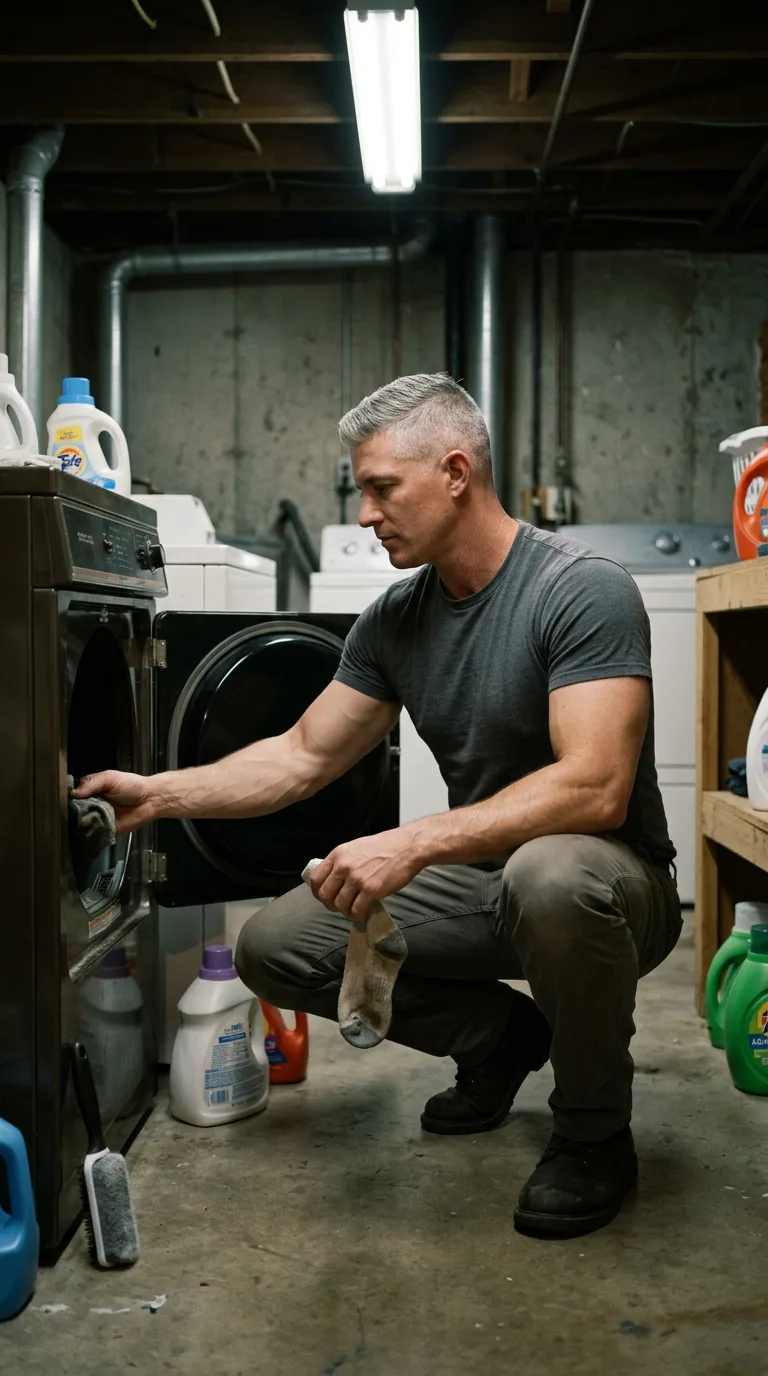
Rarest thing about him: Gay — epic, 1 in 29
Season 0seed 161296341 · engine v10
Character card
lineage 2NZHHJ
His body-swap story
@colin.hasbrook, wearing Colton Weatherall, rolled the wheel on and woke up as Russell Prentiss, spent under a minute in him, then spun the wheel and woke up as Marcos Feliciano
You are standing in a firehouse kitchen holding a coffee mug that says WORLD'S OKAYEST COOK, and you already know you're done with this one.
Colton Weatherall's hands are twenty-three-year-old hands, unmarked, a little clumsy with the mug handle because muscle memory hasn't finished settling into them. Three minutes is nothing. You haven't even learned the walk yet. Somewhere down the hall a bunk creaks and a TV plays a rerun nobody's watching, and you think: this is fine, this is a body that will be fine for somebody, but it isn't what you came for. You didn't come for fine. You spun this one blind, last time, greedy after a good run, and got a kid with a hose and a firehouse and nothing in the bank. It is Sunday and the day is heavy and slow in that particular Rural Texas way, church-quiet even for men who don't go, and you are restless in a body that hasn't earned its restlessness yet.
There is a man you have unfinished business with. You were him once — Marcus Hoyt, fifty, a paramedic's steady hands, a house in Philadelphia with a dead wife's reading glasses still in the drawer you never opened — and for four days and fifteen hours you sat inside his ordinary decency and found, riding along in it like a splinter, his boss. Houston. A bus company. A man who wrote Marcus up twice for nothing, who made him feel small in front of the new hires, who Marcus complained about at 1 a.m. over the phone to a friend while you drove his body home from a shift, feeling every bit of his exhaustion as your own borrowed weather. You never met the man. You know him only the way you know most men now — through somebody else's grievance, secondhand and complete.
You set the mug down. You open the site on Colton's phone, the wheel already spinning behind your eyes before your thumb even lands.
—
The dryer door is still swinging when it happens, warm air breathing out against your forearm, and you are crouched, and you are enormous — that is the first thing, the sheer square weight of these shoulders, the way the T-shirt pulls when you shift your knee on the concrete. A sock hangs from your fingers, damp-warm, unremarkable. Fluorescent light buzzes white above you. Detergent and mildew and hot lint in the air. You pull the load out armful by armful and it drops into the basket with the particular gravity of a body that has done this ten thousand times, and your hands — his hands — are already sorting before you've caught up to wanting them to.
The shirt you're wearing tells you first. Gray cotton, worn thin at the collar, and touching it gives you a Sunday morning: standing in front of the closet not deciding, because there was nothing to decide, pulling this one down because it was clean and close and today didn't matter to anyone, least of all him. No church, never has been, never missed it. The dryer buzzer this morning going off half-asleep, him already awake before it, because sleep doesn't hold him the way it used to since — and here it comes sideways, unbidden, a name he hasn't let himself think in the shower in nine days: a man's laugh in this same basement, doing this same chore together once, badly, folding fitted sheets into wrong shapes and not caring. Gone four months now. Recent enough that the ache still has its teeth in.
The boots against the concrete give you the route — Tuesday through Saturday, a bus number, a strip mall stop where the AC unit on the corner store drips onto the sidewalk and he always eases wide to miss the puddle. Twelve years of it. He likes the job more than he'd say out loud at a party. Likes the regulars, the old woman with the church hat, the kid who used to ride to school and now rides to a job of his own and nods at him like they're colleagues. His hands know the wheel the way they know this dryer door, without consulting him.
The calf tattoo doesn't touch anything, but the fabric grazing it as you shift your weight brings its own flash anyway — a chair, a shop that smelled like green soap, four sessions over two years to get his father's face right, the old man three years dead now and Russell not sure himself, even now, whether it was love or unfinished argument that put him under the needle. He never explains it to dates. He didn't explain it to the one who left either. That one didn't ask about much, toward the end.
You feel his body's ordinary muscle now that you're standing still with a shirt half-folded in your grip — thirty-five and strong in the unglamorous way of a man who lifts weights alone at 5 a.m. because it's cheaper than therapy, a lower back that twinges getting off the third seat cushion after eight hours in the driver's chair, gray in his hair since thirty and he stopped minding around thirty-two. Nothing hurts today. Everything is just present, solid, present-tense muscle doing what it was built to do: your hands squaring a corner, aligning a seam, setting it in the basket with a precision that has nothing to do with you and everything to do with years of a man who could not stand a messy drawer.
The money surfaces last and lightest, an afterthought that isn't his at all, that's yours, counted the way you count these things now: a man who never talks about what he's worth, who doesn't have to, whose accounts are fine, whose late father left him fine, whose only visible want these four months has been a phone he keeps almost texting and doesn't.
And underneath all of it, small and unbothered, sits the fact you already knew walking in — that four days and sixteen hours ago you wore a man who hated this one's Sundays through a phone line at 1 a.m., years of him folded into fifteen minutes of complaint, and that you are standing in the boss now, the very shirt of him, the very basement, and nobody up there, nowhere in any of it, will ever know you sat on both sides of that grudge.
—
You drop the last shirt in the basket. You look down at your hands — broad, tan at the wrist where the sleeve stops, a life of sun and steering wheels written into them plain as anything — and you turn them over once, like you're checking they're real.
"Huh," you say out loud, to the empty basement, to nobody. "Small world."