Russell Kincaid
Fictional. Generated by AI — not a real person, and no likeness of one is intended.
56, locksmith in Dallas · rolled by @colin.hasbrook · card — no film
History
who has worn him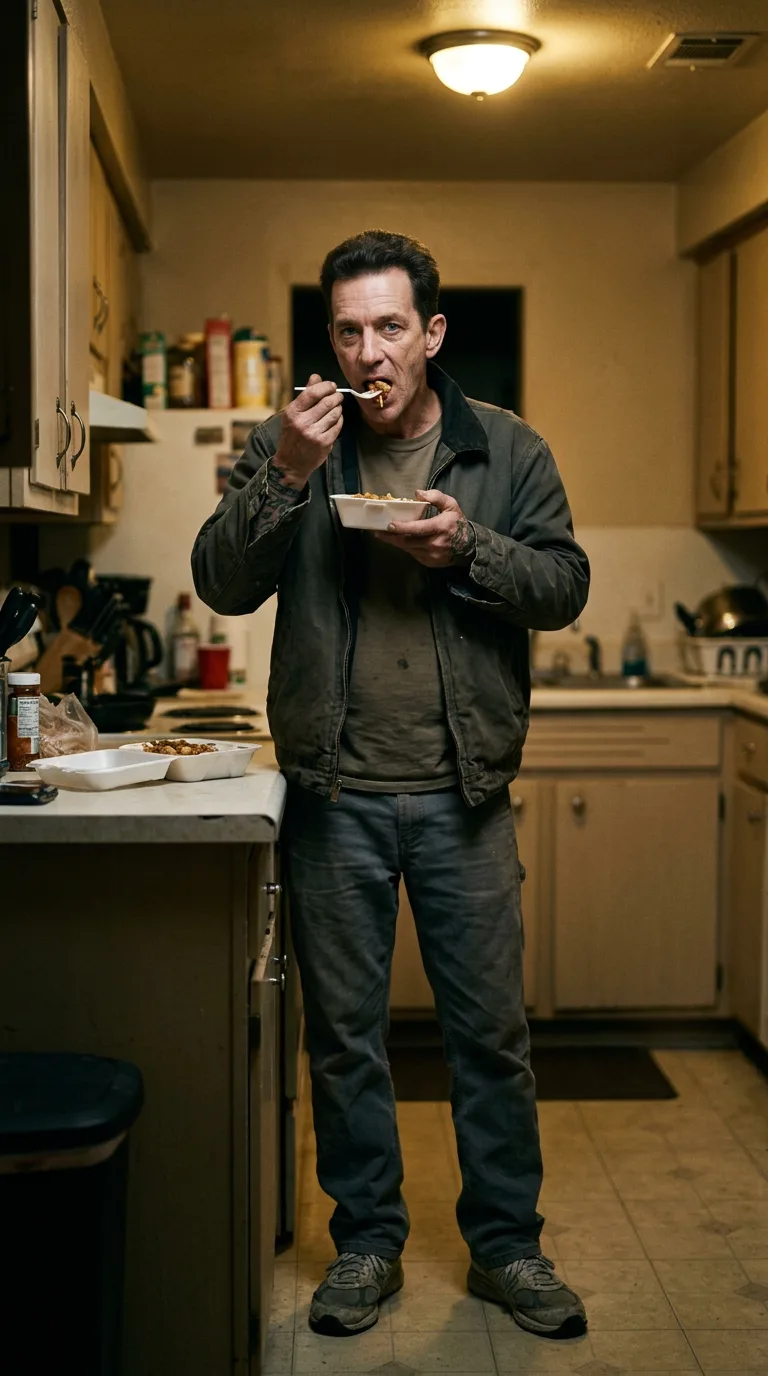
Rarest thing about him: Unitarian or liberal faith — epic, 1 in 99
Season 0seed 930760696 · engine v10
Character card
lineage 2NZHHJ
His body-swap story
@colin.hasbrook, wearing Gary Muncell, rolled the wheel on and woke up as Russell Kincaid, spent under a minute in him, then spun the wheel and woke up as Daniel Nishikawa
---
Gary Muncell's kitchen smells like fixer and old coffee, and his knees ache from a day of crouching over other people's weddings, other people's smiles. You have been him less than a minute and already you know the whole shape of the problem: the beauty mark, the gray eyes in the bathroom mirror, the gut that sits on him like a sandbag. He is fine. He is nothing. You spun five hundred and eighteen times to stop being nothing and here you are again, nothing, in Ohio, on a Friday, holding a camera bag you don't want to carry one more day. That's the whole reason, if anyone asked, which nobody ever does: boredom is a hunger too, and it doesn't care that you just ate.
You open the laptop on his counter. The wheel spins where his invoice software should be open. You pay what Gary Muncell can't really afford and you let it go.
The fork stops on the way up.
It comes back down to the counter with a small plastic click, and for a second there is no one behind the eyes it belongs to, and then there is you — and the body you're in says *fifty-six* to every joint at once, a different ache than Gary's, drier, longer in the bone. Skinny in the arms, soft through the middle in that specific way of a man who stands all day and sits for nothing. The jacket is already sliding off one shoulder because his hands, faster than your thinking, are already shrugging it down. Behind you a window holds a black rectangle of Texas evening. In front of you: a styrofoam container, something orange-sauced, going cold.
The coat leaves his arms and the memory comes with it, sleeve first — this morning, early enough that the sky outside the new-build window was still charcoal, threading his left arm through this exact lining, the zipper catching where it always catches a half-inch from the top, his thumb knowing the trick of it without him deciding to know. Under that: the smell of the flannel liner, worn soft, and a whole life folded into the itch of a tag he cut out years ago and never fully finished cutting.
The tool belt is still on him, low on the hip, and touching its weight brings back a storefront door this afternoon, kneeling on a mat that said WELCOME in letters worn to ghosts, a cylinder in his palm, pins ticking under the pick like a code only his fingers spoke. Russell Kincaid has been a locksmith since before this subdivision existed, since before the highway spur that made the subdivision possible. He knows what his hands know without asking them: the give right before a tumbler drops, how a rake feels different from a real turn, how to make a frightened woman locked out of her own house believe, in under four minutes, that everything is fine now. That part he's proud of. Quietly, the way you're not supposed to be proud of a service call.
The keys at his belt are warm from his body and touching them opens something else — a ring of a hundred blanks in a drawer at the shop, and under that, further down, a marriage that lasted six years and ended without a single dish thrown, just a slow leak of two people out of the same rooms, and no anger left in him about it now, only a kind of weather that passed through and is gone. No kids. He made peace with that on a highway somewhere in his forties, driving home from a job, radio off, and never brought it up again to anyone, because there was no one left to bring it up to.
His chest feels tight in a way that isn't new — the sleep apnea, the machine waiting for him in a bedroom you haven't seen yet, the nights he sleeps sitting up in the recliner instead because the mask fogs his glasses and he's too tired most nights to care. He hasn't had a drink since a doctor told him to stop, decades back, and didn't miss it the way people expect you to miss things; the cigar on the back step after a good job, though — that he'd miss. That's his one. He believes, in a loose unbothered way, in something larger than himself that doesn't ask much of him, and that has always been enough church for Russell Kincaid.
The fork is still in his hand. You feel him — feel *this*, the muscle memory under your borrowed grip — lift it in even mouthfuls now, no hurry, because hurrying stopped meaning anything to him a long time ago. Scraping by, some months. Never underwater. A truck outside that starts on the first try, most days.
You look down at the hand holding the fork — spotted a little at the knuckle, a callus riding the base of the thumb thick as a coin, veins standing under skin gone thin with age — and you turn it over slow, like it might not answer to you.
Then you look up into the black window, into the reflection where his face is, cleft chin and all, and you say, to no one in the empty kitchen:
"Five hundred and nineteen."