Gary Muncell
Fictional. Generated by AI — not a real person, and no likeness of one is intended.
48, photographer in Small-town Ohio · rolled by @colin.hasbrook · card — no film
History
who has worn him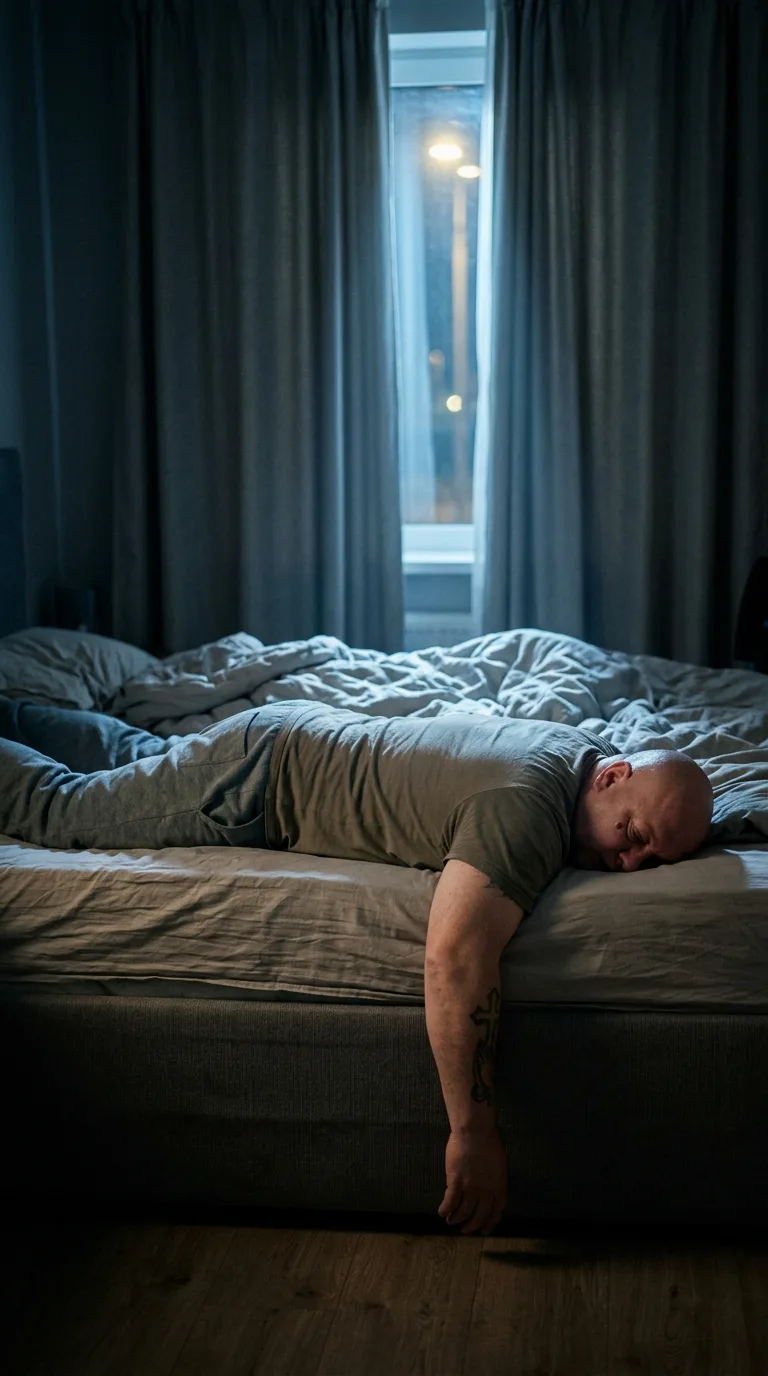
Rarest thing about him: Gray — epic, 1 in 67
Season 0seed 349116777 · engine v10
Character card
lineage 2NZHHJ
His body-swap story
@colin.hasbrook, wearing Imran Qadir, rolled the wheel on and woke up as Gary Muncell, spent under a minute in him, then spun the wheel and woke up as Russell Kincaid
The griddle is still ticking when you feel it, that thin metallic contraction as it cools, and your — his — forearms ache from the shift, from four hours of flipping eggs at a diner counter in El Paso that never once slows down at 2 a.m. Imran Qadir's hands. Thin, quick, a cleft chin catching grease-light. You have had this body less than a minute and already you know its trick: it works nights and it is tired in a way that sleep does not fix, and somewhere under the tired is the thing that made you open the site again on your phone, screen brightness low so the sous chef wouldn't ask what you were doing. You told yourself it was boredom. It is not boredom. It is that this body, gray-eyed and hollow-cheeked, has a report card of small hungers you have already spun through four hundred times, and the wheel is still sitting there on the screen with its bright dumb colors, patient as a slot machine, and your thumb is already over the button before you've admitted you're doing it again. You pay. You spin. The kitchen noise doesn't even have time to change pitch.
Weight arrives first — more of it, low in the belly and the shoulders, a heaviness that used to belong to someone your body doesn't have a name for yet. Arms that were reaching for a countertop are instead folding closed, unbidden, over your own chest. Breath that was ragged goes even in the space of one exhale. You are lying face up now though a half-second ago — in a memory that isn't yours yet — this body was face down, one arm slung off the mattress into cooler air. Streetlight cuts a blade through a gap in heavy curtains and lands across a bald scalp, a mole riding high on one cheek like a period at the end of a sentence. Somewhere outside, a stoplight two blocks over is doing its slow amber-red-green to no traffic at all.
The sheets are what open him first. Cheap cotton, softened by a hundred washes, and under your palm — his palm — a memory surfaces of him stripping this same bed on a Sunday because church was in an hour and the sheets smelled like the takeout he'd eaten crying over, three years back, the night after Denise called to say she was engaged again and did he want to tell the girls or should she. He hadn't wanted to. He'd told them anyway, on the phone, voice level, the discipline of a man who has practiced being fine. That's Gary. Gary Muncell, and the name comes with the taste of it — flat Ohio vowels, a name people mishear as Muncie and he never corrects.
The tattoo comes next, cross and praying hands inked into the meat of his inner forearm, done the year he got sober, a promise in ballpoint blue-black that he kept even when the drinking didn't stay quit the first two times. The mole under your fingers when you touch your own cheek — his cheek — brings back a decade of people staring a half-second too long at it before they remember to look him in the eye, and how he stopped minding somewhere around forty.
The camera. It isn't in his hands right now but the ghost-weight of the strap is still there across his neck and shoulders, a phantom furrow worn into him same as his back pain, same as the click his left knee makes going down stairs. Yesterday — no, today, late morning, whatever this hour actually was for him — he was on a job, a reflector propped crooked against the brick side of the hardware store, some local kid's graduation portraits, and his hands did what they always do without asking permission: checked the histogram, adjusted the flag, talked easy nonsense to keep the kid from looking stiff. Photography found him after the divorce like a stray dog that wouldn't leave the porch. He is not good with words. He is good, quietly, ferociously good, at making people look like they believe in themselves for a fifteenth of a second.
He came home after, showered, put on the gray t-shirt that's on him now — the memory of pulling it over his head arrives sleeve-first, the fabric catching on his shoulder the way it always does because he's too heavy through the chest for a medium and too stubborn to buy a large — and lay down meaning to nap an hour before picking his younger daughter up from her mother's. He has two girls. He loves them with an intensity that embarrasses him, writes it in a small notebook he doesn't tell anyone about, prayers really, though he'd never call them that in front of anyone at church. His knees ache right now, low-grade, a permanent tenant. His fingers, without him, have found the cuticle of his thumb and are picking at it, a habit from meetings, from waiting rooms, from every silence he's ever had to sit in sober.
Your eyes open on his ceiling — a water stain shaped like Texas, which he has joked about to no one — and you lift your hand into the thin streetlight and turn it. Thick fingers, a torn cuticle, a scar of old grease burn on one knuckle he doesn't remember getting. It isn't Imran's hand. It isn't your hand. It is his, and you are the only one behind it now, and there is no way to give it back.
You say, to the empty room, in his voice, rough with sleep that was never really sleep: "Okay." Just that. Like answering a question nobody in the room asked out loud.
Outside, the stoplight changes anyway, for no one, and you lie there a while longer, feeling how his back complains against the mattress, wondering — the way you always do, every single time, and never any less — how long you get to keep this one before the wheel starts pulling at you again.