Imran Qadir
Fictional. Generated by AI — not a real person, and no likeness of one is intended.
48, line cook in El Paso · rolled by @colin.hasbrook · card — no film
History
who has worn him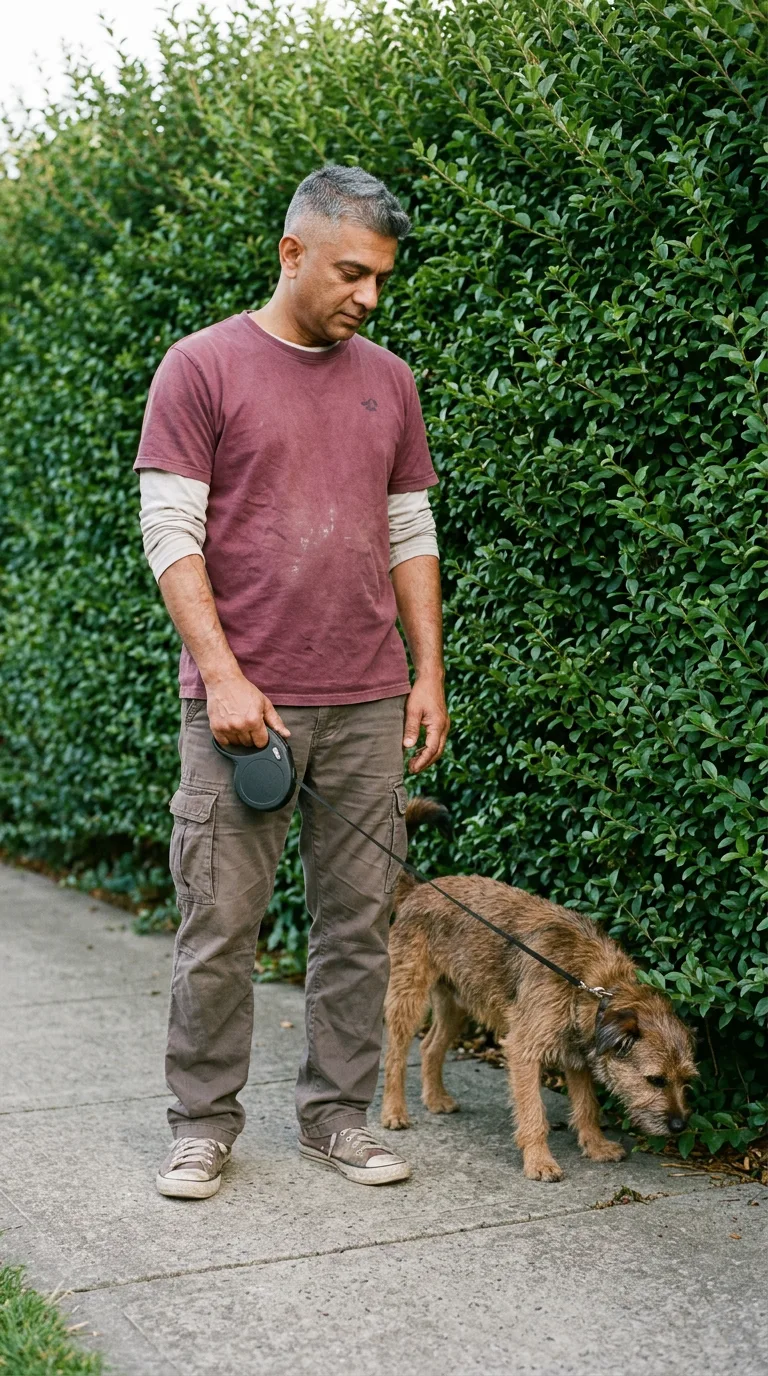
Rarest thing about him: High cholesterol — rare, 1 in 37
Season 0seed 1261674184 · engine v10
Character card
lineage 2NZHHJ
His body-swap story
@colin.hasbrook, wearing Daniel Kwon, rolled the wheel on and woke up as Imran Qadir, spent under a minute in him, then spun the wheel and woke up as Gary Muncell
---
Daniel Kwon's shift ended forty minutes ago and his scrubs still smell like the hand sanitizer that never comes off, and he is sitting on the edge of somebody else's bed — his bed, technically, for one hour and twenty-three minutes now — looking at a phone that is not his either. Twenty-two years old under this skin. Brown eyes that were somebody's before they were his tonight. He likes this one. Likes the softness of it, the tiredness that comes from something that matters, a body that spent its day putting hands on people to keep them alive. There's a text thread open from a coworker, something easy and warm, an inside joke about a patient in 14 who wouldn't stop asking for grape juice. He could stay. He knows he could stay, could learn this one properly, could find out what it is to be needed by people who don't know they're being watched by a tourist.
That's exactly the thought that ends it. The rightness of it. Five hundred and sixteen times he has felt a body get comfortable around him like a shoe breaking in, and every single time the comfort is the thing he leaves. He doesn't want a life. He wants the half-second before one, over and over, the way some men want the drop of a rollercoaster and not the ride. He opens the site on Daniel Kwon's cracked phone screen, the wheel already spinning in his head before his thumb even finds it, and somewhere in that peeled-back Friday-evening light through a Seattle window, he pays, and spins, and lets go of a nurse he liked more than most.
---
The leash stops mid-pull. That's the first thing — not a sound, not a light, just tension gone slack in a right hand that was, one instant ago, someone else's right hand entirely. The dog looks up from the hedge, ears back, reading something in the air before it shows on the face above it. The hand holding the retractable leash winds it in twice, mechanically, testing the grip like new gloves. There is warm evening air, thick with a heat that has not let go of the day even this late, and streetlight coming up pink-orange behind a chain-link fence, and a body that is short and solid and forty-eight years old standing very still on a sidewalk in El Paso while somewhere behind these particular brown eyes, someone finishes arriving.
---
The shirt comes first — a maroon T-shirt gone soft at the collar, a white long-sleeve underneath against the desert evening chill, and touching the hem of it low on the hip brings back a hand, his hand, pulling it down over a stomach that has softened with the years the way a good pan seasons, not badly, just honestly. The memory arrives sleeve by sleeve: this morning, before shift, standing in a bedroom with the blinds slatted gold, pulling the undershirt on first because Farah likes it that way, says it keeps him from looking so worn through, and he'd laughed at her in the mirror and she'd swatted a towel at him from the bathroom door. Married nineteen years to a woman who still swats towels at him. There's a whole marriage in that gesture — the fights about money before the restaurant found its feet, the two kids who don't call enough now that they're grown and gone to Austin and Dallas, the year an ex-wife's name still surfaces sometimes in a dream and he wakes ashamed of the dream, not the woman, because Amina was young love and this is the real kind, the kind that does dishes.
The tattoo on the inner forearm answers when the leash strap brushes over it — Barça, faded now, from a summer in Houston with cousins who bled for a team none of them had ever seen play live, a whole loud room of uncles shouting at a screen. Twenty-six years old in that memory, invincible, before the knees started talking back.
The wedding band on the left hand, wound twice around the leash grip, is warm from his own skin, and it brings the smell of the kitchen home with it — hot oil, cumin, the specific ache low in the back that comes from twelve hours on a line, feet that know the exact give of rubber mats, hands that know a knife's weight without looking at it, a body that has learned, the hard way, to move fast in small spaces without ever once burning itself badly, though there are old marks that don't count as scars, just history. High cholesterol nagging in a doctor's voice he ignores twice a year. A body a few years past when he stopped drinking except at weddings, never smoked, prays when he remembers to, means it more than he says it. Under the shoes — cheap canvas sneakers gone soft-soled from standing all day — the sidewalk is still warm from the sun that set an hour ago, heat coming up through rubber and bone alike, and the dog, Miski, tugs again toward the hedge, patient the way she has had to learn to be with a man who is always a little tired and always comes home smelling like someone else's dinner.
He does not know any of it is leaving him even as it arrives. That is the mercy and the whole horror of this, and it lasts exactly as long as it takes to remember it.
---
I look down at the hand holding the leash — brown-skinned, a plain gold band worn thin at one edge, a tattoo gone soft blue-green at the wrist — and turn it over once, like checking it for damage that isn't there.
"Okay," I say, out loud, to no one, to the hedge, to the dog looking back at me with her head cocked like she already knows something's different and is deciding whether to mind.
Behind me a porch light comes on, turquoise paint going gray in it, and somewhere down the line — tomorrow, or an hour, no way to know which — the wheel is still there, waiting to be spun again.