Russell Kettering
Fictional. Generated by AI — not a real person, and no likeness of one is intended.
49, boxing trainer in Rural Texas · rolled by @colin.hasbrook · card — no film
History
who has worn him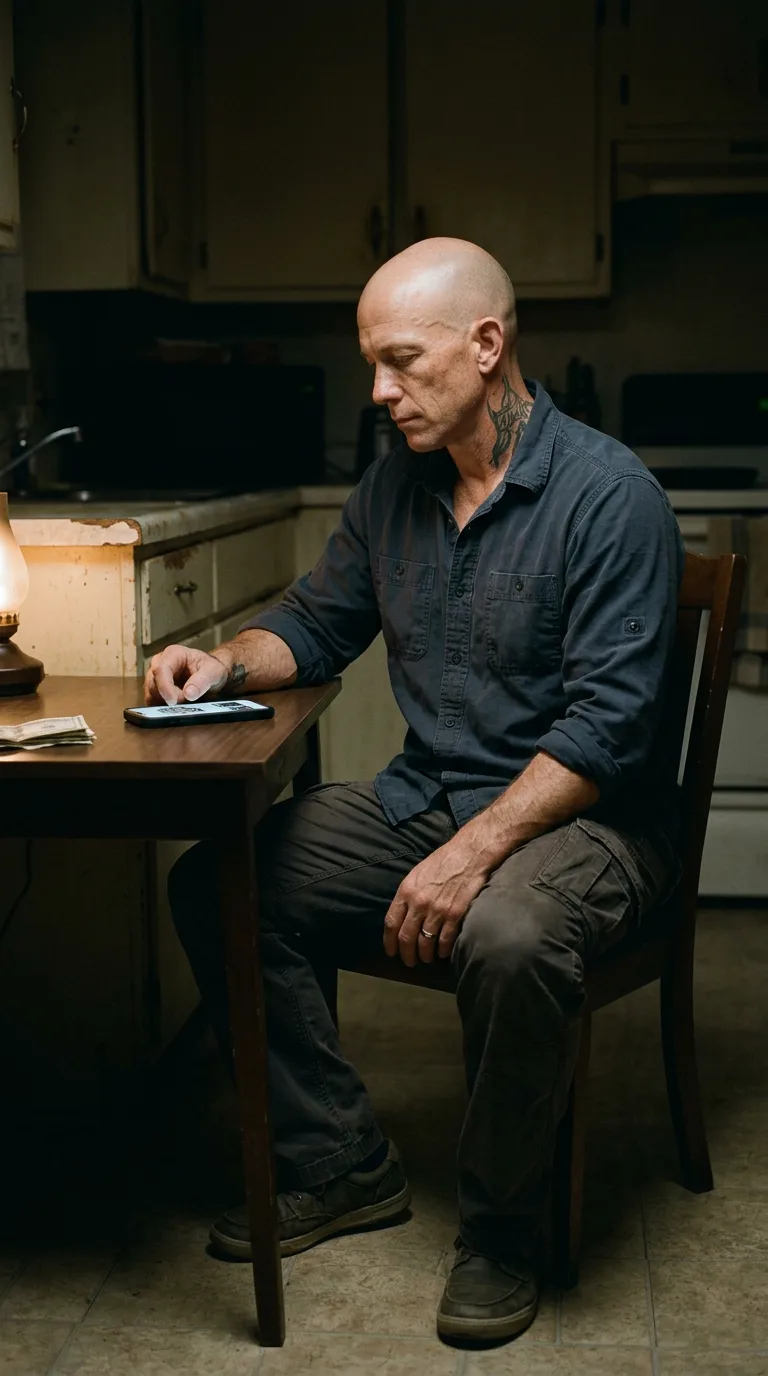
Rarest thing about him: Hand or neck (visible) — epic, 1 in 64
Season 0seed 1994006909 · engine v10
Character card
lineage 2NZHHJ
His body-swap story
@colin.hasbrook, wearing an unnamed body, rolled the wheel on and woke up as Russell Kettering, spent under a minute in him, then spun the wheel and woke up as Danny Reyes-Corbin
The espresso machine hisses behind you and somebody's ordering a triple oat milk something, and none of it reaches you, because you have been Black and 26 and muscular for eleven minutes and already you are bored inside it. The barista's apron smells like burnt milk. Your — his — phone buzzes in the back pocket with a shift-swap request you don't care about. You spun this one only twenty minutes ago and the boredom came in faster than usual, a flat gray feeling like Tuesday. There's a boy at the corner table doing homework with his mother and it needles at something. You don't examine it. You just want out of the smell of the milk steamer and the hiss and the small good life of a man you were for less time than a phone call. You go to the bathroom, lock the door, and you take the wheel out again with fingers that aren't yours yet.
The kitchen light is a bulb with no shade and it is the only warm thing in the room. Your thumb is still lifted an inch off glass, hovering, and the phone is already turning face-down on the table under a hand that used to be somebody's decision and is now only yours. Nine hundred and something dollars for a watch. The hand sets the phone down. The hand does not pick it back up. Around you: cabinets the color of old teeth, a lamp trying to be a kitchen light and failing, a stack of bills weighted down by nothing, going soft with humidity. Outside the window, dark — but a bird is already going at it in the mesquite, and that wrongness sits there a second, dark outside and a bird singing anyway, before you understand: he works nights at the gym before the fighters get there, before the sun, and this is his morning, black as anyone else's midnight.
The shirt is what opens him first — a chambray-blue shirt, sleeves rolled once, and rolling it a second time comes back to you in his hands, not yours: standing at a dresser three hours ago that isn't three hours ago for you, thinking about the electric bill while he buttoned it, thinking he should've married money and being ashamed of thinking it, the same shame he has every month around the fifteenth. The shirt was cheap and it is soft now anyway, worn honest. Under it a body that carries itself like it still expects to be hit — shoulders set forward, weight low, the balance of a man who spent thirty years teaching other men not to flinch and forgot how to stop bracing himself. Forty-nine and the left knee tells him about weather before the radio does. The right hand is stiff in the mornings from a break that never set right, 2003, a kid he was sparring who got excited. He clicks a pen without knowing he's doing it — there's no pen here, but the fingers twitch for one anyway, an old tic, and that twitch alone brings back the ring on the fourth finger, plain gold, and with it her — Denise — asleep down the hall, seventeen years married, the fight they'd had last week about the gym's water bill dissolving, the way it always dissolves, into her hand finding his under the blanket without either of them saying sorry out loud. Two kids down the hall past her: the older one's football pads by the door, the younger one's spelling words taped to the fridge behind you, *NECESSARY has one C two S's Daddy*, in her handwriting.
The tattoos on the neck and the knuckles come alive too, faint tug of ink under skin remembering the buzz of the needle, nineteen years old, a name he doesn't say anymore, a woman he still thinks of on nothing days — not with wanting exactly, just a door in the hallway of him he doesn't open, just checks is still shut. The chair under you is hard and known, the fourth kitchen chair, the one whose leg he keeps meaning to fix. The counter under his palm holds the memory of a thousand mornings of instant coffee he can't stand and drinks anyway because good coffee is eleven dollars a bag now and there's a fight card in Odessa in six weeks he's got two boys entered in and the gas alone. He has never once told Denise how bad it's gotten. He goes to Mass and doesn't pray about the money because it feels small next to what other people are asking God for. He was looking at that watch because his own father wore one exactly like it, once, for a wedding, borrowed, and gave it back the next morning, and Russell has wanted since he was nine years old to own a thing like that outright and never has and probably never will and was scrolling toward that particular grief on purpose, the way you press a bruise.
You lift the hand off the counter and turn it over under the bulb — the freckles across the knuckles, the stiff finger, the ring catching light with nothing behind it now but you.
"Didn't need it anyway," you say, to no one, in his voice, and you don't yet know if you mean the watch.