Marcus Whitaker
Fictional. Generated by AI — not a real person, and no likeness of one is intended.
55, teacher in New York · rolled by @colin.hasbrook · card — no film
History
who has worn him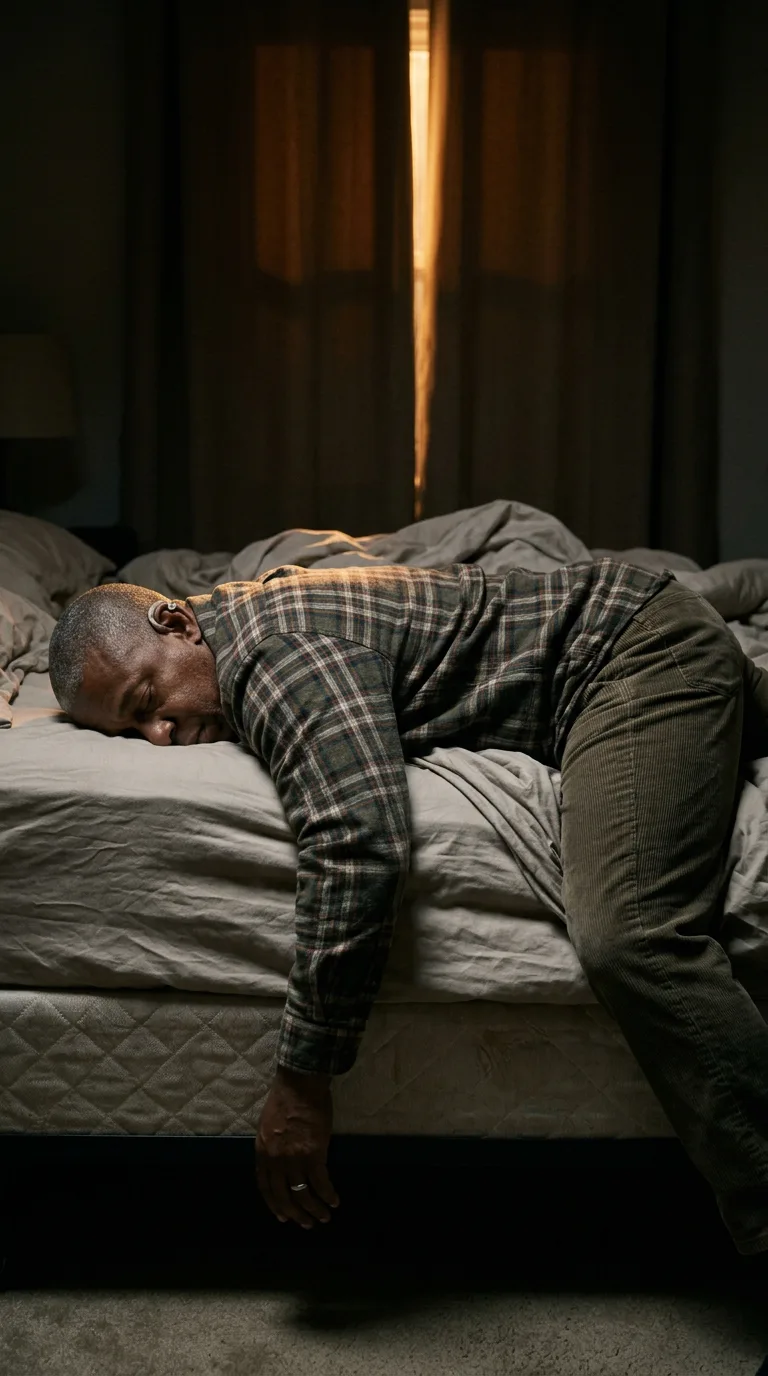
Rarest thing about him: Ear cartilage — legendary, 1 in 167
Season 0seed 851458059 · engine v10
Character card
lineage 2NZHHJ
His body-swap story
@colin.hasbrook, wearing Sami Haddad, rolled the wheel on and woke up as Marcus Whitaker, spent under a minute in him, then spun the wheel and woke up as an unnamed body
You are standing in the walk-in flour dust of a bakery kitchen, in a body that is not four minutes broken in yet — twenty-one years old, thin wrists, freckles across brown cheeks, a wedding of scars up one forearm from a hot sheet pan. Sami Haddad's hands. They know how to fold dough without thinking, muscle you haven't earned. The ovens are ticking behind you. Somewhere a radio plays something in Arabic that the body likes and you don't understand. It's the middle of the morning here, and you have been him for four minutes, and already the itch is back — that specific boredom of a body too young to be interesting, a life too unwritten to have secrets worth touching. You didn't come here for a life. You came for the turning-over. Five hundred and ninety-three men behind you and this one already feels like a coat that fits fine and tells you nothing. You wipe flour on your apron — his apron — and you go back to the site in your pocket, thumb on the glass, and you spin.
The wheel doesn't care what time it is anywhere. It hands you a Monday in New York, an hour that is not this hour, a man face-down across a bed with one arm hanging into the lamplight like he fell out of the sky and landed on a mattress instead of pavement. His breath is ragged, open-mouthed, the particular ragged of a man who worked a night he shouldn't still be feeling. You take the breath and smooth it. One inhale ragged, the next even. The arm rises on its own current, folds up off the floor and across the chest, the other hand meeting it there, palms settling on a chest that rises and falls slow now, deliberate, a posture this body has never once organized itself into in fifty-five years of sleep. Streetlight comes through the gap in the curtain in one gold blade across the plaid of his shirt. You are heavier here. Solid through the middle in a way the baker's body never was. Everything smells like laundry soap and someone else's cigar smoke, old, in the fabric.
The shirt is the first thing that talks. Flannel, soft from washing, and it gives you a Sunday — him buttoning it slow in a mirror with the bathroom fan running, his wife's voice through the door asking has he seen her keys, and the small satisfaction of a shirt that still fits the way it fit ten years ago even if the belly under it argues otherwise. You get the whole undressing and dressing of him in that one flash: he pulls his undershirt over his head first, the piercing in his upper ear catching on the collar the way it always does, a small practiced wince. He puts the aids in last, always last, after the shirt, because he hates the feel of fabric dragging across them. Without them the world goes soft and far away and he likes that, actually, likes those ninety seconds of a muffled apartment before the world turns back up. The ring goes nowhere because the ring never comes off — thirty-one years, and his thumb finds it now against his sternum, an old habit clenched into the folded hands you're wearing, turning the band once out of nothing.
The mattress under you gives you the year his back went out and he taught three weeks of eighth-grade English from a stool, kids ribbing him gently, come on Mr. Whitaker sit down before you fall down. The classroom smell arrives with it — dry-erase marker, the radiator's tin smell, thirty desks he counts every single day out of a habit older than any of the kids in front of him now, a superstition disguised as diligence. He loves them in the specific tired way of a man twenty-some years into loving other people's children better on some days than his own, which shames him a little, which he has never said to anyone, not even her.
His wife arrives through the pillow, through the specific give of her side of the mattress cooling six inches from you — she's already up, already gone to the kitchen, and some nights that's the whole marriage now, missed shifts passing each other in doorways, and some nights it's still the thing that started it, her laugh through a cracked window at a barbecue in 1994 that he can still hear better than he hears most things these days without his aids in. Three kids came out of that laugh. One of them calls every Sunday without fail. One of them he worries about in a low continuous hum he's stopped noticing, like tinnitus. He bites at a thumbnail now, an old tell, and even unconscious the body reaches for it, teeth finding the ragged edge before you catch it and still the hand.
There's a night that comes up harder than the others, unbidden the way the site promised — a bad one, years back, a bottle of something and a phone call he almost didn't survive making, the kind of low he has never once described to his priest in confession because some things you carry alone even in a faith built to take them from you. Then, right behind it, easier, the ordinary miracle of Tuesday: cigar on the back stoop after the kids are down, a beer sweating on the step beside him, streetlight doing exactly what it's doing now through exactly this curtain, and the particular peace of a man who built something and is, mostly, allowed to rest in it.
You open your eyes. The room is gray-gold and unfamiliar in the specific way every room is unfamiliar the first ten seconds, before it becomes the only room you've ever had. You lift the left hand off your chest, into the light, and turn it — the wedding band catching the sodium glow off the street, the nail on the thumb bitten close, the aids' faint hum only now registering as sound instead of silence, the whole apparatus of an evening man's morning arriving one sense at a time.
"There you are," you say, to no one, in a voice heavier and slower than the one you had four minutes ago in another city, and you don't yet know if that's relief or just the sound of him talking.