Danny Reyes-Corbin
Fictional. Generated by AI — not a real person, and no likeness of one is intended.
23, soldier in Atlanta · rolled by @colin.hasbrook · card — no film
History
who has worn him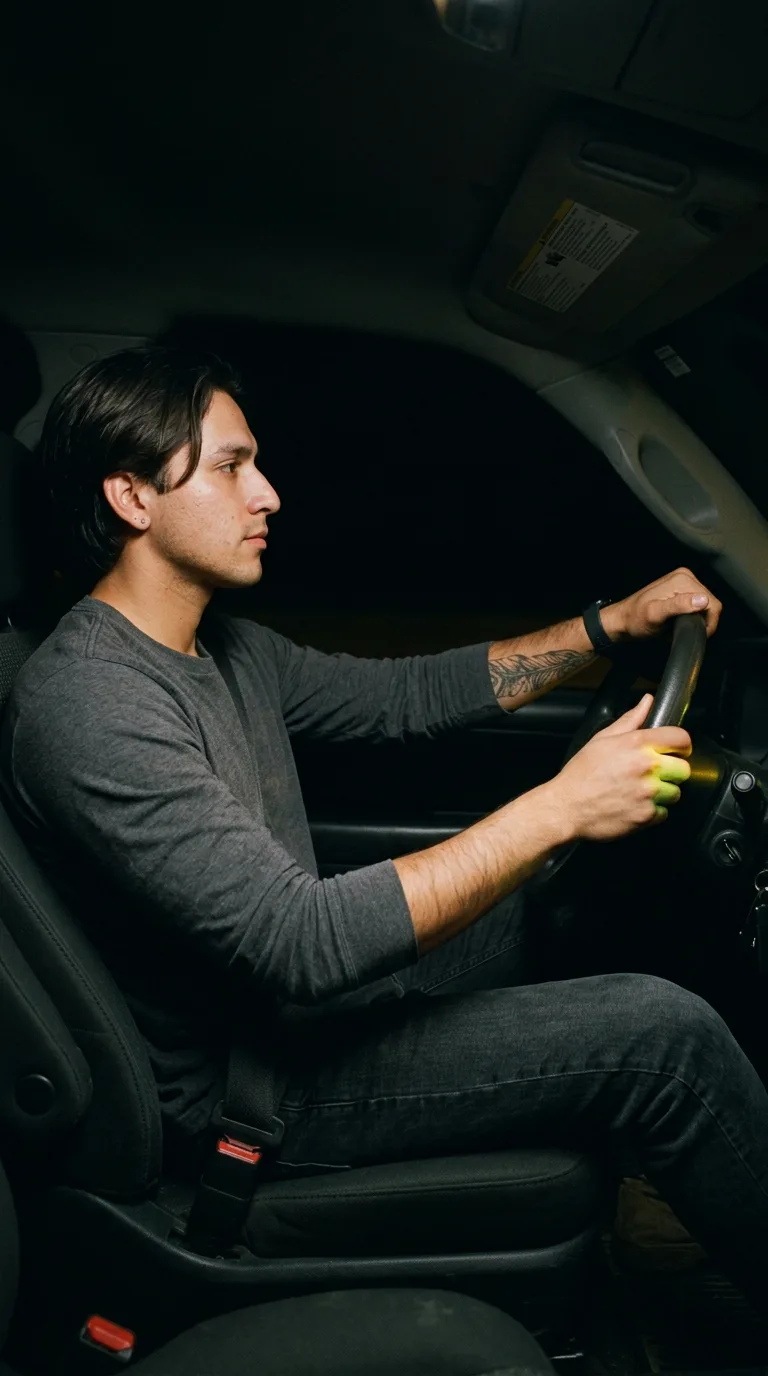
Rarest thing about him: Both earlobes — epic, 1 in 42
Season 0seed 1375969024 · engine v10
Character card
lineage 2NZHHJ
His body-swap story
@colin.hasbrook, wearing Russell Kettering, rolled the wheel on and woke up as Danny Reyes-Corbin, spent 8 minutes in him, then spun the wheel and woke up as Nolan Kettering
Russell Kettering's gym smells like bleach over sweat, and it is eleven in the morning, and this body has been yours for less than a minute and already you know the whole shape of the problem: the left knee. Bone on bone, the doctor said, and Russell — you, this morning, this version of you — had been standing at the edge of the ring watching some kid with too much reach flinch his way through a combination, and the knee had gone, sideways, small, a nothing movement, and the whole day had turned into a slow arithmetic of what a torn-up forty-nine-year-old body can and can't do anymore. You have had 596 bodies and you know already, standing in the ring's chemical light with your hand on the ropes, that this is not going to be one you keep. Not out of cruelty to him. Just — the knee. Just the fact that there is a wheel and you do not have to be a man whose knee is going.
So you go back to the truck, and you sit in the cab a minute with the AC roaring, and you take out the phone and you open vessel.cards, and there it is, the same as always: the wheel, the soft chime it makes, the price that stopped mattering spins ago. You spin.
The wheel does not care what time it is where it lands. It never has. Somewhere it is the middle of the morning; somewhere else, at the same instant, it is the deep dark hours of a Monday, and you don't know that yet, you only know the floor drops out from under Russell Kettering's bad knee and —
— your hands are at ten and two on a wheel that is not Russell's truck's wheel, thinner, warmer, gripped by fingers that are not the ones you just had. Highway dark on both sides. Dash glow low and green across knuckles that are younger than any you've worn in months. A body sitting differently in the seat — narrower through the shoulders than Russell's brute solidity, taller stretched out, the seatbelt cutting a line you feel now for the first time. Three miles from home, though you don't know that yet either. The car drifts a foot toward the line. You correct it before you've decided to, hands coming off the wheel and back on, lower, wider, some inch of you that isn't thinking already steering. The turn signal clicks on. It is for an exit that means nothing to you.
It means something to him, though, and it comes up through your borrowed hands the second they close on the wheel again — the vinyl of it, worn smooth at ten and two from four years of exactly this, this drive, this hour, night shift ending, the barracks gate receding in a mirror you haven't looked in yet. Danny. The name arrives with the wheel's grain against your palms, plain as a nameplate. Danny Reyes-Corbin, twenty-three, and this is his hour, this nothing hour between three and four in the morning when the whole interstate belongs to truckers and men like him coming off duty, and the exit sign he's flicking toward isn't his — it's the old one, the one that used to take him to Selena's, and some tired reflex in his hands took it before Danny's mind caught up to correct it, before you arrived and inherited the half-finished habit like a coat still warm from someone else's shoulders.
The dog tags are cool where they've slipped outside his collar, and touching them without meaning to — a strap catching your throat — gives you formation at 0500, the smell of diesel and cut grass, a drill sergeant's voice going hoarse by July. The studs in his ears, small enough you'd miss them on a man in uniform, came from a weekend in Savannah he wasn't supposed to take, a woman whose name doesn't matter now attaching them one at a time and laughing at how much he winced. Under your borrowed hands the wheel keeps giving: this same drive, a hundred times, radio low so it doesn't wake the block, his daughter's carseat empty in the back most nights because it isn't his week — Marisol, eighteen months, and the second her name surfaces you get the whole weight of her asleep against his chest at 2 a.m., her mother's voice on the phone a year ago going tight and final, the two of them deciding like adults to be nothing to each other anymore except this, a kid handed back and forth on a schedule taped to a fridge.
The thermal shirt against your back is the one he put on before shift — you get his hands doing it, sleep-stupid, sleeves shoved up past sharp forearms, the tattoo on the left one catching cloth and pulling, a design he got at twenty that he still likes fine. Jeans worn soft at the knee from three years of the same drive. The watch loose enough to spin once around the wrist when he shakes it settled. And under all of it: a body that runs on four hours' sleep and coffee and the particular restlessness of a mind that was never going to sit still in a classroom, ADHD, diagnosed at twenty-one by an Army doctor who seemed almost relieved to finally have a word for it — the knee that never once complained, the nose broken in a fight nobody remembers the reason for anymore, set crooked and left that way because it gave his face something Selena used to say she liked.
The signal is still clicking, patient, toward an exit he hasn't taken in over a year.
You reach up and shut it off. Your hand — his hand — hangs there a second in the dash light like it isn't sure whose command it just followed.
"Wrong turn," you say, out loud, to no one, and you don't know yet if that's the truest thing you'll say tonight or the last thing Danny Reyes-Corbin would have said himself, three miles out, half-asleep, still headed, out of habit, toward a door that isn't open to him anymore.