Russell Anzalone
Fictional. Generated by AI — not a real person, and no likeness of one is intended.
58, butcher in San Francisco · rolled by @colin.hasbrook · card — no film
History
who has worn him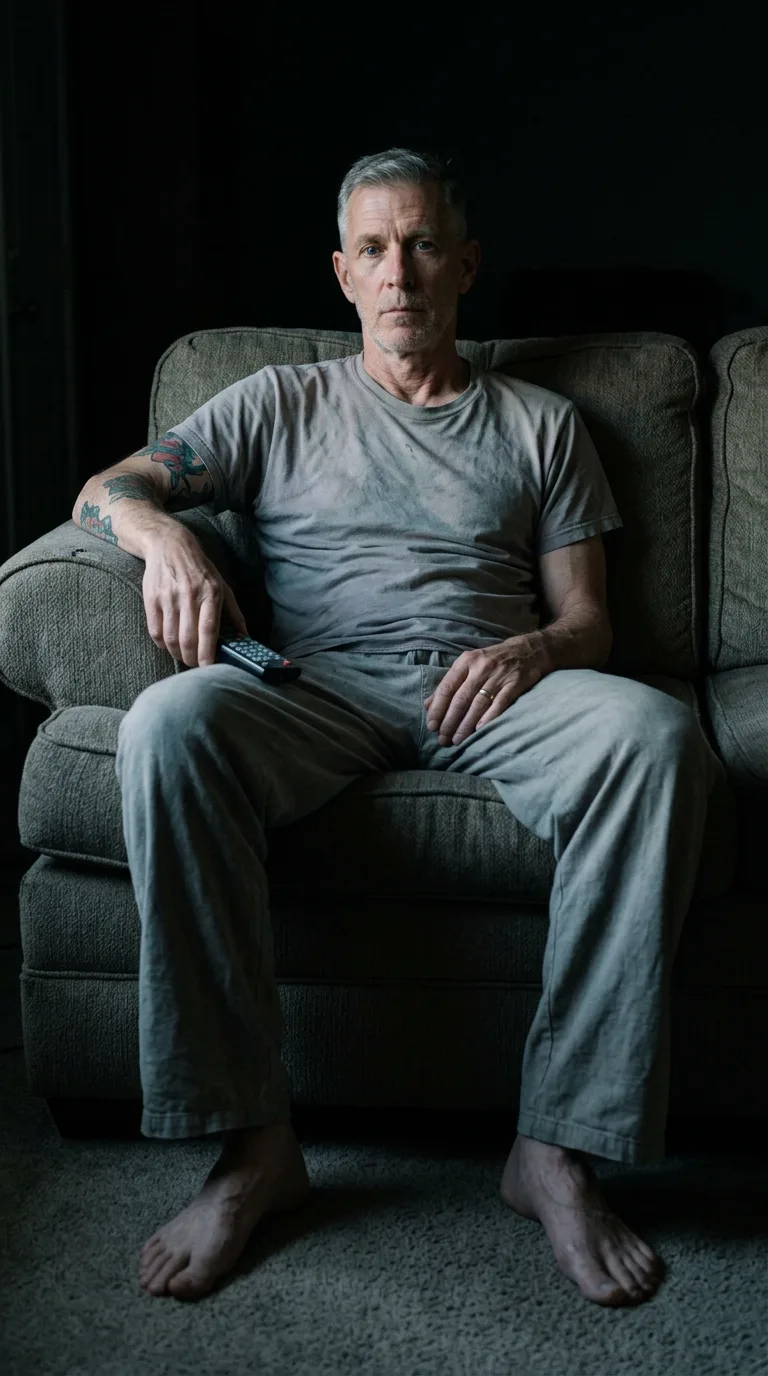
Rarest thing about him: One, upper arm — rare, 1 in 24
Season 0seed 530112130 · engine v10
Character card
lineage 2NZHHJ
His body-swap story
@colin.hasbrook, wearing Warren Gaskin, rolled the wheel on and woke up as Russell Anzalone, spent under a minute in him, then spun the wheel and woke up as Dustin Yellowhawk
The court reporter's kitchen smells like coffee gone cold in the pot, and you are standing at his counter in his body — soft gut, thinning hair, the freckled forearms that were his father's — looking at the screen door across the shared driveway, still ticking on its hinge from when he let himself back into his own house forty seconds ago. You watched him go. You were him for the length of a conversation about the fence line and a dead sprinkler head, and it was enough. Forty-five years married to a man he never got to see enough of, is what he told you without telling you, in the way he stood too long by the mailbox. Not your grief. Not your marriage. You have three hundred and eighty of your own housed away in you like specimen jars, and you did not want a three hundred and eighty-first ache going soft on a Friday morning. You wanted out of him the way you want out of most of them, eventually — restless, not unhappy, just finished. His laptop is still open on the table to the site, the wheel still faintly spinning down from last time. You sit. You spin. You do not say goodbye to him, because he is right there through the window, watering something, and does not know you were ever inside him at all.
The television cuts to a white flare of ad-brightness and you are sitting up straight before you know you have a spine to sit up with — this one long and thin, a stranger's frame, weight distributed wrong after the reporter's stocky give. Your arm sets a remote down on the couch arm without your telling it to; his hand already knew where the wood was. Around you: brown dark, blackout curtains, a television throwing cold color across a room that smells faintly of bleach and cut meat under cologne. Bare feet on carpet. A ring on the left hand, cool and thin. You do not laugh at the joke on the screen. He would have laughed. Something in the arm that isn't quite your arm yet remembers laughing at this exact rerun before, and doesn't now, and the room holds that absence for a second like a missed stair.
Then the shirt against your back gives you the first of him — not words, just the memory of buttoning it, sleeve by sleeve, hours ago in a bathroom with a fogged mirror, a body sixty pounds lighter than the one you just left, everything long where the other was short, everything spare where the other went soft. His hands know these cuffs. Roll once, roll twice, same fold every morning for thirty years, the same three shirts rotating through a life that does not need more than three shirts. Under it: a chest with not much on it, ribs you could count if you wanted to, and a low ready ache behind the sternum that the body carries everywhere now, medication-managed, blood pressure cuffed and noted at every physical like a bill that never stops arriving. The knees are fine. The knees have always been fine. It's the wrists that complain first, every day around three, from twenty-some years of the same three motions on the same steel table.
The remote's plastic gives you television — decades of it, this same couch, this same dark, lights off because she likes the room black when he watches so she can read across from him without the glare, a woman you have not met yet whose shape you already know from the dent worn into the far cushion. The couch fabric under your palm gives you weekends: her laugh from the kitchen, the particular hush of a Sunday when the shop is closed and there is nowhere he has to be. The wedding band gives you a single afternoon, whole and complete, a courthouse in the Marina and her in blue and neither of them able to afford the ring yet so his mother's ring stood in until the real one came, six months later, from a jeweler two doors down from his shop, paid for in cash he kept in an envelope behind the register.
The apron is not on him now — that's a different hour, a different self, the man behind the counter in chainmail and white — but the forearm carries the tattoo anyway, faded blue-red under the sleeve, a thing done at twenty-two in a shop in the Outer Sunset that doesn't exist anymore, bold lines gone soft with forty years of sun and soap and steel wool, and under it a whole boyhood: a father who cut meat, a grandfather who cut meat, sawdust on a floor that got mopped at six every morning before the doors opened, the particular pride of a trade nobody in this city thinks is a trade anymore, until they taste what he does with a chuck roast and change their mind. He is not rich because of the shop. He is rich because his father bought property in this city sixty years ago and never sold it, and the shop is what a man does instead of sitting still with that kind of money, and none of his customers know it, and he likes it that way. No children came, not for lack of trying in the early years, and then not for lack of anything — just a door that quietly closed and a marriage that built its rooms around the space instead of filling it. Evangelical on Sundays out of habit more than fire now, a flask in the truck he doesn't touch except twice a month when the big nights come, and even those he stopped chasing years ago when the doctor started saying words like stroke.
The carpet under your bare feet gives you nothing but the ordinary hour: a Friday off, a shift starting later, the television low company in a dark room in the middle of the day because sunlight in San Francisco means nothing to a man who has spent forty years indoors under white bulbs and steel.
You look down at the hand on your knee — long fingers, a plain gold band, a faint scar across two knuckles you don't have a story for yet and maybe never will. You turn it over once, feel the wrist ache announce itself right on schedule, and lift your eyes to the dark room like it's a lens.
"Forty minutes and I gotta be at the shop," you say, to no one, in his voice, and you have no idea yet how long you'll keep it.