Dustin Yellowhawk
Fictional. Generated by AI — not a real person, and no likeness of one is intended.
38, janitor in Las Vegas · rolled by @colin.hasbrook · card — no film
History
who has worn him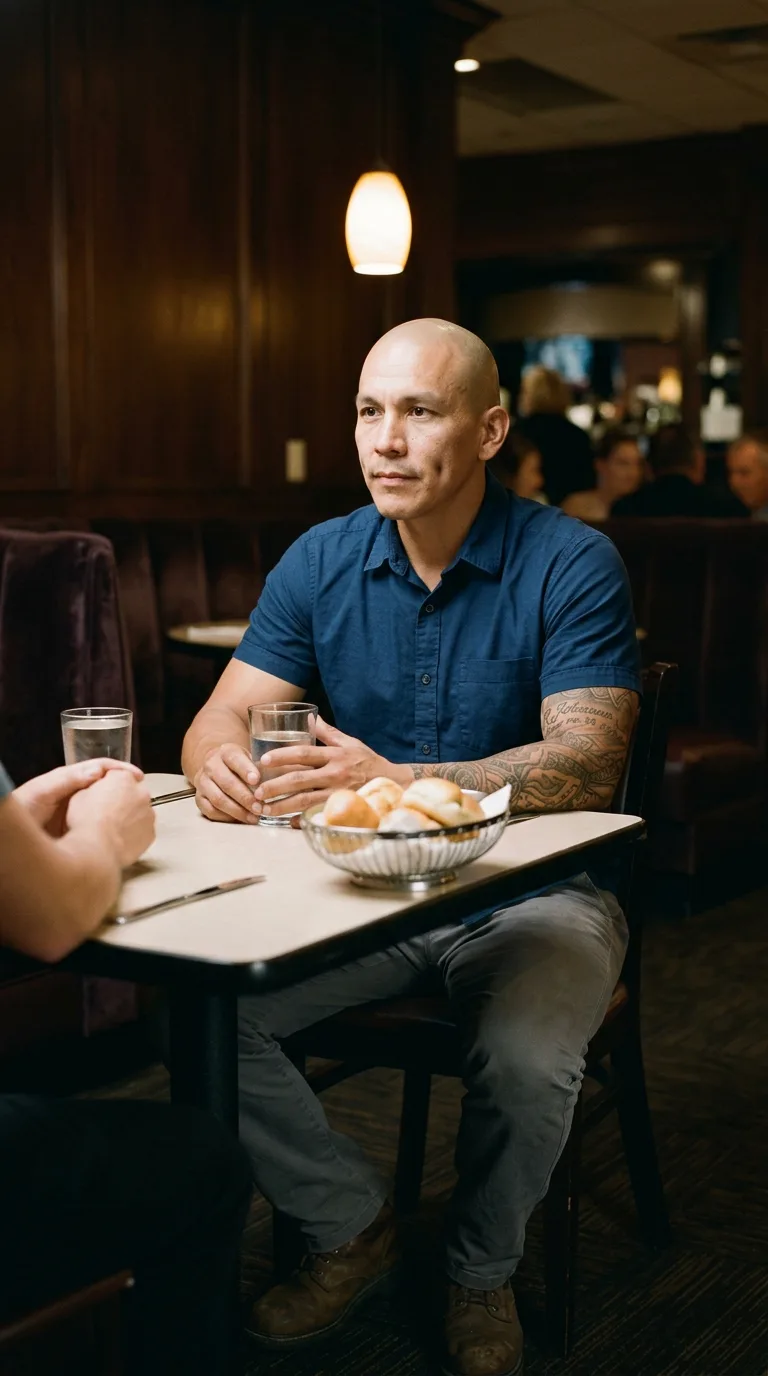
Rarest thing about him: Native American — rare, 1 in 41
Season 0seed 2017151044 · engine v10
Character card
lineage 2NZHHJ
His body-swap story
@colin.hasbrook, wearing Russell Anzalone, rolled the wheel on and woke up as Dustin Yellowhawk, spent under a minute in him, then spun the wheel and woke up as Warren Iwata
The knife has been in your hand — Russell's hand — since six this morning, and it has stopped feeling like a tool sometime in the last forty years, and started feeling like the only sentence you know how to finish. You are behind the counter at the case, breaking down a shoulder into something a customer can picture on a plate, and your regulars are gone for lunch, and the radio is playing something with too many horns in it, and none of that is the reason. The reason is smaller than that. It is that you have been Russell Anzalone for less than a minute, and in that minute you already know the whole shape of the rest of it: the ache low in the back by three, the knee that doesn't want the walk to the bus, the particular boredom of a life that is competent and finished and has no more doors in it. Fifty-eight years old and skinny under the apron and gray going to silver, and you didn't even get to keep the wanting that made you spin last time — that was some other version of you, in some other man, and now it's just this, a shoulder and a horn section and forty more years of knowing exactly how the day ends before it starts. You set the knife down still bright. You wipe your hands on the apron without looking at them. You are already gone before your feet move toward the back room and the phone in your coat.
The bread basket is the first thing. It's under your hand — his hand, small-knuckled, a callus riding the base of each finger — and the wicker rasps against three fingertips he has felt ten thousand times without thinking about it, and the glass under his other palm has gone warm from holding, and the apology is halfway out of a mouth that is not asking your permission, so you finish it. The sentence lands louder than he meant it, carries to the table behind, and a woman there glances over, and across from you a face you have never seen goes still in the specific way a face goes still when a date has already ended and everyone at the table knows it but nobody has said so. Your hand — his — turns the glass a quarter turn on the tablecloth. It stays there. Water in it doesn't spill. Nobody screamed. Nobody will.
The glass is cold-slick where his palm was and dry-warm where yours is now, and that's the first door: him at nine years old holding a different glass, grape juice, at a table where an uncle was teaching him gin rummy and laughing too hard, and it isn't your memory but it arrives with his fondness folded into it, unearned and total. The bread basket gives you less — a hundred baskets like it, hotel restaurants, steakhouses, this one three times now with women who didn't call back — and under that a flatter feeling, tired in a specific direction: he has done this so many times that he has started rehearsing the apology before he's said the thing that needs it.
The shirt is what opens him properly. Blue, cotton, the cuffs turned twice because he did that himself twenty minutes before he sat down, standing in front of a mirror that isn't kind to overhead light, and the memory comes in with his own hands doing it, the specific two-fold roll he always does, once for each side, checking it's even, because he read once that women notice forearms and he has forearms worth showing and no shame in using them. Under the shirt: the shape of him, compact, 5'6", built dense rather than tall, shoulders that carry a mop and a rolling bucket eight hours a night without complaint because the body was built for carrying things before it was ever asked to. The dimples are there even now, even in the stillness after the ruined sentence, two grooves that don't wait for a smile to show up, and you feel them like two small permanent decisions his face made a long time ago and never revisited.
The sleeve on his right arm comes up warm where the tattoo sits, and it isn't decoration to him, it's a name — R. Johnson, a date under it, June something, ninety-something — and it comes with a wash of grief so old it's gone soft at the edges, a brother, gone before either of them were grown, and every shift Dustin works nights because the corridor after everyone's gone is the only place quiet enough to still hear him. The bald head is a choice, not a loss — thirty-one, first gray hair, said forget it, ran the clippers himself, kept doing it because it made his jaw look like something. The keys at his belt, when your hand brushes them without meaning to, ring with three thousand nights of the same corridor, waxed floors under fluorescent hum, a supply closet he keeps obsessively ordered, a vice principal who says good morning like he means it and nobody else does. The leg under the table has been bouncing since before the appetizers, a motor that runs whether he's nervous or not, has run since he was a kid, and diabetes lives quiet in him too, a meter in a bag somewhere, a discipline he doesn't advertise, a body that works hard and asks for care it doesn't always get.
It is the middle of a Friday here and the middle of his night's opposite — he should be asleep, this is his morning turned inside out by a shift that runs 11p to 7a, and instead he's sitting upright in good light on a day off, in a shirt he rolled himself, on a date that a woman across the table is already composing the end of in her head. You feel the whole tiredness of that — being awake at the wrong hour for a stranger, hoping it's worth it — and under it, quieter, the fact that there's twenty-five, maybe thirty thousand dollars sitting patient in an account because he doesn't drink much and doesn't smoke at all and has nowhere urgent to put money, and that patience was supposed to be for something, someday, and he never got to find out what.
Your hand — yours now — comes up off the table and you turn it over in the light from that ugly hanging fixture, dimples showing though nothing on this face is smiling, and the woman across from you says nothing, waiting to see if the man who just repaired his own sentence is about to ruin it again.
"Sorry," you say, in his voice, to her, meaning it for no one at this table at all. "I don't know where that came from."