Ruben Salcedo
Fictional. Generated by AI — not a real person, and no likeness of one is intended.
42, grocery stocker in Pittsburgh · rolled by @marcus.villaverde · card — no film
History
who has worn him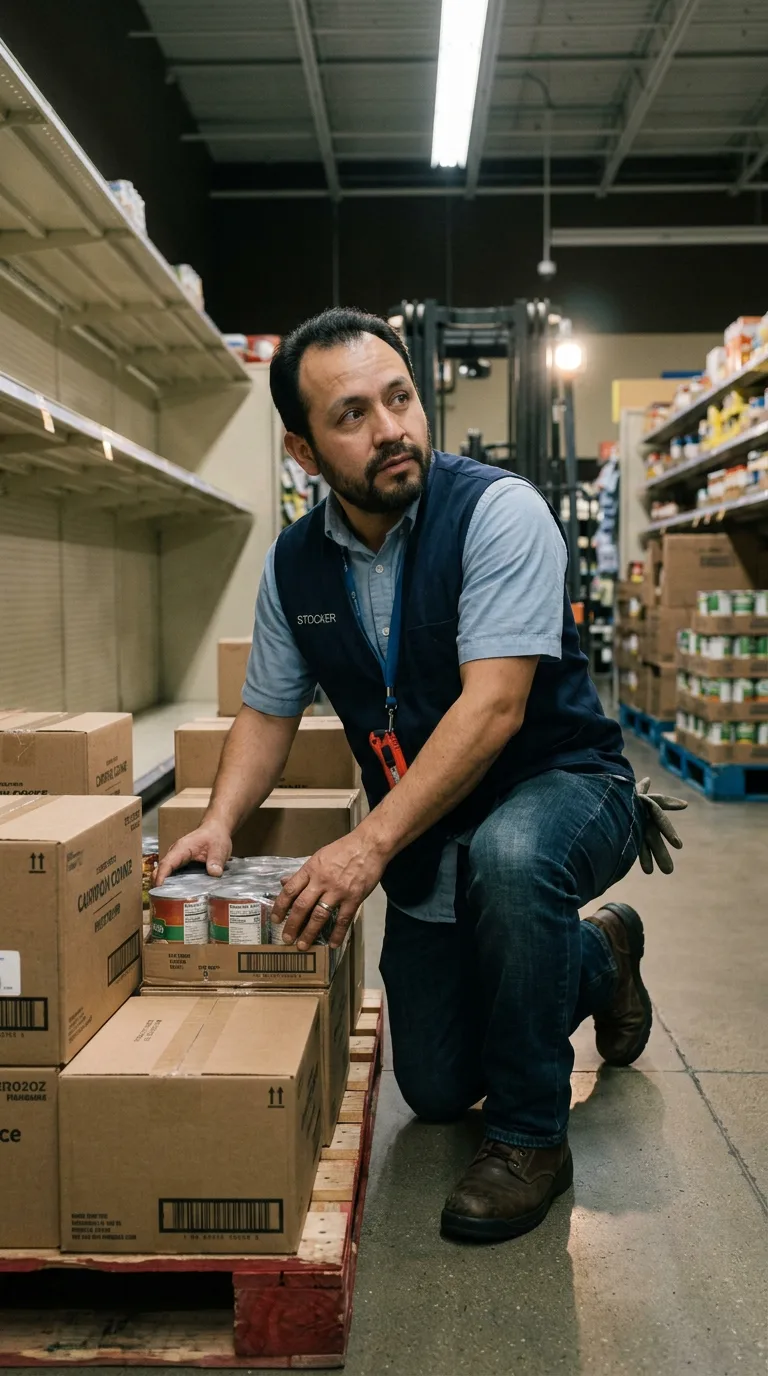
Rarest thing about him: Vapes socially — common, 1 in 44
Season 1seed 1459144457 · engine v11
Character card
lineage KEPHG1
His body-swap story
@marcus.villaverde, wearing Marcus Villaverde, rolled the wheel on and woke up as Ruben Salcedo
Marcus Villaverde's hands are wrong and you've known it since you put them on. Detroit, mid-morning, a service van idling in a stranger's driveway with a compressor gauge still clipped to your belt, and you are sitting in the front seat not moving, because two minutes ago you were somebody with a cleft chin and a work order and a life you did not choose and already hate. Twenty-nine years old and his knees ache like an old man's from crawling under condenser units. That was not you. None of it was you. That's the whole appeal of the wheel and the whole poison of it — you didn't build this, you just arrived in it, and now you have two minutes of somebody else's Thursday and no reason to want a third. You open the site on your phone with his thumb, the print oily on the glass, and you spin before you can talk yourself into liking the smell of refrigerant on his sleeve.
The wheel turns somewhere you'll never see and it lands on a kneeling man.
You come up out of the crouch already leaning forward, one knee still on the concrete, a case of canned tomatoes gripped in a fist that is not the fist you had a second ago — shorter fingers, a wedding band biting cool against one of them, a plastic wrap seam cutting into the pad of the thumb. The aisle tilts up taller than it should. Fluorescent tube light, a forklift ticking somewhere behind you, cold coming up off the floor through the knee of the jeans. Your body doesn't know this is new. It just keeps setting the can down, low and centered, the way it has ten thousand times, and you ride inside that motion like a passenger who grabbed the wheel a half-second late — one can set down crooked, then the next ten placed with a care this hand hasn't needed in years.
The vest smells like cardboard dust and the underarms smell like someone else's sweat, and that's the first thing that comes through, before any memory does — smell always arrives first and asks nothing of you. Then the box cutter against your chest on its lanyard, worn smooth where a thumb has hooked it a thousand times, and with it: a Tuesday two years back, a case knife slipping, a thin line of blood on this same knee that never scarred because the jeans took most of it. The eyebrow itches under a scar you didn't put there — his, a bicycle at nine years old, a curb in a neighborhood called Beechview, his mother's hand on the back of his neck in an ER waiting room, her saying *mijo, quieto* — and it comes up whole and gone in under a second, the way all of it does, ownerless and warm and not yours to keep.
The shirt gives you the most. Chambray, short-sleeved, buttons done up one-handed in a dark bedroom at half past one in the morning so as not to wake her — Danielle, that's her name, arriving with the second button, her side of the bed a shape under the quilt, the baby monitor light blinking green on the dresser though the babies aren't babies anymore, one's eleven and mouthy and one's eight and scared of the basement. He'd dressed by the glow of his phone, sleeve by sleeve, the fabric still holding the fold-lines from the dryer, and thought about nothing, the way you don't think about the four hundredth time you've done a thing. Thought about the shift ahead, six hours of pallets before the sun came up over a street with concrete steps between the yards and wet leaves gone black on them from three days of rain nobody in Pittsburgh had bothered to rake.
The wedding band gives you a wedding — a backyard, folding chairs, his mother crying into a paper napkin, Danielle's dress with a stain already on the hem from the grass, and under that, quieter, a girl who isn't Danielle, a name that surfaces and won't quite come all the way up, an ex he doesn't let himself think about on purpose but who is there anyway in the ring's weight, in the specific ache of an anniversary he still privately marks and never mentions. There's money somewhere in the memory too, more than the vest would suggest — a house he's proud of and doesn't talk about at work, a number in an account he prays over more than he spends. Evangelical, tither, sober because he decided to be at twenty-six and has never once explained why to anyone who asked. A vape pen in the vest's other pocket, plastic-smooth, social-only, his youth pastor's voice still somewhere underneath telling him moderation is its own kind of faith.
The knee under you knows concrete floors. The low back knows what forty-two years of lifting costs, a dull line of ache along the belt that never fully leaves. He is not a big man and the case is not a small case and his body has made peace with that math a long time ago through leverage, not strength — knees, not spine, always knees. And under all of it, distinct as a second heartbeat, one leg has already started to bounce where he's balanced on the ball of his foot, an idle tremor that has nothing to do with nerves and everything to do with just being alive in a body that runs a little hot all the time.
You set the last can down square. You look at the hand that did it — bond-thin scar through the eyebrow above it, though you can't see that part, only the ring, only the knuckles, only the gloves tucked into the back pocket he hasn't put on yet tonight. You turn the hand over once like it might tell you something it hasn't already told you three times.
"Hey," you say, to no one, to the aisle, to the forklift driver two rows over who doesn't look up, "that's — that's not how I left that."
You don't know yet if you mean the can.