Marcus Villaverde
Fictional. Generated by AI — not a real person, and no likeness of one is intended.
29, refrigeration technician in Detroit · rolled by @marcus.villaverde · card — no film
History
who has worn him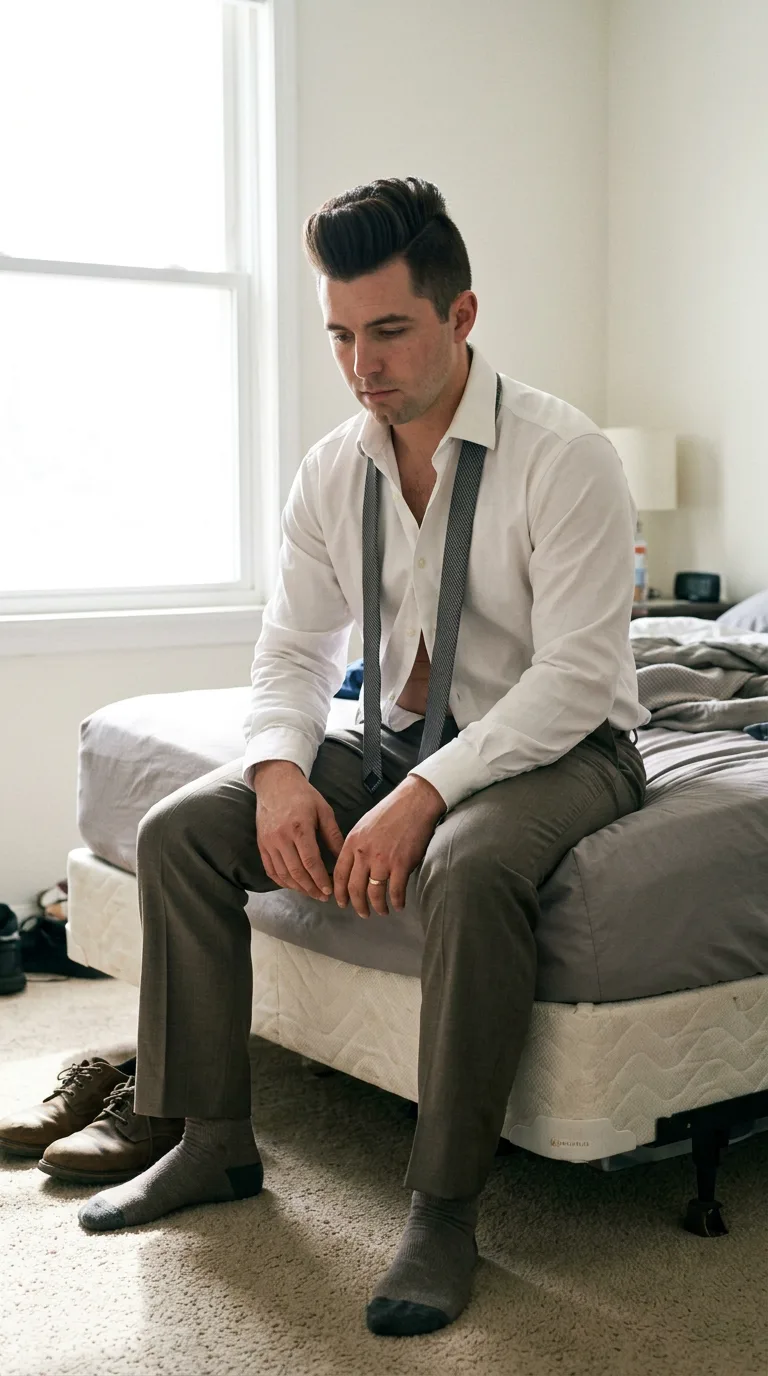
Rarest thing about him: A tic — a hard blink, a throat clear — uncommon, 1 in 147
Season 1seed 2095075183 · engine v11
Character card
lineage KEPHG1
His body-swap story
@marcus.villaverde, wearing Owen Sato, rolled the wheel on and woke up as Marcus Villaverde, spent 2 minutes in him, then spun the wheel and woke up as Ruben Salcedo
Owen Sato's studio smells like linseed oil and the coffee going cold on the windowsill, and you have been standing in front of the same canvas for eleven minutes not painting it. This is what it is to be him: soft in the middle, a moustache that itches when the weather turns, a cleft chin under it like some cruel echo of the last mouth you wore before this one. You have had him for one minute of his own life and six months of yours, and the itch under the itch is the only thing that's actually you — not his hand, not his brush, just the wanting, low and constant, to be someone else's problem instead of your own. You set the brush down wet. You don't clean it. Somewhere behind Owen's eyes you are already gone, already spinning, already not particularly sorry.
The tie is grey silk between two fingers and it is not your fingers.
You are shorter, first — that's the whole body announcing itself at once, a compactness, weight sitting closer to the floor than you're used to, and the cleft in the chin you can't see but can feel, a fold in the muscle when the jaw sets. A white shirt is open down the sternum, one button out of sequence, cool bedroom air on skin that was warm a half-second ago in a room four hundred miles east. The hand on the fourth button stops. Ribs under it, real ones, moving with someone else's held breath. Then the hand corrects the buttons, all the way up, and reaches for the tie a second time, and the tie goes into a knot Owen Sato's fingers never learned in their life.
The shirt gives it up first, sleeve by sleeve, in a memory that isn't quite a memory yet, more like a smell arriving before the word for it — starch, and this shirt specifically, ironed at 5:40 by a wife who does it every morning without being asked because his hands shake too early to trust with a hot iron, a joke between them so old it isn't funny anymore, just true. Denise. The name comes with the smell of her shampoo still on the pillow behind you. Two kids down the hall, one of them already awake, you can hear cartoons through the wall, low, considerate volume because Daddy sleeps different hours than everybody else.
That's the wrongness the room itself is handing you: the light outside the window is late-morning flat and gray, and by every clock in this house it should be a workday's start, and it is — his start, not the sun's. He came off a night rotation four hours ago, slept three of them, and now he's dressing again because the walk-in at the Eastern Market grocery went down overnight and somebody's got to be there before the produce turns. That's who he is. A man whose sleep answers to a pager and not a sky.
The trousers know the drive already — Gratiot Avenue at this hour, brick two-flats going by gray under gray, a coffee thermos with a dent in the lid from being dropped in a walk-in doorway two winters back. The belt knows the loops it's threaded through six mornings a week for four years. The socks — wool, marked left and right in faded laundry pen, Denise's handwriting — know cold concrete floors and the particular ache that lives in the arches of a man five-foot-three doing a six-foot job, reaching, always reaching, a body that has made itself strong in the forearms and shoulders to make up the difference the rest of him didn't get.
And under the touch of it all, bigger memories surface the way a held breath finally lets go. A wedding in a church basement because the sanctuary was booked, his mother crying not from joy exactly but relief, because he was twenty-four and she'd worried. The cleft chin, which every uncle on both sides has a joke about, none of them funny, all of them said anyway at every holiday. The two kids — a boy who already reaches for tools before he's asked, a girl who cries at commercials for the humane society and nothing else. The quiet fact, never once said aloud in this house, that faith is the thing that gets him through the 2 a.m. calls, a verse repeated under his breath in a cooler that's dropped forty degrees and is still dropping, a technician's version of a prayer that sounds a lot like counting.
The tie again — his hands doing this from muscle alone, not thinking, the same hands that clear his throat when the silence goes on too long, hard-blink, throat-clear, a tic worn smooth with age like a coin in a pocket. He never smoked. He never drank. He has one ring and it has never once come off since a preacher told him not to let it.
You look down. The hands are wrong in a way you like — thicker at the knuckle, a burn scar pale across one thumb pad that isn't Owen's, isn't yours, is only his, and it aches faintly in a way you understand belongs to him and not to you and you keep it anyway. The wedding band catches window light.
You look up into the mirror over the dresser, into a face that isn't asking you anything, because it never gets the chance to ask.
"Denise," you say, testing the shape of her name in his mouth, and it comes out steadier than you expected, "I'll grab breakfast on the way."
Somewhere behind that, small and getting smaller, is the question that brought you here in the first place, already turning over: how long is a man like this worth being.