Owen Sato
Fictional. Generated by AI — not a real person, and no likeness of one is intended.
23, fine artist in Small-town Ohio · rolled by @marcus.villaverde · card — no film
History
who has worn him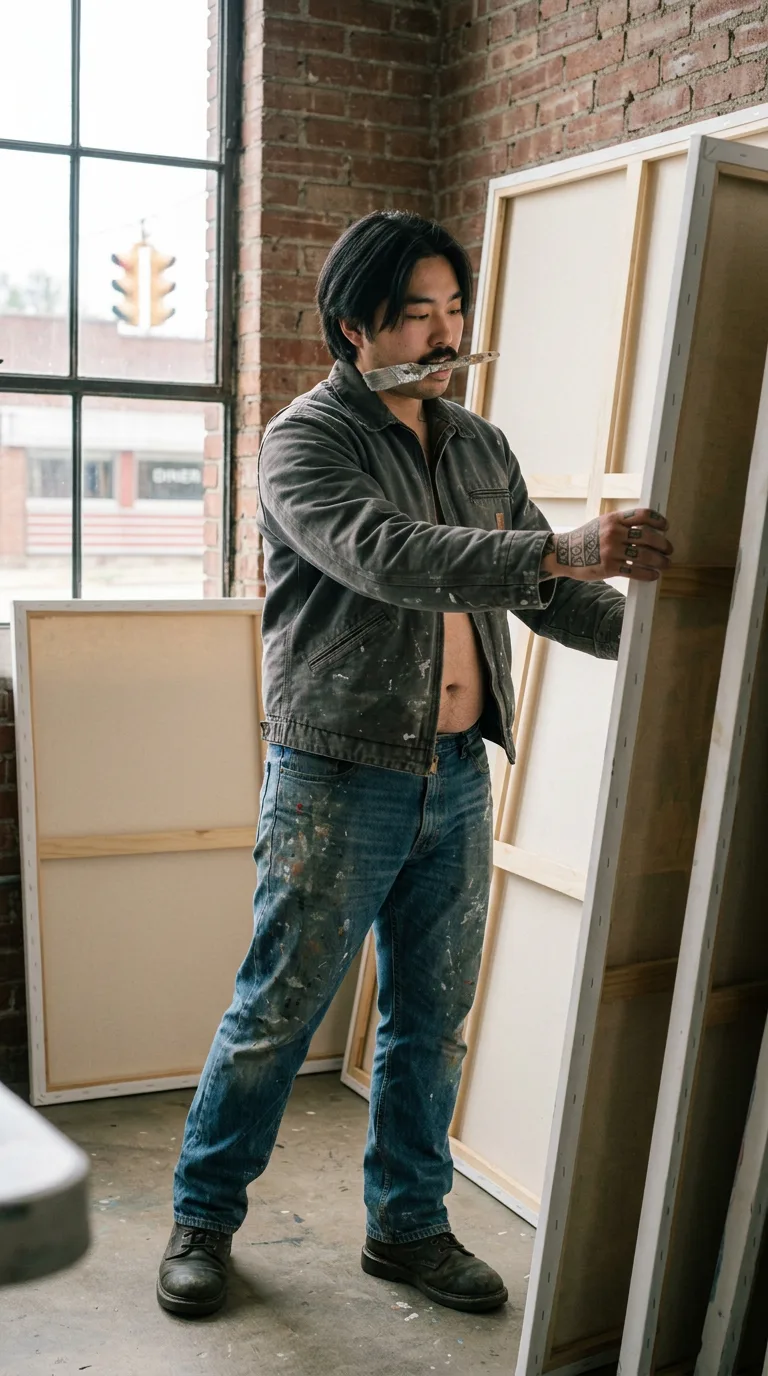
Rarest thing about him: Fine artist — uncommon, 1 in 2,362
Season 1seed 1401743149 · engine v11
Character card
lineage KEPHG1
His body-swap story
@marcus.villaverde, wearing Patrick Novello, rolled the wheel on and woke up as Owen Sato, spent 1 minute in him, then spun the wheel and woke up as Marcus Villaverde
Patrick Novello's apartment smells like other people's boxes, and three minutes in his skin is already three minutes too many. You stand in his kitchen — his kitchen now, technically, though nothing in it is yours — and you look at the hand that isn't yours either, average, forty-two years of somebody else's bad decisions written into it, and you think: no. Not this one. You didn't spin five times to end up unemployed in a rent-controlled walk-up at eleven in the morning on a Thursday, a man between jobs meaning a man who used to have one. There's no pull to Patrick. No thread worth following. Boredom arrived before the memories even finished settling, which has never happened before, and that fact itself is the tell — you are not a person who lingers, you are a person who spins again. You open the laptop already open on his counter, the wheel already loaded from three minutes ago like you knew, and you pay, and you don't let yourself think about what that says about you, and you spin.
The half-second break in the motion is not yours — it belongs to the hand still holding the canvas stretcher bar, still walking it upright against brick, and then the hand does the thing again, slower, correct this time, because you are learning weight and reach and grip strength all at once from inside a body that already knew how to do this and now has to relearn it with you watching. The wood is rough under fingers with tattoo-fine lines across the knuckles. A brush handle is wedged crosswise in the teeth, bitter with old gesso, and the jaw is already, absently, chewing gum around it. Cold warehouse air on a bare stomach where the jacket hangs open. Short. Solid through the middle. Thirty pounds heavier through the gut than Patrick ever was, and every ounce of it feels more like a body than his did.
The canvas edge under your palm gives you the first flash: not this moment, an older one, this same stretcher bar, a different afternoon, cheaper lumber, a critic in Columbus telling him his line work was "commercial" and him not knowing whether to be insulted. The brush in your mouth gives you more — thousands of hours, the taste of it not unpleasant anymore, just his, the specific give of bristles he trims himself with nail scissors because the good ones cost too much and he's Owen Sato, twenty-three, and there has never once been enough money, and there has also never once been a morning he didn't want to be in this room.
The jacket gives you the coldest one first — his mother, four years ago, folding this exact Carhartt into a box before he left for the city that turned out to be one stoplight and a diner that closed the year he got here anyway, and her not saying she was proud, Buddhists in his family don't say it plain, she just pressed the collar flat with both hands like she was blessing it. The jeans, stiff with a decade of paint he refuses to wash out, give you a woman's name he doesn't let himself think in daylight, someone from art school, gone two years now and not an ache anymore, just a data point, a closed door he stopped checking. The boots give you standing eight hours at an opening in Cleveland nobody came to and being fine with it anyway, actually fine, because the alternative — the office job his aunt keeps mentioning — was never once on the table for him. The gum, going stale in his cheek right now, gives you the shape of a hundred anxious rituals worn down into nothing, chewing through client calls, chewing through a breakup he didn't cry at, chewing because his hands need a job even when his hands aren't the ones working.
This morning — his this-morning, hours behind where you're standing now, the light through that window still early and flat — he pulled this jacket over no shirt because the shop's never warm before ten, buttoned nothing, picked up coffee he let go cold on the sill, put the brush in his mouth before his hands were even free, because some part of him needs something between his teeth before nine a.m. or the day doesn't start right. He clocked in at himself the way he does every day: not late, not early, just present, chewing, moving toward the canvases like they're an argument he's still winning.
You look down at the hand on the stretcher bar — square, a little soft, knuckles inked in fine geometric lines he chose himself at nineteen and has never regretted — and you turn it over slow, watching the tendons work like they belong to someone you've just met, because they do. The gum stops moving in your jaw.
You take the brush out of your mouth and say, to the empty warehouse, to the stoplight going red outside the window, "Okay. Let's see what you were making."