Patrick Novello
Fictional. Generated by AI — not a real person, and no likeness of one is intended.
42, between jobs in New York · rolled by @marcus.villaverde · card — no film
History
who has worn him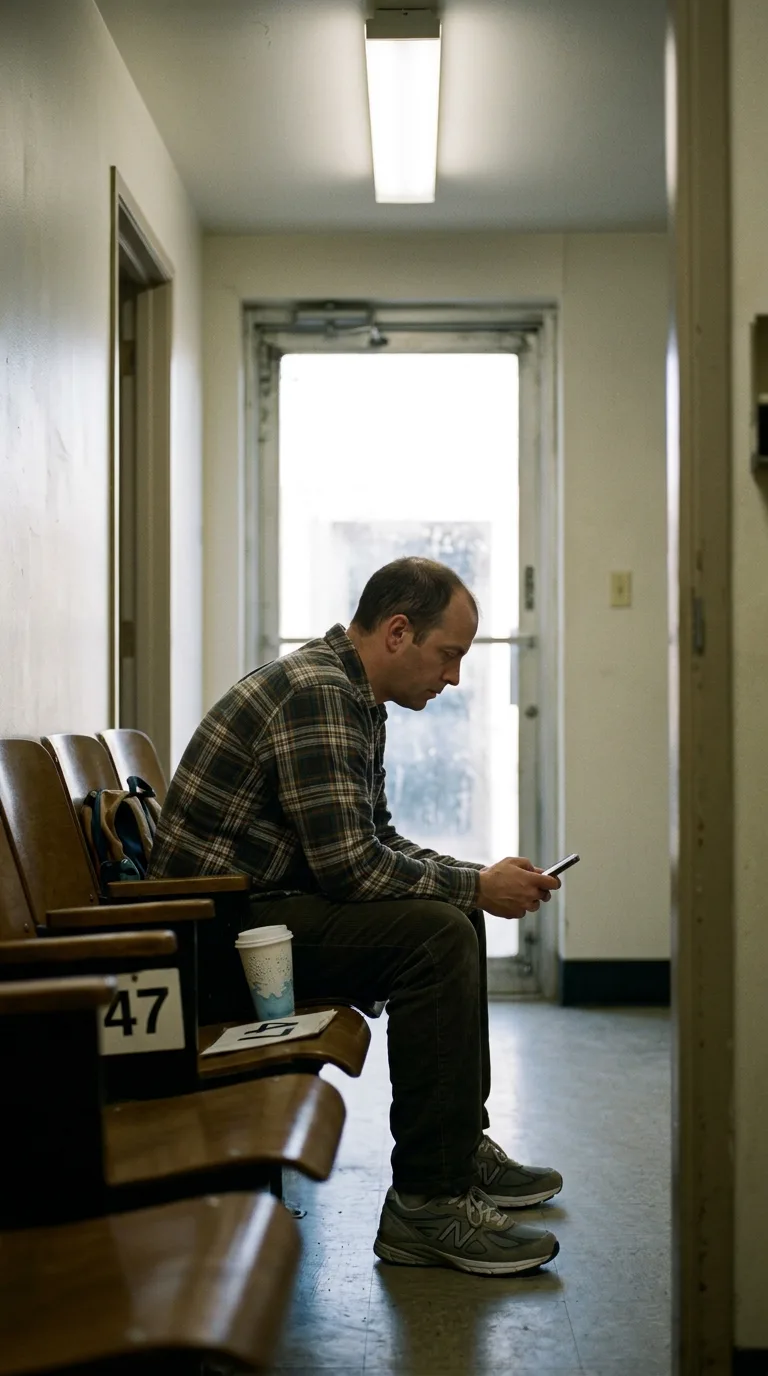
Rarest thing about him: In a waiting room — common, 1 in 77
Season 1seed 672728794 · engine v11
Character card
lineage KEPHG1
His body-swap story
@marcus.villaverde, wearing Gary Fenimore, rolled the wheel on and woke up as Patrick Novello, spent 3 minutes in him, then spun the wheel and woke up as Owen Sato
You are standing at the sink in Gary Fenimore's kitchen, rinsing a mug he has owned since before you took him, when you understand that you have to go back. It is not the mug. It is the light — high-desert Nevada morning, thin and yellow through a window with a crack of tape across one corner, and the sound of a school bus somewhere down the road, and the fact that in forty minutes you will have to be a man who runs an assembly and remembers four hundred names and pretends to care whether Kayleigh Torres gets her science fair poster board back. You have been him less than a minute of felt time and already the shape of the day is a coat that does not fit. Gary's shoulders ache in a specific, permanent way from thirty years of standing. His hazel eyes need the readers on the counter. None of that is why. The why is smaller and worse: you are already bored, and boredom in this line of work is not a small thing, it is the whole engine, and you have found out that you would rather be anyone becoming someone than anyone already being someone. You dry your hands — his hands — on the dish towel, and you go to the laptop in the den, and you open vessel.cards, and you spin.
The room changes before your body does. Fluorescent tube light, a strip of it, buzzing very faintly at a frequency Gary's ears never carried. A hallway. Wood-backed chairs bolted in a row. A door at the far end with a wire-glass window and grey daylight coming through it, wet-looking, city light. Your knee — his knee — is still moving, a small bounce that stops dead the instant you arrive, as if some other hand had been driving it and just let go of the pedal. There's a paper cup on the seat beside you, water gone room-temperature, a skin of dust already on it. Your hands are already moving without you: setting the cup down square on the little pull-out desk, folding themselves in your lap, one over the other. A number board across the hall clicks from 47 to 48. Somewhere behind you, a voice says a name — not yours, not anymore — and you do not look up.
The shirt is what starts it. Flannel, soft at the elbows from wear, and the second your shoulders settle into it there's a morning: a bedroom with the blinds half down, a woman's voice from the bathroom saying something about the dentist, and his hands — Patrick's hands, you have his name now, it came up out of the plaid like steam — buttoning this exact shirt in this exact order, top button skipped, always skipped, he never liked it snug at the throat. Rachel. Her name arrives with the smell of her shampoo still faintly on the collar, because she hugged him at the door, told him it would be fine, he'd get the next one, he always did eventually. There's love in that memory that isn't yours and it sits strange and real in your chest anyway, a whole year of her folded into one sleeve.
The jeans give you less, just weight — worn soft at the knee where he kneels to tie his shoes, a habit from some job he doesn't have anymore. The sneakers on your feet, New Balance, grey suede scuffed at the toe, hand back a hundred miles of walking: canvassing when the layoff first hit, resumes in a manila folder that got rain on it once outside an office on Court Street, the particular shame of a barista who used to be his student calling him Mr. Novello with a little too much surprise in her voice.
The phone in your palm is warm, a screen full of job listings he has already half-memorized and half-given-up-on. Touching it gives you the kitchen table three towns over in feeling, though it's really only two rooms from here in this new geography you don't have yet — laptop open, coffee going cold, Rachel's voice down the hall getting ready for a job that still exists. And under that, quieter, an ex — Danielle, gone eight months now, a fight about money that was really about fear, her voice saying you'll figure it out like that was an insult. He still checks, sometimes, whether she's online. He hasn't told Rachel that. Nobody has to know everything about a person for you to feel what he feels about it, which is a low, constant, private guilt, the kind that lives in the same place as the mole on his cheek — you can feel it now, a small raised warmth under two fingers when your hand drifts up without asking your permission, an old habit that isn't checking, exactly, just touching a thing that's always been there.
The chair under you is unforgiving wood, and the backs of your knees know it: he's been sitting here a while. Cracks assemble in your knuckles — his hands do that when he isn't paying attention to them, three fingers, a pause, then the other hand, a private percussion that has nothing to do with nerves and everything to do with forty-two years of having hands. The scalp under the strip light prickles where the hair has gone thin at the crown; his own palm, if it went up there, would know the exact border of it by feel, the way a man knows a doorway in the dark.
The board clicks again somewhere, though you're not watching it now. You look down instead, at your hands folded in your lap, unfamiliar and completely functional, faint white ghost-lines at two knuckles where they've been cracked ten thousand times, and you turn the right one over slowly like you're checking it came back correctly.
You look up into the wire-glass light at the end of the hall, and you say, quiet, mostly to yourself, "Forty-eight."