Gary Fenimore
Fictional. Generated by AI — not a real person, and no likeness of one is intended.
54, school principal in High-desert Nevada · rolled by @marcus.villaverde · card — no film
History
who has worn him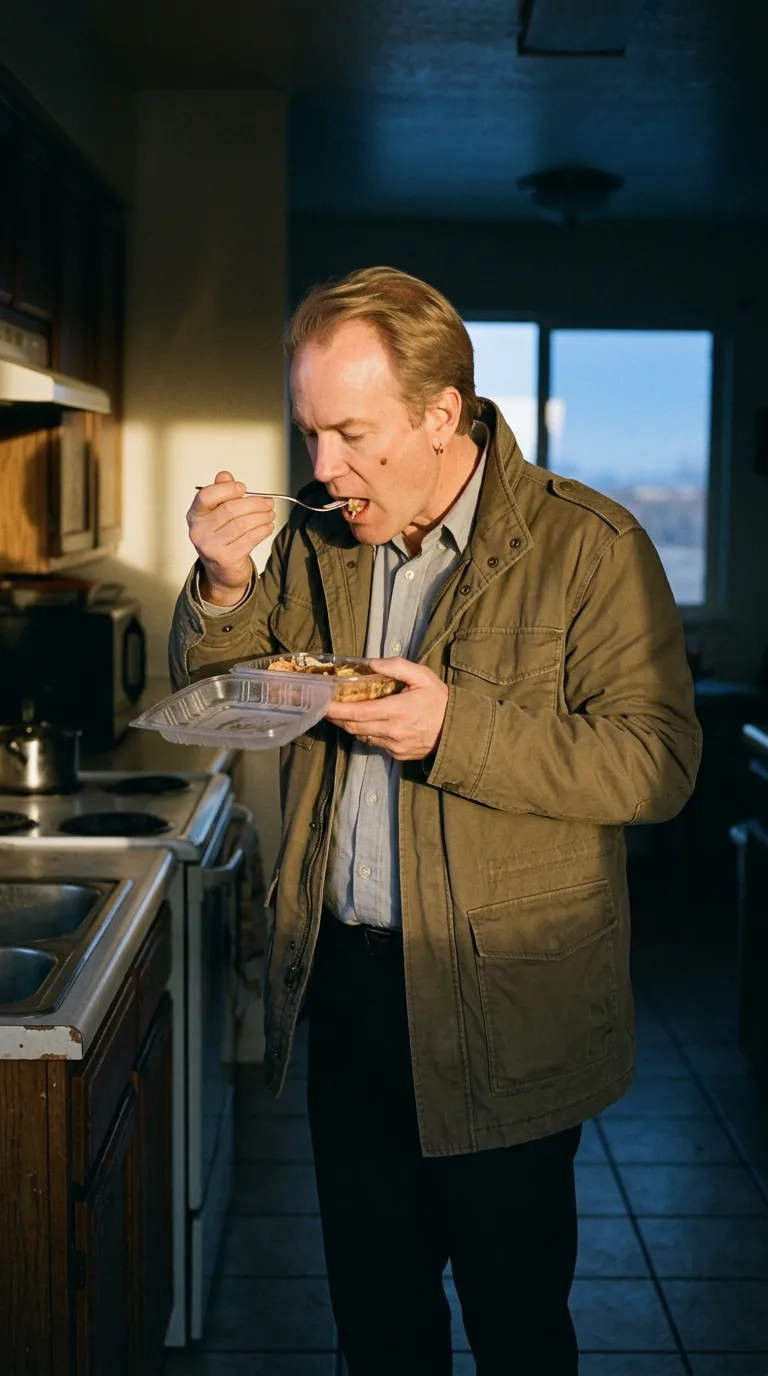
Rarest thing about him: Can't stand still — common, 1 in 51
Season 1seed 456602692 · engine v11
Character card
lineage KEPHG1
His body-swap story
@marcus.villaverde, wearing Anthony Delvecchio, rolled the wheel on and woke up as Gary Fenimore, spent under a minute in him, then spun the wheel and woke up as Patrick Novello
Anthony Delvecchio's hands won't sit still on the workbench, and that's the whole problem this morning. Eight minutes in this body and already you know its habits better than its owner ever did: the fingers drumming on the vise, the knee that won't stop bouncing on the stool. Twenty-five years old, compact, strong through the forearms in a way that felt good for about four minutes, and then it didn't, because this is a body that wants to be doing something with its hands every second and you have nothing for it to do. The shop smells like cut oil and cold concrete. Somebody's socket wrench is skittering across the floor from a shelf nobody touched. You spun once and got small and stubble and impatient, and it was fine, it was a body, but it isn't yours in the way that matters — it isn't new anymore. Eight minutes is long enough to know a thing all the way down. You want the part before that, the part where you don't know yet what you're standing in. You go back to the site with grease already under nails that aren't going to be yours in another second, and you spin.
The fork stops an inch from a mouth that used to be somebody else's decision and now is yours. It comes back down. Sets itself, with a small metal sound, against the rim of the plastic container. The coat is still on the shoulders — canvas, heavy, warm from a body that was moving until half a second ago — and under it the room is dim except where a hard low sun is coming sideways through a window with no curtain, throwing everything gold and blue at once. There's weight here that Anthony didn't have: broader through the chest, taller, the knees a little stiffer, an ache low in the back that says fifty-something before anything else does. You shrug the coat off. It slides down arms that know exactly how far the sink is without looking. You sit at a chair that creaks under real weight for the first time in a while, and you finish the container in even mouthfuls, looking at nothing in a window that's gone from black to pale blue while you weren't paying attention to it.
The fork is what starts it. Cheap steel, bent slightly at the tines from being used to pry things it shouldn't — a memory of frustration, minor, forgettable, and behind it a whole kitchen drawer of mismatched flatware from thrift stores in three different towns. Then the shirt. Cotton gone soft at the collar, and putting it on this morning comes back whole: the dark before the alarm, the particular ritual of dressing in a trailer where the heater clicks on grudgingly and the linoleum is cold enough to make you hop foot to foot at the sink. Button by button, sleeve by sleeve — the cuffs first because the left cufflink always catches on the hoop in his ear if he's not careful, a small practiced tilt of the head to avoid it. The sweater vest next, brown, warm, chosen because September mornings in this county come in cold and burn off fast. The tie knotted by feel, four times around before it sits right, muscle memory older than this job. The jacket last, and the lanyard over it after, keys against the sternum, a small percussive comfort he's had since his first year as a vice principal in Elko when he was thirty-one and terrified of the job and good at it anyway.
The mole on the cheek isn't felt so much as known — a thing his husband touches sometimes without meaning to, thumb grazing it in the dark, and that flash comes with a name, Curtis, and a face gone soft with sleep, and sixteen years of Tuesdays. A son, grown now, living in Reno, a voice on the phone that says *Dad* in a register nobody else gets. The job comes in through the keys themselves — a thousand mornings of hallways, lockers slamming like gunfire between periods, a hand on a kid's shoulder steering him out of a fight before it starts, the particular tired satisfaction of Fridays. The earring: a small rebellion at forty-five, Curtis laughing so hard he had to sit down. The wedding band: cheap gold, upgraded twice, worn thin now on the underside where it rides the knuckle. A smoking habit killed twelve years ago on a bet with a school nurse he still owes ten dollars. The body underneath all of it: fifty-four and starting to know it in the lower back and the left knee on stairs, but the shoulders still square, still capable, hands that have never once in their life been able to just rest — tapping now against the counter's edge, from muscle habit, before you've even decided to move them. Sagebrush out past the window, hard morning light coming in sideways and blue over the sink, a life built small and specific and entirely his, arriving in pieces through cloth and steel and bone that isn't yours.
You look down. The hands are already moving — thumb finding the wedding band, turning it once out of forty years of habit that belongs to somebody who isn't in here anymore. You lift your eyes to the black window, where the glass has gone from mirror to morning, and you say, to no one, in a voice that still surprises you with how deep it sits —
"Curtis, I'm gonna be late."
Nobody answers. Nobody's going to. You don't know yet how long you get to find that out.