Gary Molchan
Fictional. Generated by AI — not a real person, and no likeness of one is intended.
54, musician in Los Angeles · rolled by @gary.molchan · card — no film
History
who has worn him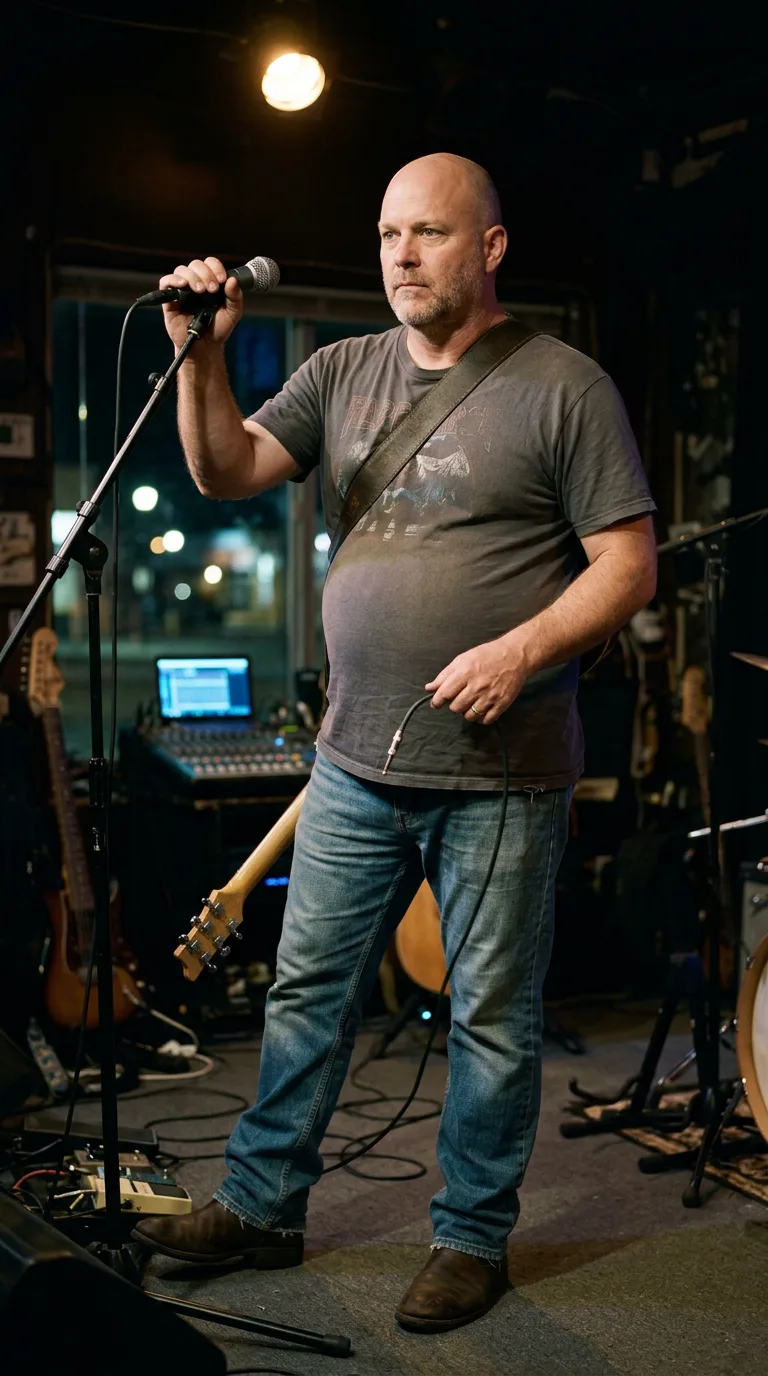
Rarest thing about him: Musician — uncommon, 1 in 596
Season 1seed 776931643 · engine v11
Character card
lineage KEPHG1
His body-swap story
@gary.molchan, wearing Ruben Salcedo, rolled the wheel on and woke up as Gary Molchan, spent 6 minutes in him, then spun the wheel and woke up as Anthony Morales
Ruben Salcedo's apartment smells like the cheese aisle even at three in the morning, even seventeen hours after the shift ended, and that is reason enough by itself. You stand in his kitchen not sleeping, working a hangnail with your teeth out of a habit that isn't even yours yet, and you think: small hands, small rooms, small everything. Nothing wrong with him. That's the trouble. Seventeen hours of a life so exactly sized to itself that wearing it feels like standing in a closet with the door shut. You didn't take him to keep him. You took him because he was there and the wheel was warm. Now the warmth's gone cold and the phone is unlocked and the page is already loaded, the wheel already spinning under your thumb before you've decided anything, which is its own kind of honesty.
It lands, and the floor is different under different feet.
You're not standing anymore, you're half-turned, weight rolling off one boot heel toward a mic stand, cable pinched between two fingers that are already reaching to seat it into a jack they've seated a thousand times. The motion goes wrong — thumb catches the barrel at the wrong angle, jack skids off true — and you feel the correction happen before you've chosen it, slow, deliberate, right. Then the next one. And the next. Ten cables, checked like a man defusing something, on hands that have not needed to check anything in years.
The shirt is what opens first — worn thin at the collar, gone soft the way old cotton goes, and under it the memory of a closet in a courtyard apartment, dry palm shadow crossing the blinds at five in the afternoon, pulling this exact shirt off a hanger because it was clean and it was there and it didn't matter, nothing about getting dressed for a Tuesday night ever mattered less. Flap Jack Records, the shirt says, a band that broke up when he was thirty and never once left him. He remembers buying it. He remembers the girl he was with when he bought it, not this year's ghost but an older one, before the one that mattered.
The strap comes next, worn diagonal, leather gone dark and glossy at the shoulder from twenty years of exact same friction, and it gives you a stage smaller than this one, a stage bigger than this one, a hundred stages collapsed into the single fact of weight pulling one shoulder down and the body correcting for it without asking. His hands know the neck of a bass without his eyes' help. His hands know a lot of things his life stopped needing.
The ring finger is bare and pale where a band used to sit, and that one comes slower, reluctant, like it doesn't want to be touched even by its own memory: a kitchen in Reseda, an argument that was really twelve arguments wearing one coat, her voice gone flat in the specific way that meant it was over before either of them said so. No kids to split, which they both, separately, at different volumes, called a mercy. He kept playing through all of it. He kept playing after. The gigs paid what gigs pay, which is not much, which is why the boots are the same boots from four years ago, resoled twice, and why the drink starts most nights around the same hour it starts tonight, because tonight is not different from other nights, tonight is only earlier.
The floor under his boots is the floor of this room, familiar down to the give in one particular board, dozens of soundchecks going back further than the mortgage he doesn't have anymore, and under it, quieter, older, a boy in a bedroom with a first guitar, before any of it went sideways, before it was work, back when it was only good.
None of it is dramatic. None of it needed to be. It's just a life laid down slow enough to wear smooth, and now you're standing in the smooth part of it, cable in hand, second one seated true.
You look at your hand. Blunt nails, bitten to the quick, a thin white ring of skin where a promise used to sit. You turn it over once like you're checking it's really yours.
"Okay," you say, to no one, to the empty room, to the mic that's still live. "Let's try that again."
Somewhere back in Pittsburgh a smaller man is gone from a kitchen that still smells like cheese, and here, tonight, for however long tonight turns out to be, you are fifty-four and bald and divorced and a little bit drunk before the first song, and none of that is going anywhere soon — except that it might, the instant the wanting turns over again, and nobody, least of all you, knows when that will be.