Ruben Escalante
Fictional. Generated by AI — not a real person, and no likeness of one is intended.
63, miner in Rural Texas · rolled by @colin.hasbrook · card — no film
History
who has worn him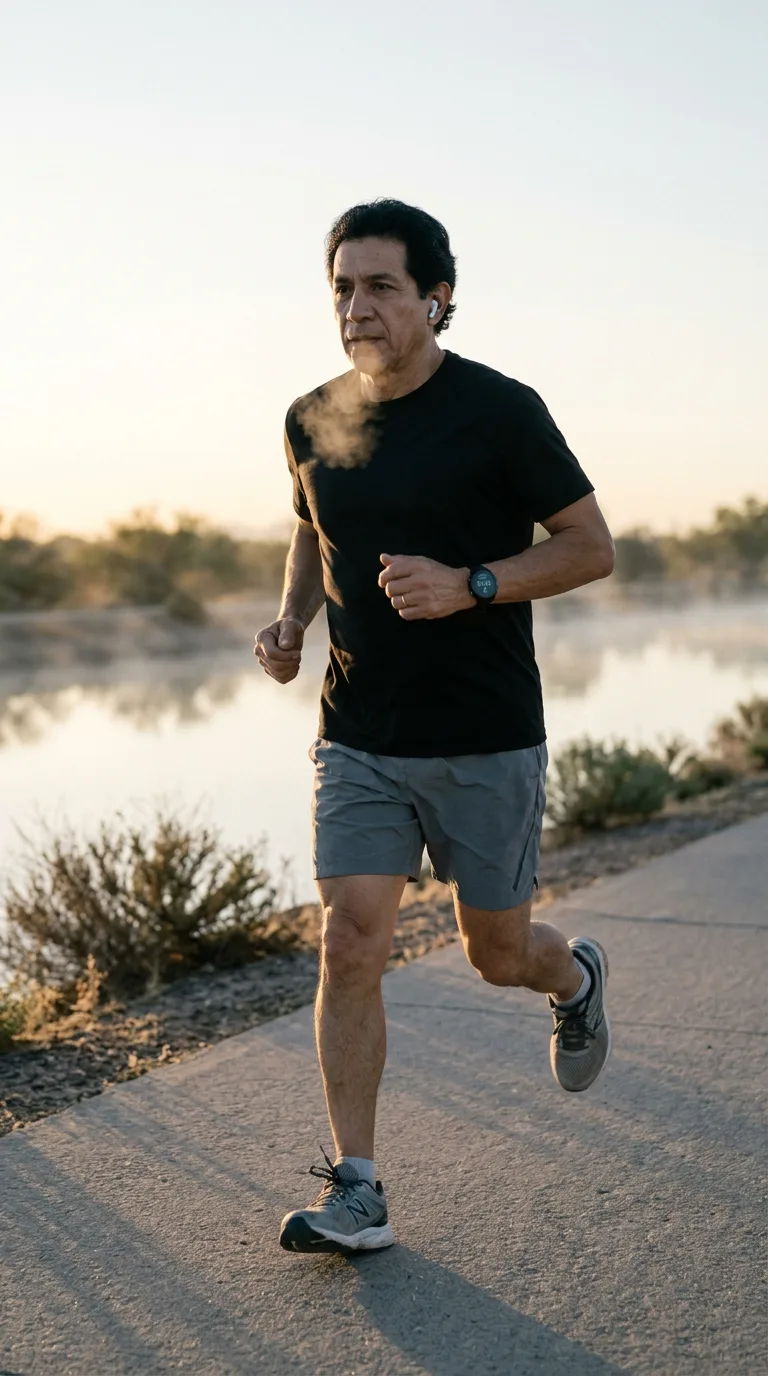
Rarest thing about him: Pulls at his beard — epic, 1 in 208
Season 0seed 1109910221 · engine v10
Character card
lineage 2NZHHJ
His body-swap story
@colin.hasbrook, wearing Dennis Farraday, rolled the wheel on and woke up as Ruben Escalante, spent under a minute in him, then spun the wheel and woke up as Paul Kittredge
Dennis Farraday's apartment is quiet the way empty rooms are quiet, and you have been him for less than a minute and already you know you don't want the rest of the evening in this body. Bald, soft in the middle in a way that isn't fat exactly, just unused, standing in a kitchen with a view of a bridge nobody in New York looks at twice. Sixty-five years old and retired, which sounds like a reward until you're actually wearing it: knees that announce themselves, a stillness in the apartment that isn't peace, it's just nothing happening. You spun this one last time out of curiosity about how the money lives. You already know the answer. It lives quietly and it lives alone. That's enough of that. You go back to the site because a good body is not the same as an interesting one, and Dennis Farraday, sixty seconds in, is already a hallway you've seen the end of. You open the laptop that is his and not yours, and you spin.
The path tips. Not you — him, whoever he is now, a half-beat where a foot that should have landed doesn't quite, and then it does, on the other side of itself, and the run goes on like nothing happened, because as far as the morning is concerned nothing did. You are moving. That's the first thing, before you're anything else — legs already going, lungs already working, cold air with a rim of dawn burning off it, breath standing in front of your face in a small cloud that wasn't there a second ago in New York because in New York it's already evening and warm and none of that matters now because now is here, on a canal path, an earbud sitting warm in your ear playing something with a beat you didn't choose. A watch on the wrist buzzes against skin. Mile four, it thinks. It has never seen this stride before and it doesn't know that either.
The shirt is what gives you the first of it — black cotton, damp already at the chest, and it comes with a feeling before it comes with a memory: pride, plain and physical, the pride of a body that still does what you ask of it at sixty-three. Then the memory itself, small: a mirror in a bedroom before light, pulling this same shirt down over a chest that has spent thirty years underground and still, still, look at it. Ruben. The name arrives with the shirt, the way his name always does, sewn into the label of everything he owns without him ever having asked for it to be. Ruben Escalante, and the shoes next, gray and broken in exactly right, and with them the whole ritual of laces double-knotted because a knot that comes loose four miles out on caliche gravel is a fall waiting to happen, and Ruben does not fall, not out here, not down there, not anywhere he can help it.
The watch keeps feeding you afternoons that were mornings. A garage with a pegboard of tools he built himself over twenty years, each one outlined in marker so nothing goes missing and nothing has, not once. A wife's voice — Marisol — saying his name the way she's said it since before either of them had gray in anything, not a complaint in it, just a fact, *Ruben, breakfast*, and the warmth of that lands somewhere that isn't quite yours and aches anyway. A daughter, grown, a photograph of her at a graduation he paid for in cash counted out on a kitchen table, bill by bill, over three years. And under that, quieter, guiltier, a woman younger than Marisol who is not in the pegboard garage or the kitchen — a handful of months last year that he has folded up small and doesn't look at directly, the way you don't look at the sun, and it still comes anyway, tangled in with everything else the shirt is telling you, because memory doesn't sort itself by what a man wants kept.
The body underneath all of it is honest in a way the memories aren't: hips that carry thirty years of stooped tunnels, a low steady hum behind the sternum that is the blood pressure pills he takes with coffee and sometimes forgets, hands that already know — even now, even running — how to close around a jackleg drill, how to find handholds in dark by feel alone. Fingers that, left alone a second, drift up toward a beard that isn't there anymore, an old habit outliving the beard by a year, and finding smooth jaw instead, and not stopping for it. The dyed hair, too black, too even, a small vanity he'd deny to anyone who asked — a barber in town who does it every six weeks and never mentions it either. The cage at the pit mouth, the yellow hardhat, the taste of dust that never fully leaves the back of the throat no matter how far out here on a canal path a man runs to get away from it, this last run before the truck, before the harness, before the four hundred meters down into rock that doesn't care whose name is on the ring around your finger.
You look down and it's his hand, mid-swing, wedding band catching the early light, and for one full stride you just watch it move like it belongs to somebody you're introducing yourself to.
"Okay," you say, out loud, to nobody, breath fogging, pace already finding itself again under you. "Okay, Ruben."
The watch buzzes once more, a split it has never seen, and you keep running, not knowing yet how far this one goes.