Dennis Farraday
Fictional. Generated by AI — not a real person, and no likeness of one is intended.
65, retired in New York · rolled by @colin.hasbrook · card — no film
History
who has worn him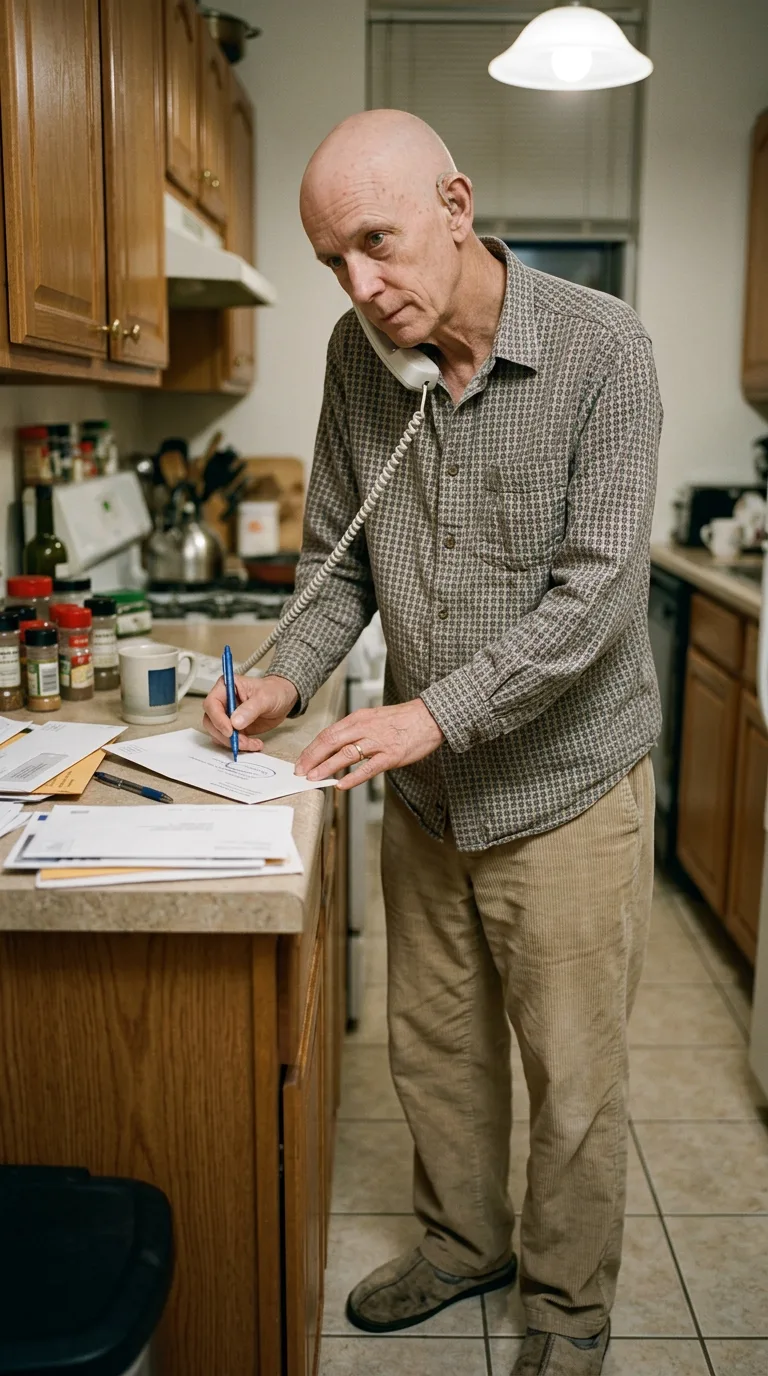
Rarest thing about him: Hearing loss, wears aids — rare, 1 in 55
Season 0seed 1778956950 · engine v10
Character card
lineage 2NZHHJ
His body-swap story
@colin.hasbrook, wearing Roger Standish, rolled the wheel on and woke up as Dennis Farraday, spent under a minute in him, then spun the wheel and woke up as Ruben Escalante
You are Roger Standish for less than a minute, and already you know you are not staying. The cab's still got that pine-tree smell baked into the vents, radio crackling dispatch, your gut sitting heavy from a gas station burrito eaten too fast in the last body's mouth. Fifty-two years on this chassis, tow truck yellow light turning lazy circles behind your head, and here's the thing nobody tells you about a body that works fine: it's boring. Nothing wrong with Roger. Nothing interesting either. You feel the wanting come up in your chest like a hiccup, uninvited, familiar as breathing now, two hundred and eleven times familiar. You open the laptop balanced on the passenger seat, the site already loaded, the wheel already spinning in your head before your thumb touches it. You don't say why. You never do. You just watch the colors blur.
The kitchen arrives around you mid-loop of hold music, the same eight bars closing back on themselves, and your shoulder — his shoulder — drops the phone into a waiting hand like it's done this ten thousand times. The pen stops on a two. Doesn't finish the circle. Somewhere under the fluorescent hood-light a coffee mug says nothing in particular on its side and the shirt against your back is soft in a way Roger's flannel never was, checkered, brushed cotton, second-day wear. Outside the window it's dark already, streetlamp orange leaking through the blinds — evening here, though your last body was drinking afternoon light in Arizona. Different hour, same breath.
The shirt gives it first. Buttons known by feel, not by looking — his fingers finding the collar this morning without checking, an old motion, a body that dressed itself for forty years while listening for a wife's voice from the next room and then, for the last several years, listening for nothing, dressing in a quiet he still isn't used to. A flash: putting this shirt on today, sleeve first, right arm, always right arm first since some Navy habit or his father's, tucking the hem in one-handed, the aids in his ears clicking faintly as he settled them, adjusting the little wheel behind the left one with a thumbnail out of habit before he even checked his hearing worked. A whole morning comes with it — coffee on the porch, mid-morning sun, the paper he doesn't read anymore just holds, a neighbor's dog barking at nothing, the specific ache in his lower back when he stood from the porch chair, the specific looseness in his knees that never used to be there.
The pen in his hand brings the rest. Circling a reference number on a hold call that's been forty minutes and counting, some insurance thing, some estate thing — three kids now grown and calling less than he'd like, one of them handling money that used to be his to handle. His hands won't sit still even holding a pen; they click it, turn it, tap it against the counter edge in a rhythm that's older than any of his children, a habit his late wife used to reach over and still with her own hand without a word. The wedding band on the left hand is warm from his skin, worn thin at the bottom from decades of exactly that resting position against countertops, steering wheels, her shoulder. She's four years gone and he still turns the ring sometimes like checking a pulse. There was someone before her too — a girlfriend decades back, a name that surfaces with a specific kind of ache, not grief, something more like a door he never fully closed, a woman he still thinks of on certain slow evenings for reasons he's stopped examining.
The counter under his palm is cool tile-laminate, familiar as his own name, this kitchen the one he's cooked ten thousand dinners in, alone now more than he ever expected to be at sixty-five. The spice jars, the pot on the stove nobody's using tonight, all of it his, all of it known. His body: skinny fat, soft where it used to be flat, strong still in the forearms from thirty years of manual work before retirement let him go soft everywhere else, knees that complain on stairs, a bald head he stopped mourning years ago. The green eyes that were watching a reference number are still open, still pointed at the same paper, and nothing in them says anything happened.
You look down at the hand holding the pen — his hand, your hand now, ring dulled gold, knuckles a little swollen — and you turn it over slow like checking it's real.
"Huh," you say, to the empty kitchen, to the phone still looping its hold music against your ear, "wrong number I guess," and you hang it up, and you don't put the pen down.