Roger Standish
Fictional. Generated by AI — not a real person, and no likeness of one is intended.
52, tow truck driver in Phoenix · rolled by @colin.hasbrook · card — no film
History
who has worn him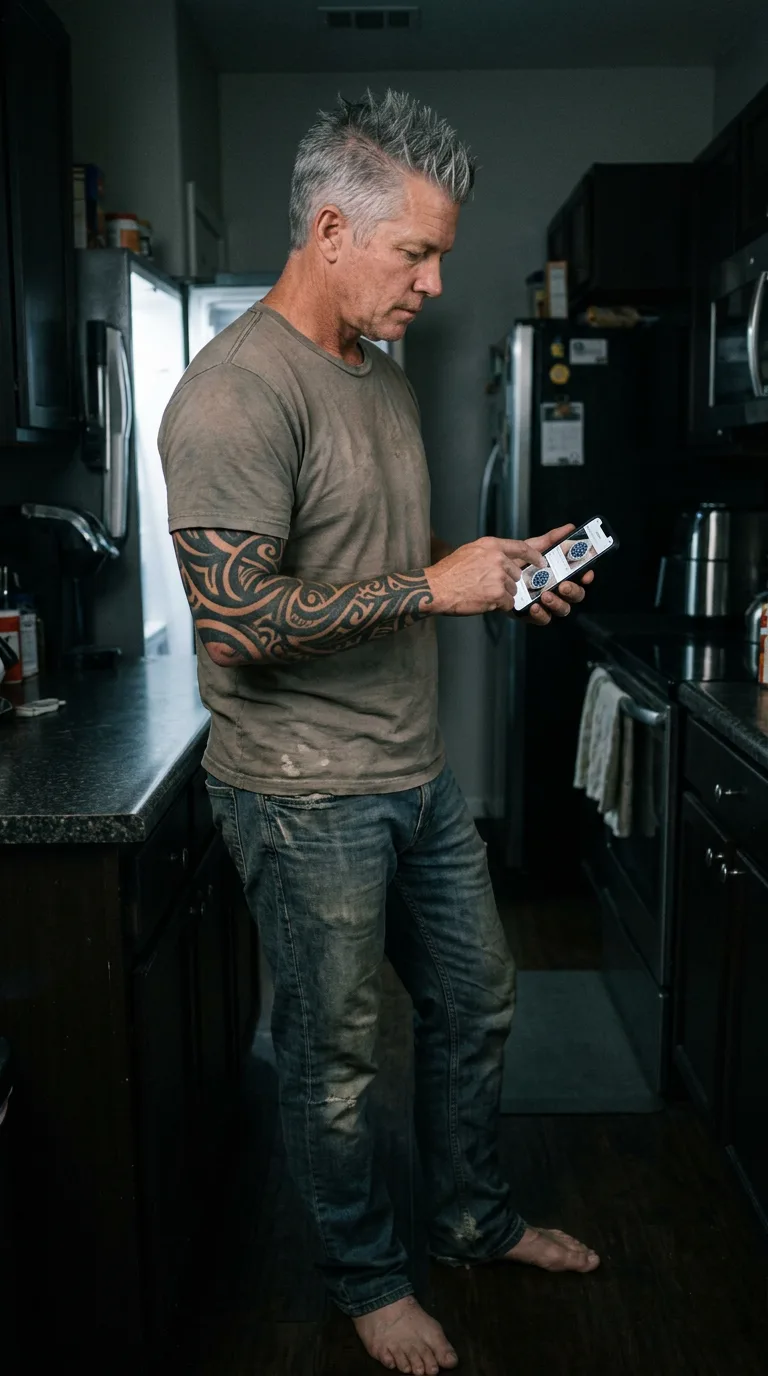
Rarest thing about him: Full sleeve — epic, 1 in 78
Season 0seed 1242182058 · engine v10
Character card
lineage 2NZHHJ
His body-swap story
@colin.hasbrook, wearing Marcus Ibeh, rolled the wheel on and woke up as Roger Standish, spent under a minute in him, then spun the wheel and woke up as Dennis Farraday
Marcus Ibeh's office chair is the wrong height for you, and it has been for less than a minute of feeling it, though the memory of ever being anyone else is already thinning at the edges the way a dream thins on waking. You are twenty-four in this one, athletic, mid-level, a lanyard still around a neck that isn't cooperating with the tie today. There's a spreadsheet open behind the phone in your lap. You spun into this man last time and by the count you keep for yourself alone, this is spin two hundred and eleven, and you have been him for the length of a bathroom break he is not going to remember taking. That's the thing nobody warns you about the wheel: the new one comes in so clean, so whole, that within a day you start hunting the edges of him for something you haven't already worn. Twenty-three, Black, athletic — good hands, quick mouth in meetings, a life with promotion in it — and none of that is boredom exactly. It's more that you have been careerists and soldiers and one priest and you already know, four minutes into being him, the shape this one is going to hold. Predictable is the word you'd use if anyone asked. Nobody asks. You open the site on his phone, thumb steady, El Paso office light coming through blinds behind you, and Marcus Ibeh's hand — his hand, still, for one more second — taps spin.
The kitchen is dark and it closes around you mid-breath, someone else's breath, deeper in the chest than the one you just had. A phone is heavy and warm in a hand that is not the hand you had four seconds and one time zone ago. The thumb — this thumb, blunt, a white ring-groove worn into the base of it — is already lifting off the glass where it had been dragging down a page of watches. A price sits there a second longer than it should: four figures, an oiled steel case, a strap he'll never touch. The hand turns the phone face-down on the counter without deciding to. It does not go back for it.
The kitchen smell arrives first — old coffee, a whiff of citrus dish soap, the particular mustiness of a refrigerator gasket that needs replacing — and with it, faint as a radio in another room, comes a whole shift: the flatbed's hydraulics whining down under a stalled minivan on the 10, three a.m. cold coming up off the asphalt, headlights strobing past close enough to move the hair on his arms. That's not tonight, but it's close, it's recent, it's under everything. Because his day runs backward from most men's — you feel that now in how loose and low the light sits, an afternoon that is his morning, his body still humming with the particular unslept ache of a man who came off a graveyard tow route six hours ago and hasn't caught up on it since.
The T-shirt against your back gives you the rest before you ask for it. Cotton gone soft with washing, a little tight over shoulders that carry rope and chain for a living — and the memory surfaces of putting it on: standing in a bedroom that used to have two people's clothes in the closet and now only has his, pulling the shirt over his head one-armed because the other hand was holding a insulin pen he'd forgot to put away, cursing mildly, Roger, not at anyone, just at the morning. Fifty-two years in this frame and you feel every one of them settle — a lower back that complains getting out of the truck cab, a right shoulder that's tighter than the left from decades of hauling chain off the same hook, feet gone flat and wide and permanently a little sore. The sleeve on his arm prickles under your notice — not pain, just presence, black tribal ink laid down for a reason you don't get handed, only the fact of sitting in some shop chair in his thirties while it was done, gritting through it, a version of him that still thought his marriage was going to hold.
The wedding band is gone but the tan line isn't, and touching it — his own finger finding his own finger, an old habit his hand does without him — opens a wider, sadder room: a woman's voice at a kitchen table not unlike this one, papers between them, three kids' names on a custody schedule that never quite balanced, the sound of a car pulling out of a driveway for the last time as a married man's car. He doesn't hate her. That's the thing that comes through clearest, unwanted and plain — he never got around to hating her, he just got around to being alone, and he built a life out of chains and hooks and a phone he scrolls at midnight-that-is-afternoon, pricing things he tells himself he's only looking at.
A pack of cigarettes sits by the sink, worn soft at the corner from his back pocket, and touching air near it — not even touching it, just the throat's memory of the taste — brings up church. Sunday mornings, a building with bad carpet and good singing, a decision made sober fifteen years ago on somebody else's advice and kept since out of something between faith and spite. He does not drink. He has never told anyone that the diabetes is half the reason and half isn't, that some mornings his hands shake before the meter tells him why, that he keeps working nights because nights don't ask him to explain himself to anyone at a desk.
Your — his — thumb is still resting on the counter's edge where the phone landed. The whole kitchen holds still around you both, or around whichever of you is now doing the holding.
You lift the hand up in front of your face, turn it, watch the tribal ink shift with the tendons the way it must have a thousand times without him ever once looking at it like this — a stranger's furniture, worn-in and warm.
"Didn't need that watch anyway," you say, out loud, to no one, in a voice ten years older and one continent further west than the one you had a breath ago, and you don't know yet — you never know — how long the gravel yard and the flatbed and the three kids who don't call enough are going to be the only life you've got.