Paul Kittredge
Fictional. Generated by AI — not a real person, and no likeness of one is intended.
46, refrigeration technician in Coastal Maine · rolled by @colin.hasbrook · card — no film
History
who has worn him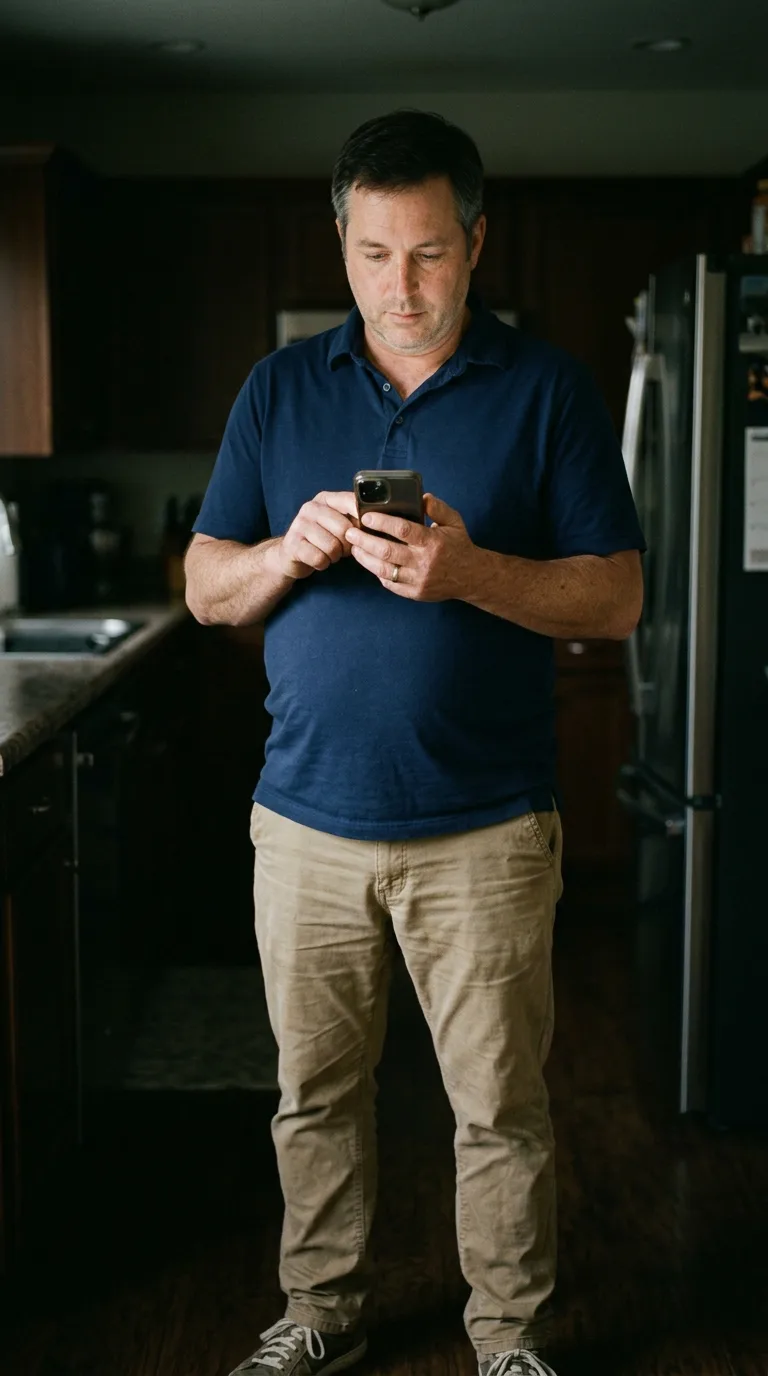
Rarest thing about him: Covers the gray — rare, 1 in 10
Season 0seed 928030049 · engine v10
Character card
lineage 2NZHHJ
His body-swap story
@colin.hasbrook, wearing Ruben Escalante, rolled the wheel on and woke up as Paul Kittredge, spent under a minute in him, then spun the wheel and woke up as Douglas Petrakis
The heat in this borrowed body never lets up, even at two in the afternoon, even standing still in a doorway that smells like diesel and caliche dust. Sixty-three years in these knees. The mine radio on the hip crackles somebody else's shift change, and you are so tired of the ache in this particular back that you stop pretending you're going to finish out the day in it. Ruben Escalante has been a good body — strong through the shoulders, steady hands, a face the crew trusts — but you have worn him less than a minute by his own clock and already the wanting has turned over in you like an engine catching. Not boredom, exactly. Hunger's too honest a word, so you don't reach for it. You thumb the phone in his shirt pocket, pull up the site, watch the wheel bloom on the cracked screen, and you spin because you always spin, because two hundred and thirteen men were never going to be enough and there was no reason this would be two hundred and fourteen.
The wheel stops.
You are standing in a dark kitchen with your thumb lifted off a phone.
The weight arrives all at once — heavier through the middle than Ruben was, softer, a low persistent throb behind the eyes that you'll come to understand is blood pressure doing what it does at the end of a long day. Green eyes adjusting to a kitchen gone the color of dusk. A refrigerator humming against your hip. The phone goes face-down on the granite under your own hand, and the hand — thick-knuckled, a plain gold band snug on the fourth finger — does not go back for it.
The polo shirt is the first thing that speaks. Cotton gone soft with washing, a collar that sits a little crooked because he always misses the second button when he's tired, and tired is exactly what he was ten minutes ago, driving home past the co-op with the truck heater roaring and the radio off because his ears were still ringing from a compressor that wouldn't quiet down. The shirt gives you the drive home in one long unbroken pull — Route 1 going quiet and blue, the smell of brine coming in through a cracked window, a lobster boat's running lights out past the breakwater doing nothing but existing, beautiful and unasked-for. His name is Paul. Paul Kittredge. Thirty-one years in this town, twenty-two of them fixing other people's cold.
The khakis know the crouch of a walk-in cooler, knees against a compressor housing, breath fogging white while sweat runs down his spine in July. They know the specific stubbornness of a bad capacitor at eight in the morning with a produce manager standing over him asking when, exactly, when. His hands — and here it comes strong, unbidden, the way his hands already know the weight of a manifold gauge before his mind has caught up, the particular twist that seats a fitting without stripping it — his hands have done this since he was twenty-four and his father-in-law, who is dead now, three years dead, put a wrench in them and said *this'll keep food on a table longer than lobstering will.* He was right. It kept food on a table and paid for a modest house gone silver-shingled with salt weather, and a girl now nineteen and away at school in Orono who calls on Sundays, and a marriage that has had its long cold spells and thawed out anyway, because that's apparently what a marriage does if you let it, if you keep showing up for it the way you show up for a service call at eleven at night in February.
The wedding band gives you Carol. Not a flood — a single afternoon, their kitchen this exact kitchen, ten years younger, both of them laughing about something so small neither of them could tell you now what it was. He loves her in the unspectacular way of a man who quit drinking eleven years ago because she asked him to once, quietly, and never asked again because she never had to.
The phone under your palm gives you the last thing, the thing that sent this whole body still in the dark: a chronograph, stainless, more than his truck is worth, glowing on a screen he shouldn't have opened. Not longing exactly. Just the particular ordinary grief of a man who is doing well — house paid down, savings that would surprise you, more put away than most folks in this town would guess — and who still stands in his own kitchen at the end of a long day doing arithmetic against a number that will never make sense no matter how you turn it. His jaw was already going tight with that math when you arrived. Freckles across his nose from thirty summers of sun on the water, a faint permanent flush at the temples where the dye doesn't quite reach the gray. A pen in his other pocket that his fingers already want, out of habit, to click.
You look down at the hand on the counter. Turn it. The ring catches what's left of the light coming off the water outside the window, and for a second you just watch it move like it belongs to somebody you're being introduced to.
Then you lift your eyes to where the phone's camera would be, if there were one, and you say, to no one, in his voice, with his ordinary tired evening still sitting in his throat —
"Guess I'm not buying that watch after all."