Ruben Castellanos
Fictional. Generated by AI — not a real person, and no likeness of one is intended.
47, social worker in Nashville · rolled by @brian.okafor.lynch · card — no film
History
who has worn him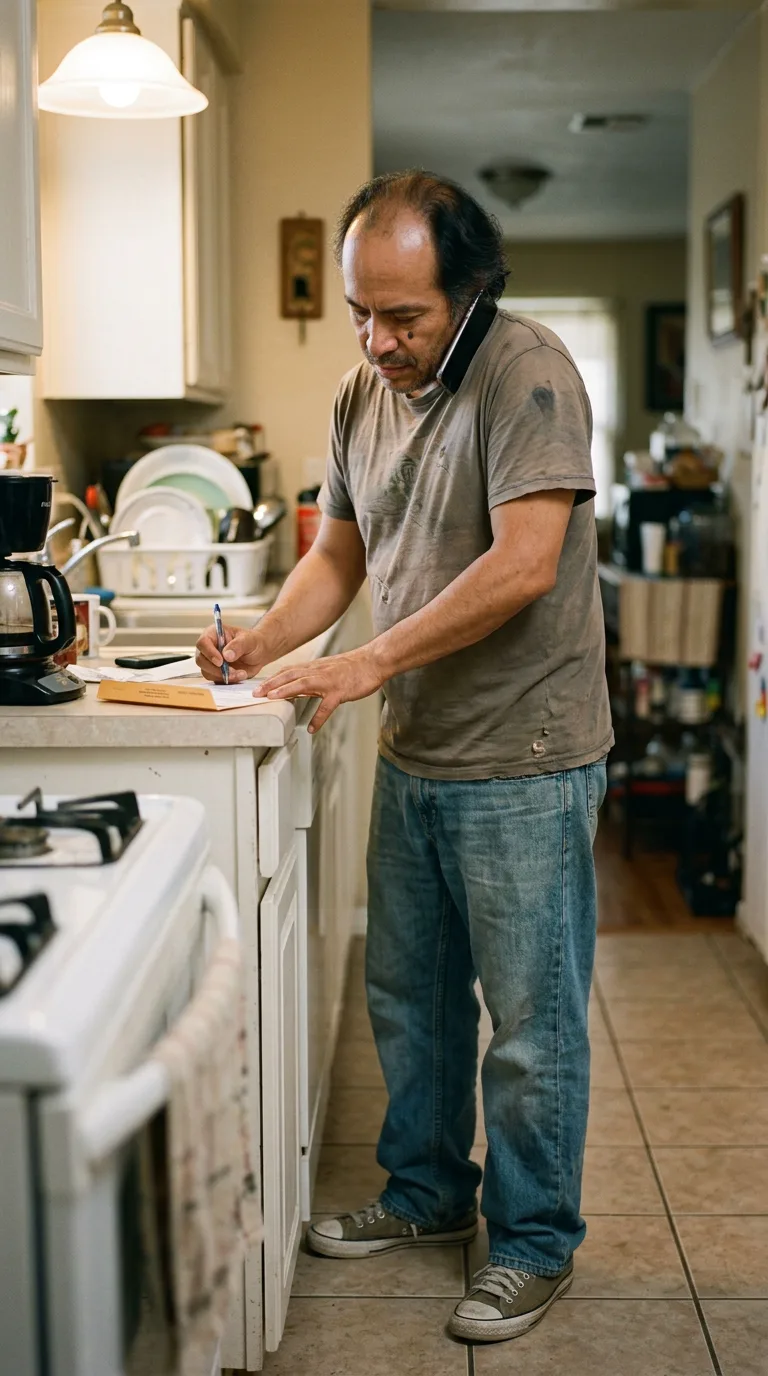
Rarest thing about him: Flips a lighter — rare, 1 in 51
Season 0seed 1527782257 · engine v10
Character card
lineage 79CGDV
His body-swap story
@brian.okafor.lynch, wearing Malik Freeman, rolled the wheel on and woke up as Ruben Castellanos, spent under a minute in him, then spun the wheel and woke up as Wade Youngblood
Eighteen and skinny in a white coat pocket that still smells like somebody else's cologne, you stand in the pharmacy stockroom at close and count Malik Freeman's hands twice, because they still surprise you — thin wrists, a chewed thumbnail, a pulse you didn't ask for. You've been him fifty-one seconds. It should be enough. It has never once been enough. The wanting comes back the way it always does, quiet as a second heartbeat, and you are already reaching for the phone in his — your — pocket, already thumbing to the browser you bookmarked under a fake name weeks and twenty-nine bodies ago. Somewhere behind Malik's eyes there is a version of you that used to feel bad about this part. That version spun himself out of existence a long time back. You open vessel.cards. The wheel loads. You do not think of it as trading Malik away, because you never do — you think of it as adding a room to a house that never runs out of rooms. You pay. You spin. Chicago is asleep around a boy who is about to not be here anymore, and you don't even watch the wheel land.
You arrive mid-breath, standing, weight already balanced on it — the particular tiredness of a man on his feet since before dawn, kitchen tile cool through thin socks, phone wedged hard enough into the meat of your shoulder to ache. Hold music loops back to its first bar, tinny and cheerful, some string arrangement of a song you'll never place. Your hand — his hand, callused across the pen-side knuckle, a burn-shine of old grease near the thumb — drops the phone into your palm mid-loop like it's done this a thousand times, because it has. The pen is still touching paper. Second digit of a reference number, ink slightly blotted where it waited too long in one place. It does not move again. You are standing in a kitchen that is not yours, in an hour that is not yours, holding a call that has been on hold for longer than you've existed inside this man.
The envelope comes first, because it's under your fingers — county letterhead, a case number, and with it a flood of fluorescent-lit hallways, a supervisor named Denise who says *just get through the queue, Ruben* like a woman who has said it every day for a decade. You are, for one full second, exhausted in a way that has nothing to do with tonight and everything to do with eleven years of it. Then the shirt. Thin cotton, a coffee ring gone permanent near the hem, and it gives you the morning you put it on — except it wasn't morning at all, it was two a.m. and you were already dressed because you never fully undressed, dozing upright in the recliner with the TV going so the apnea machine's hiss wouldn't be the only sound in the house, waking at the second alarm because the first one is a lie you tell yourself. Tenant emergency at the Dickerson Street complex — a pipe, a lockout, a woman's kid running a fever and no ride — and you, Ruben, pulling on jeans still warm from the dryer at some ungodly hour because that's the job, that's always been the job, nights and weekends and whatever's left of you after.
The mole under your fingers when you touch your own cheek without meaning to — that's not memory, that's just his face, but touching it anyway loosens something: a woman's voice, years back, tracing it with her thumb and saying *don't you dare get that looked at, I like it,* and her name arrives soft and singular — Carla — gone eight years now, and still the person he calls, some nights, just to hear how the kids sounded that day, because she raised them mostly alone and he sends what he can and it is never, ever enough, and he knows it, and he has made a kind of peace with knowing it that isn't peace so much as scar tissue. Two kids. A boy who plays trumpet badly and beautifully. A girl who calls him *Papi* on the phone and *Ruben* to her friends, which he pretends not to notice hurts.
Your body: forty-seven and thick through the middle in the way of a man who eats standing up, feet flat and permanently a little sore, lower back a low hum of complaint from years of hauling banker's boxes of case files up walkways with no elevator. Strong hands, though — the strength of use, not gym — hands that know a stripped screw, a stuck window latch, the exact grip a lighter wants even though there's nothing to light, thumb already twitching toward a pocket that in this kitchen holds only a pen. Faint gray stipple of stubble your fingers find at the jaw, missed this morning in the two a.m. dark. Somewhere behind your sternum a machine's absence — you can feel, obscurely, that some nights a mask presses there and hisses you through the hours, and that tonight there was none, because tonight there was a phone call instead of sleep.
The counter under your palm is cold and a little tacky, dish soap gone dry. Kids' drawings taped crooked to the fridge in the hallway light. A single lamp on over the sink. The person on the other end of the hold music will come on eventually and ask for a reference number and you, or he, or whoever answers, will have circled a two and stopped.
You look at your hands. Not thin and quick like Malik's — broad, older, a small burn-scar shine you didn't earn and can't explain, a pen held loose in fingers that already know sixty other things to do with themselves. You turn the right one over slowly, like you're checking it's attached.
"Bueno," you say, to no one, to the phone, to the lamp, "otra vez."
Then you lift your eyes to the middle distance of a kitchen that isn't yours yet, and hold there, because thirty spins in you already know better than to promise this one anything.