Malik Freeman
Fictional. Generated by AI — not a real person, and no likeness of one is intended.
18, pharmacist in Chicago · rolled by @brian.okafor.lynch · card — no film
History
who has worn him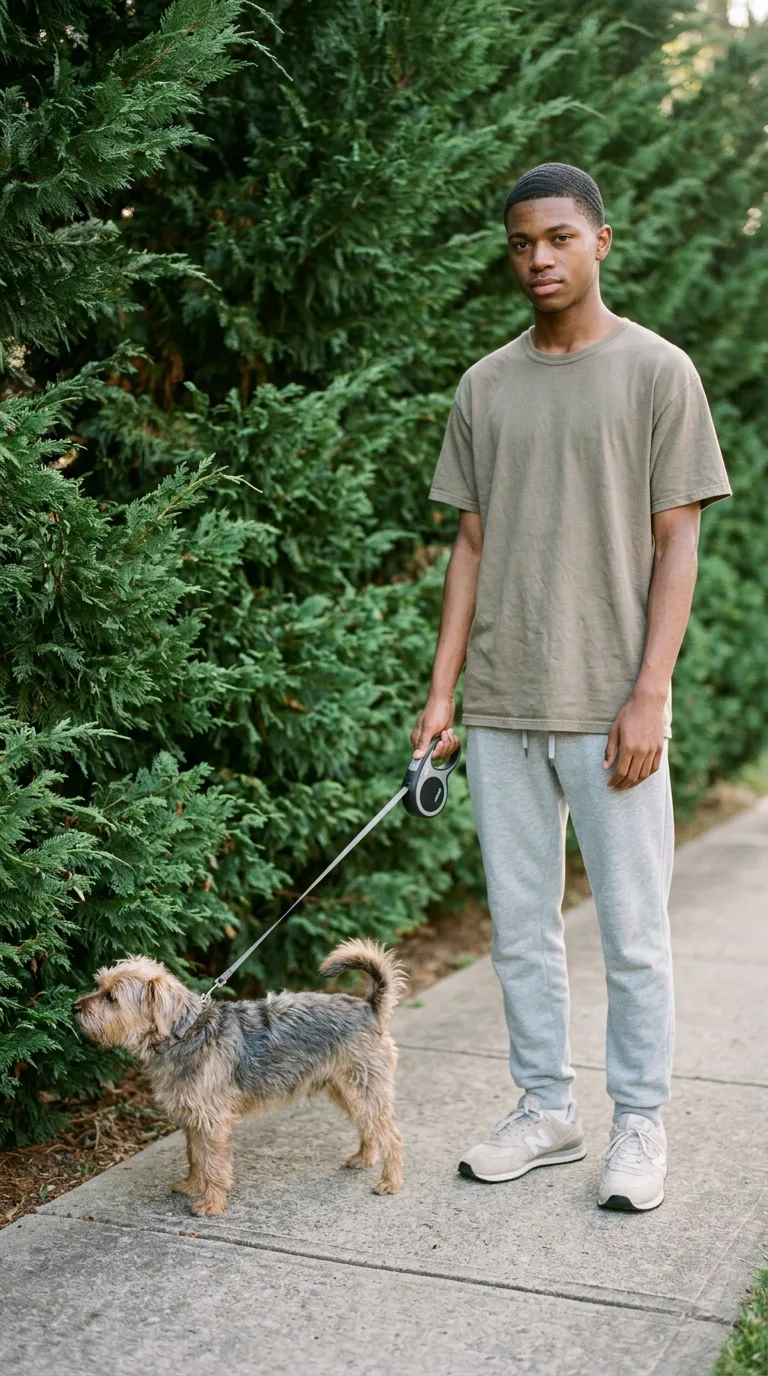
Rarest thing about him: A tremor in the hands — epic, 1 in 504
Season 0seed 905156888 · engine v10
Character card
lineage 79CGDV
His body-swap story
@brian.okafor.lynch, wearing Denny Okafune, rolled the wheel on and woke up as Malik Freeman, spent under a minute in him, then spun the wheel and woke up as Ruben Castellanos
The garage smells like diesel and coffee going cold in the cupholder, and your hands — his hands, sixty-five years of them, thick-knuckled, one nail gone permanently blue-black from a hood that fell wrong — are shaking a little around the phone. Just a minute in this one. A minute of gray dawn through the office window, the tow truck idling outside, some kid's Corolla still hooked up behind it from an overnight call. You didn't even get his name before you flinched off. You know your own name for him doesn't matter, because you're already thumbing back to the wheel, because the itch that sent you here in the first place — thirty years of driving trucks in some form, feeling every year of it in your lower back, tasting metal every morning — didn't go away just because you spun. It never does right away. You want something with no ache in it yet. Something that hasn't had the time to hurt.
You spin.
The leash stops being loose in your hand.
The night comes down on you like a lid — not evening, not dusk, full black, a suburban street lit orange under a sodium lamp, hedges close and smelling of green and dog and cold. The weight is wrong in the good way: light, young, a body that has no idea what an ache is yet. Eighteen years old standing up through your spine like a rumor. There's a dog at the end of the leash, some scruffy terrier mutt, sniffing a hedge like it has all the time in the world, and it looks up at you — at him — ears flattening, and something in it knows before you do. You wind the leash twice around your knuckles. You start walking. The dog has to trot to catch the new stride.
The joggers are the first thing. Gray sweatpants, soft with age, waistband gone slack at the hip — cotton against your calves, easy, unthinking, the kind of clothes a man puts on when he's not going anywhere anyone will see. And putting them on comes back to you sideways, sleeve of the tee first: him standing in a dim bedroom at what should be evening light but isn't, boyfriend's foot sticking out from under the blanket, the soft grunt of *you're really taking him out now* and his own voice, low so as not to wake him all the way, *he's been staring at the door for twenty minutes, Danny, I'll be back.* Two a.m. shift tomorrow means his nights run backward from everybody else's — pharmacist's hours, the overnight fill, the twenty-four-hour counter down on Lawrence with the amber glass wall behind him and the bell that dings when somebody comes in wrecked and needing something before the sun's up. He loves that hour, oddly. Quiet register, quiet street, the whole city asleep except him and whoever's hurting enough to need a pharmacy at 3 a.m.
The shirt — plain cotton tee, worn soft — gives you the coat that isn't on him now, the white coat, heavier canvas, and with it a whole day: the tray of amber vials balanced against his hip, the tremor he hides by holding things with both hands when he can, counting pills into the tray twenty at a time because if he counts by ones his fingers start to shake and somebody might see. Nobody's ever said anything. He tells himself nobody's noticed. Four years of school and a white coat and a name badge that says PHARM.D. under Malik Freeman and none of it touches the number he doesn't say out loud, the one that sits under everything like a stone under a rug — the loans, the interest eating faster than the paycheck, a debt so deep it doesn't feel like a debt anymore, just weather. He tithes anyway. Sunday mornings, a church on the South Side with his grandmother's hands on his shoulders when he was small enough for that, and he still believes it, still says amen and means it, even carrying what he's carrying.
The leash-hand remembers the shape of habit: this walk, this hedge, this dog that isn't even his originally, it's Danny's, but the dog picked him within a week and that was that. Danny asleep right now in a bed two blocks behind you, one arm thrown over the empty side because he always reaches for it even in sleep. A pouch of nicotine tucked in his cheek an hour ago, gone soft and spent, the taste of it still faintly there under your tongue like a leftover thought. A few drinks a year, church wine at Christmas, a beer at somebody's cookout, nothing more — he keeps himself careful, the way a man does who has already watched money slip through his hands like water and doesn't trust himself with much else.
The shoes on your feet — his sneakers, broken in exactly to the shape of his stride — know this sidewalk without being told: crack, crack, smooth, the dip near the Petersons' driveway. Eighteen years old and already tired in a way that has nothing to do with sleep, walking a dog at an hour when the whole street is a single porch light and a distant siren, because it's the only twenty minutes of his day that belongs to no one — not the counter, not the numbers, not even Danny, just him and a dog that doesn't care what he owes anybody.
You look down at your hands. Young hands, unmarked, only the faintest give in the fingers if you watch long enough — the tremor starting up now that nothing's gripping the leash-plastic hard enough to hide it.
You turn them over once in the orange light, then lift your eyes to find nothing in particular, because there's no one out here to find, just a hedge and a sleeping street and a dog waiting to see which way you'll go.
"Good boy," you say, to no one who asked, and it isn't a decision, it's just something to say with a new mouth while the wheel, behind you, keeps spinning whether you look at it or not.