Rubén Castellanos
Fictional. Generated by AI — not a real person, and no likeness of one is intended.
45, lawyer in Detroit · rolled by @colin.hasbrook · card — no film
History
who has worn him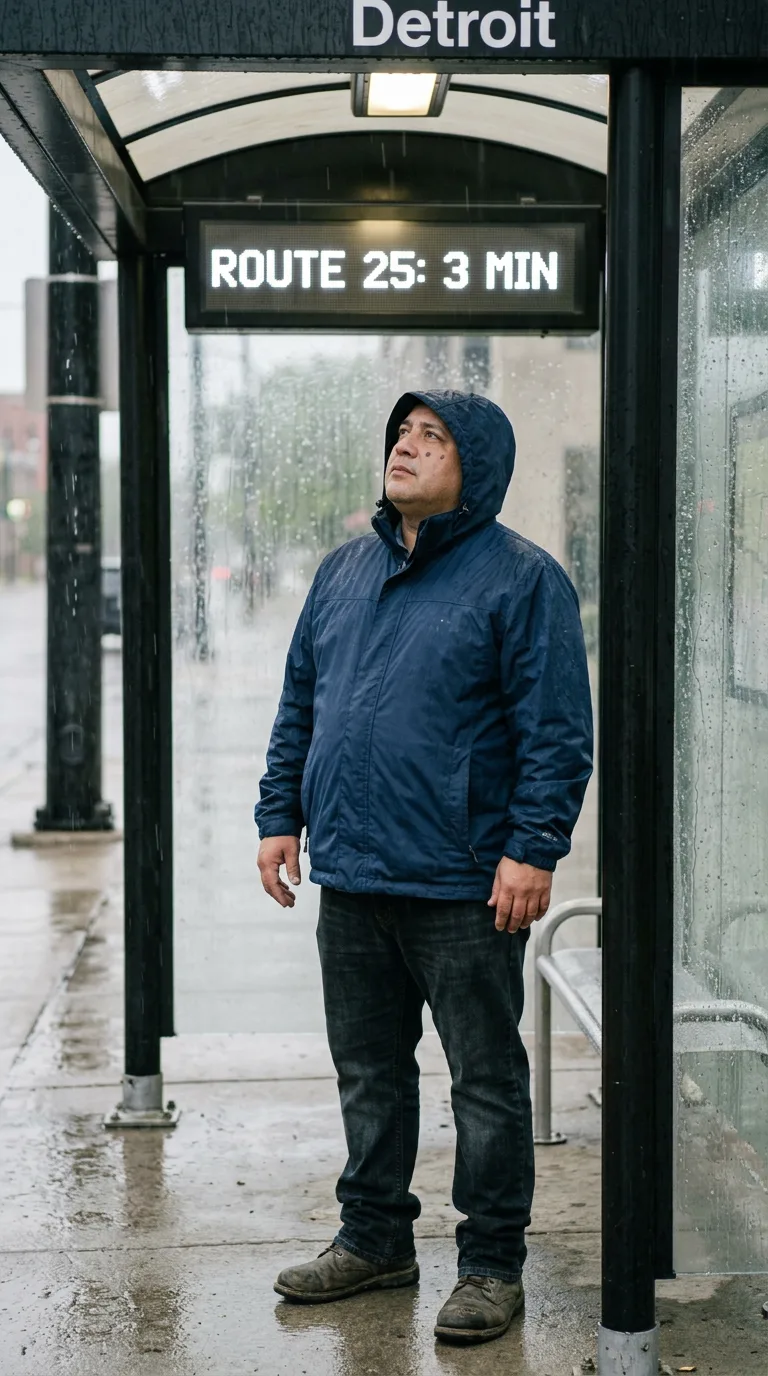
Rarest thing about him: Historically Black Protestant — rare, 1 in 21
Season 0seed 1866059590 · engine v10
Character card
lineage 2NZHHJ
His body-swap story
@colin.hasbrook, wearing Gary Petrosky, rolled the wheel on and woke up as Rubén Castellanos, spent under a minute in him, then spun the wheel and woke up as Nabil Haddad
Gary Petrosky's feet hurt in a way that has become a permanent fact of the world, like gravity, and you are standing in the break room at eleven at night still wearing them. Somebody's insulin bag has leaked on the floor in bay four and somebody else called you a name through a curtain and none of it is new. You have been Gary for less than a minute and that is somehow the worst part — not the tooth missing when you run your tongue over it, not the gray hairs on his forearm, but knowing that this exact fluorescent hallway, this exact ache, is now the whole size of what you are. You did not spin to become a Miami nurse. You spun and the wheel gave you this, and it is Friday, and there is a phone in your — his — pocket with your dinner break on it, seven minutes, and you open the site instead because seven minutes is enough. You do not hate Gary. You have not been him long enough to hate him. You are just already finished.
You press spin standing in the supply closet with the door not quite shut, and Miami keeps existing without you.
The rain finds him first, before you do — cold and specific, running down into a collar, and your weight lands into it a half-second behind, like stepping onto a moving floor. Your face is already tipped back. Water is going into a nose that is not the nose you had four seconds ago, over a mole high on a cheek that itches faintly where the drops sit on it. Full weight, heavier than Gary's, differently heavy — solid through the gut, thick through the shoulders, a low hot line of pain sitting across the lower back like a belt cinched one notch too far. A phone buzzes against a thigh. Somewhere behind you a bus grinds up wet asphalt. You are standing in runoff up to your ankles and you have not yet decided to move.
The hood is what gives it to you first — canvas against the back of your neck, and there he is: Rubén, forty-five, shrugging this same jacket on this same morning, the zipper catching where it always catches, a curse under his breath that is more habit than heat. He'd stood in the hallway of the house on Merrill Street doing the zipper twice because his fingers were stiff from sitting too long the night before at his desk. Rosa had called from the kitchen that the coffee was going, and the sound of it — the specific creak of that particular cabinet door, three kids and a fourth on the way years ago before they were three teenagers now and one out of the house — comes up through your chest like something remembered by the body instead of the mind. She is not an ex. She is the woman he still lives with, whose name he says a certain way, whose voice this morning had been thick with a cold. That thickness worries him. It is a small worry sitting under a much bigger one, which is Denise.
Denise, the ex, who is not gone the way exes are supposed to be gone — she still calls about the youngest boy's asthma, still texts him about custody weekends like they're colleagues, and there had been a night three weeks ago, late, a glass of water instead of the whiskey he used to keep in the cabinet before he quit for good, where he'd sat at the kitchen table turning his phone over and over deciding whether to answer her at midnight, and had, and it had gone somewhere it shouldn't have gone, just words, just an old gravity neither of them had earned the right to feel anymore. Rosa doesn't know. It sits in him like a stone he steps around every day without looking down.
The briefcase — you're not holding it now, it's home by the door, but the memory of its handle worn smooth comes anyway, riding in on the jacket: the courthouse steps this morning, gray light, a plea deal he'd fought two years to get down to a number a family could survive, and the particular satisfaction, quieter now than it used to be, of doing one clean thing in a system built to grind people down. He'd made partner at forty-one. Nobody who grew up where he grew up, going to the AME church every Sunday his mother dragged him to and resented and now, unexpectedly, misses, was supposed to end up with a house like his, a number in accounts he doesn't check often enough, three kids in decent schools. His knuckles ache — they always ache, this cheap parlor trick his hands do without asking, crack, crack, one after another when he's thinking about a case, and they're doing it right now, absently, water running off each knuckle as it pops.
The bus doors hiss open somewhere to your left. You do not get on.
You bring his hand up in front of your face — thick fingers, a plain steel watch, no rings, skin darker than Gary's and younger by ten years and heavier by forty pounds, water running off the knuckles into the sleeve. You turn it over once, like checking it's real, and the low ache in the lower back agrees that it is.
"Rosa," you say out loud, to no one, to the rain, in a voice you have not used before and already like better than the last one, "I'm gonna be late."