Nabil Haddad
Fictional. Generated by AI — not a real person, and no likeness of one is intended.
44, butcher in Toronto · rolled by @colin.hasbrook · card — no film
History
who has worn him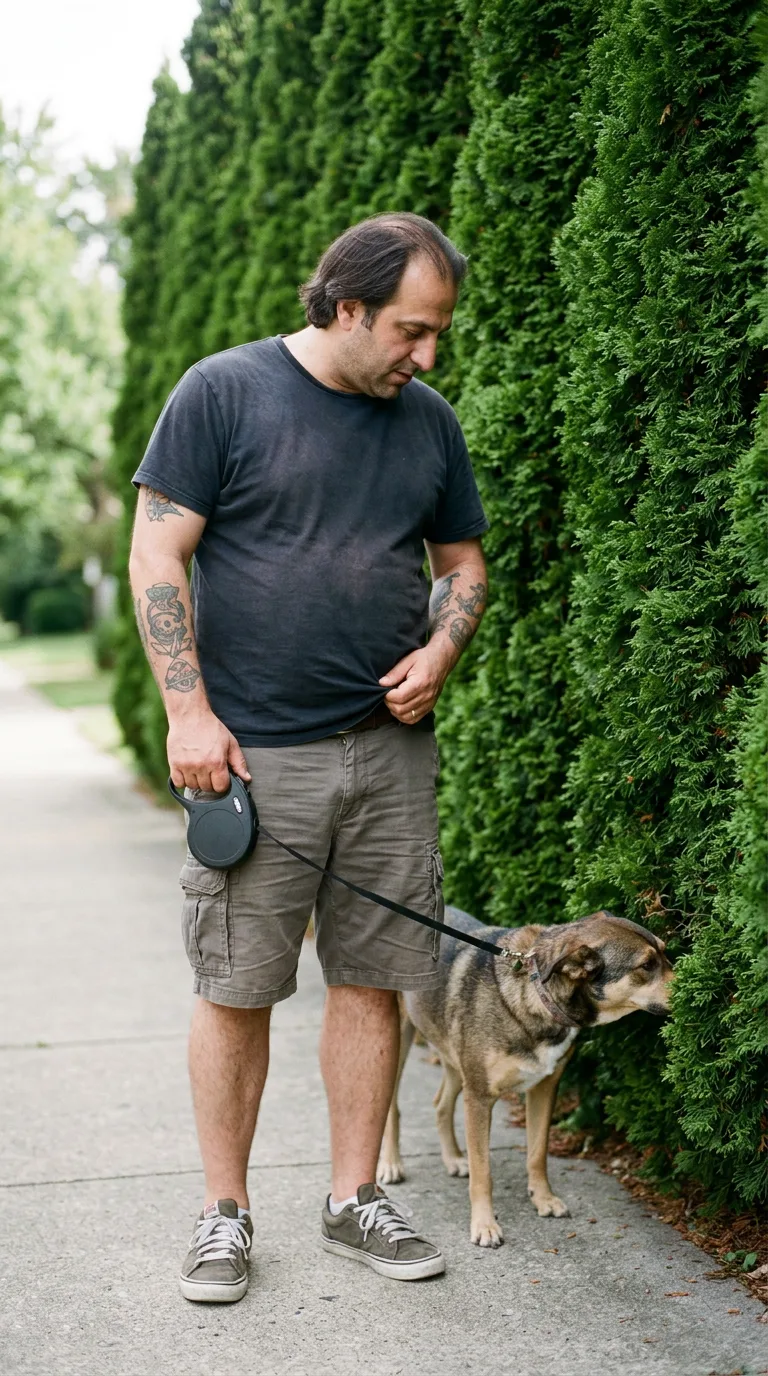
Rarest thing about him: Toronto — rare, 1 in 260
Season 0seed 1112045029 · engine v10
Character card
lineage 2NZHHJ
His body-swap story
@colin.hasbrook, wearing Rubén Castellanos, rolled the wheel on and woke up as Nabil Haddad, spent under a minute in him, then spun the wheel and woke up as Cody Baranski
Rubén Castellanos has been you for forty-one seconds and already the shine is off him.
You're standing in his home office — his, not yours, though the word "yours" has started meaning whatever body you're currently renting — and the desk lamp is throwing that sick yellow light across a bar exam certificate you didn't earn, in a name you're already tired of holding in your mouth. The bald head still feels wrong on top, too smooth, too exposed to the air conditioning. The beauty mark itches like it knows it's being watched. Somewhere down the hall his — your — wife's voice says something you don't answer, because in nine minutes it won't be your problem, and knowing that already makes the room feel thin, temporary, a hotel you're checking out of before you've unpacked. Five hundred and seven men and you still can't make yourself care about the furniture. You open the laptop. The site loads the way it always loads — patient, gray, a wheel sitting dead center like it's been waiting all day just for you. You don't decide so much as notice your hand has already clicked.
The hedge is green and close and smells like something you'll never get to name, because the moment your eyes are open behind them, the smell is already his and not yours to keep separate.
The leash goes slack in your hand.
You feel the weight arrive all at once — shorter than you were, a softness at the belly pulling at your center of gravity, a low ache low in the back like a hinge that's been rusting for years — and the dog looks up at you past the hedge, ears back, reading something in your face before you've had the chance to put anything there. Your hand — his hand, the wedding band cool and thin on it — winds the leash twice without being told to. Muscle does it. Muscle knows this dog, this sidewalk, this hour, even though you don't, not yet.
The shirt is what opens first — old cotton, soft from a hundred washes, and dressing in it this morning comes back sleeve by sleeve, not as a memory you're told but as a thing your shoulders already did: reaching first with the left arm because the right shoulder complains if you lead with it, the little grunt he makes bending for the sock, a joke that isn't funny anymore about how the belly gets there before the rest of him does. Marina had laughed anyway, from the bed, half-asleep, her voice rough — *you'll wear a hole in that thing before you throw it out* — and the sound of that laugh comes with the shirt the way a smell comes with a room.
The apron isn't on you now but your hands remember its weight regardless, chain looped at the neck, cool against sternum, sixteen years of it — the shop cold enough in January to see your breath, warm enough in July that the fan does nothing, the particular give of a shoulder of lamb under the knife, the saw's whine going quiet at the end of a Saturday when the cases are wiped down and Tony's already got his coat on asking are we getting a beer. Your father's voice is somewhere in the meat too — *hold it like this, not like that, you'll take a finger* — forty years dead and still correcting your grip every single cut. The crooked nose throbs faintly with old cold-weather memory, a hockey stick to the face at nineteen, nothing dramatic, just a thing that happened and set wrong and stayed.
Three kids' names arrive with the leash strap under your palm — Layla texting from university about money she doesn't need, the twins fighting over the dog last night, whose turn, whose dog, everyone's dog. Marina at the sink this morning, not looking at you, saying something about her sister's visit, and you not really listening, and some old guilt about that not-listening sitting under your ribs the way it always does. Somewhere further back, an ex-girlfriend's name — Renata — comes and goes like a smell through an open window, nothing you did, nothing you didn't, just a person who still occupies a room in you nobody's repainted. Church on Sunday, the candles, the incense that always makes your eyes sting a little, the drink you'll have tonight after this walk, one, maybe two, the ache in your lower back that never fully leaves, that you've stopped mentioning because Marina stopped asking.
The dog tugs. Somewhere behind you, glass towers hold the last of a Friday evening light that has no business being this late where you came from and exactly this late where you are now.
You look down at the hand holding the leash — his hand, thick-fingered, faded skull and anchor riding the forearm, the ring catching what's left of the sun — and you turn it over like it might tell you something, like a stranger's hand always does for the first few seconds, before it starts answering to you instead of him.
Then you lift your eyes off it, toward whatever's in front of you now, and you say, quiet, mostly to the dog:
"Okay. Let's go home."