Ruben Casillas
Fictional. Generated by AI — not a real person, and no likeness of one is intended.
50, delivery driver in Houston · rolled by @marco.villagrana · card — no film
History
who has worn him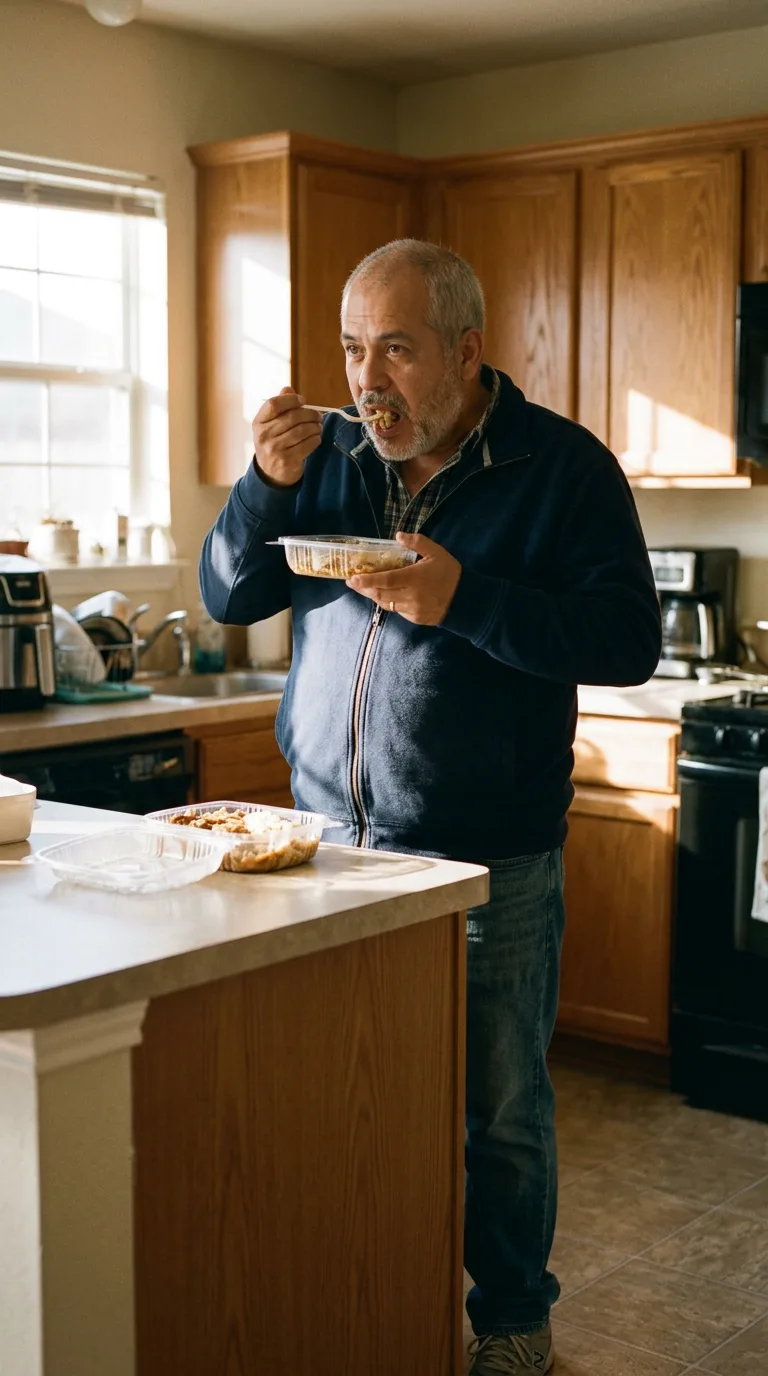
Rarest thing about him: Sober by decision — common, 1 in 27
Season 1seed 1812568872 · engine v11
Character card
lineage LJL8SV
His body-swap story
@marco.villagrana, wearing Aaron Whitcomb, rolled the wheel on and woke up as Ruben Casillas, spent 4 minutes in him, then spun the wheel and woke up as Gary Holcomb
The dirt under Aaron Whitcomb's nails is not yours, but it's yours now, four minutes deep, and that's the problem. You're standing in a barn doorway in the middle of a Los Angeles afternoon, county light coming in flat and gold, and the smell of him — hay, diesel, something sour on his collar — is already boring you in a way that feels almost like an insult. He's 31. He's got decades of knees left. And you spent your first sixty seconds inside him listening to some foreman drone about a fence line like it mattered, like anything about this particular rented life was going to be worth the wait. You didn't come back to the wheel because Aaron did something wrong. You came back because he did nothing at all, and the boredom arrived faster than it ever has, sharp as a held breath let go. Your thumb finds the phone in his pocket — not his, yours now, forget that — and you open the page you always open. The wheel is already spinning before you've decided anything, which is its own kind of honesty.
The tick of it lands the way it always lands: nowhere, and then everywhere.
You are standing over a kitchen counter with a fork in your hand and the light outside the window already gone the color of a bruise. The fork stops an inch from your mouth. It goes back down onto the plastic lip of the container, deliberate, like you meant to set it there all along. Your shoulders are heavier than they were a second ago — not younger shoulders, not farmhand shoulders, but wide and soft and tired in a way that has nothing to do with fieldwork. The coat is still on you, and it's too warm suddenly, indoor warm, and you shrug out of it in one practiced motion your arms know before you do. You sit. You did not decide to sit. The body decided, the way a body decides after a twelve-hour shift, and you ride it down into a kitchen chair that creaks under weight that is now, entirely, yours.
You keep eating, because he would have kept eating, and each bite is even and unhurried and looking at nothing but the black glass of the window, which is the first thing that gives you his face back at you — gray at the temples going silver, a beard you didn't have an hour ago, a man's whole tired evening reflected in glass instead of in a mirror.
The container is a rectangle of foam, still faintly warm, and your fingers around it bring the first flash: his mother-in-law's kitchen, a Sunday, this same starch-heavy smell, laughing at something his wife said under her breath so her mother wouldn't hear. Arroz con pollo, leftover, the good kind of leftover, the kind you save because someone who loves you made too much on purpose. The fork is a cheap department-store fork and it remembers being washed ten thousand times by his own hand at this sink, elbow-deep, half-listening to a ballgame on a radio he no longer owns.
The shirt is next — not a shirt, a company polo, brown as a UPS truck but not UPS, some regional outfit with a name stitched small over the pocket — and putting it on this morning comes back through the fabric now stuck faintly damp to your spine: sleeve, then sleeve, the little hitch getting the second one over a shoulder that's been giving him trouble since spring, a scanner clipped to the belt loop with a motion so automatic it barely registers as memory at all, more like muscle laying old track. Fifty years old and the body knows exactly how much this pinches and where. Lower back, always, by hour nine. Knees on the concrete of loading docks. But strong too, in the specific way of a man who has carried boxes heavier than himself since before either of you were born into this — forearms that don't ask permission, a grip that has never once dropped a package it decided to hold.
The wedding band on your left hand is warm from his own body heat still trapped in the metal, and that one goes deep, goes years: a courthouse, her in green because white felt like a lie the second time around for her, both of you laughing about it after. A daughter, older now, calling on a Tuesday for no reason he could name except that she still calls him on Tuesdays. And under that, quieter, guiltier — a name that isn't his wife's, someone recent, someone who left this spring and left a version of him that still checks his phone half a second too fast when it buzzes. He never told anyone. He barely told himself. It sits in him like a stone at the bottom of a clear lake — visible, unbothered, unmoved.
The counter under your forearms is the last thing, and it gives you almost nothing, just tile-cool wood and thirty years of coffee rings under thirty layers of cleaning, a kitchen that has absorbed every ordinary Monday he's ever stood in it and asked nothing back.
You finish the container. Set the fork down — really down this time, done. Your hands come up in front of your face without your permission, his hands, olive-brown and thick-knuckled, a life's worth of small cuts healed pale along the fingers, that ring catching the window's last gray light.
You turn them over once, like you're checking they're real.
"Didn't even taste it," you say, to the dark glass, to no one, in a voice that is not the one you had four minutes and one body ago.