Gary Holcomb
Fictional. Generated by AI — not a real person, and no likeness of one is intended.
45, food delivery courier in Atlanta · rolled by @marco.villagrana · card — no film
History
who has worn him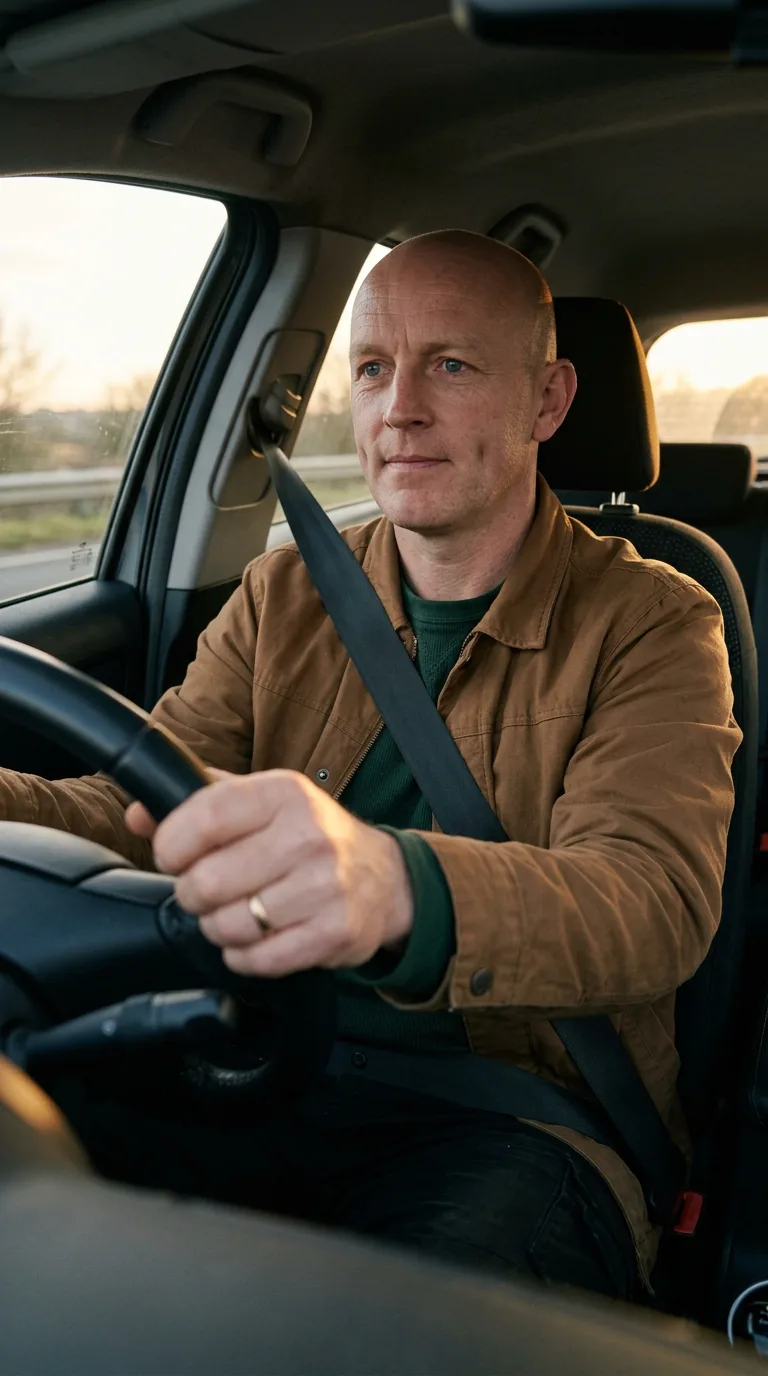
Rarest thing about him: Food delivery courier — common, 1 in 185
Season 1seed 37278564 · engine v11
Character card
lineage LJL8SV
His body-swap story
@marco.villagrana, wearing Ruben Casillas, rolled the wheel on and woke up as Gary Holcomb, spent 3 minutes in him, then spun the wheel and woke up as Patrick Novogratz
Ruben Casillas's kitchen smells like somebody else's dinner, always, that grease-and-cardboard smell that gets into the gray in his beard and never quite leaves. You have been him for three minutes. Three minutes ago you were nobody in particular, and now you're standing over his sink with his phone still buzzing in his pocket, some app telling him another order's ready, and you already know you're not going to answer it. Three minutes was long enough to feel the ache set into his knees from the driver's seat, the way his lower back has opinions about eleven-hour shifts, the particular tiredness of a man who has been fifty for a while and felt every year of it today. It isn't boredom, exactly. It's that you spun through Aaron and Kyle and Fetu and a hundred forty more before him and you know already, in the way you know weather is coming, that a body stops being new almost as soon as you've learned its hallway. Ruben's hallway smells like grease. You want a different smell.
You reach for your own phone — his phone, a stranger's phone in a stranger's hand — and you open vessel.cards, and you pay, and you spin.
The highway comes up under you like a held breath let go.
Both hands are already at ten and two, and you feel them there before you feel anything else — the dash light green-gold across the knuckles, the wedding band cool and thin under the middle finger, the seatbelt's diagonal weight. The car is warm with a day's held sun. There's a smell of pine air freshener gone stale and the ghost of a fast-food bag from lunch. Three miles from home, a voice in your head that isn't yours yet says, though you don't know whose home, or where, or why the light through the windshield is doing that low copper thing that highway light does at the very end of a day. Your hands come off the wheel — not both at once, a beat apart, like a man startled awake — and reseat themselves lower and wider, easy, like they'd rather be there. The turn signal clicks on, blinking green on the dash, for an exit that is not his.
The shirt is what gives him to you first. Green polo, worn thin at the collar, and touching it you get a flash of a laundry room, humid, a wife's voice from another part of the house asking if he's taking the good jacket or the beat one, and him saying the beat one, obviously, it's Atlanta in July and it's not raining, and her laughing because there's no logic to which one he calls good. Deborah. Her name arrives folded inside the memory like a receipt left in a pocket. Nineteen years married. He still calls the porch light thing "her light" because she's the one who always remembers to leave it on.
The jacket — navy, a little stiff at the cuffs from being rained on and dried in a car — that one comes slower, a whole morning instead of a flash: him zipping it over the polo at six a.m. with the kids still asleep, the deadbolt's particular stubbornness, the bike propped against the garage where it always is, red delivery bag already loaded on the rack. His hands know this motion without asking permission — zipper, strap, strap, mount the phone to the handlebar, thumb the app awake. Eleven years he's been doing some version of this. Before that, warehouse work; before that, a stretch he doesn't love remembering where nothing was going anywhere, not even him. The bike changed something. Being outside changed something. Nobody at the restaurants knows his name but they know his face — bald, dimples that show up whenever he says thank you, which is often, because his mother raised him to.
The wheel under your palms brings the car itself: eight years old, paid off last spring, a small private triumph he told exactly one person about, his father, over the phone, because his father is the kind of man who says good for you, son and means it and it costs Gary something in the chest every time, in a good way. His faith sits in the car too, low and constant, a cross air freshener he keeps meaning to replace clipped to the vent, a habit of praying at red lights that Deborah teases him about affectionately. He doesn't drink except at his brother-in-law's Fourth of July thing, once, maybe twice a year, a light beer he mostly nurses. Never smoked. His mother did and it took her lungs slow and ugly and he decided at nineteen he'd rather not find out what that felt like.
The wedding band gives you the wedding itself, briefly — a backyard, folding chairs, Deborah's dress catching wind — and then it gives you this morning, her kissing him at the door and saying be careful out there like she says every day, not because she's afraid exactly but because saying it is a kind of insurance she's paid into for nineteen years. Two kids upstairs, a boy who is eleven and losing interest in being hugged and a girl who is eight and hasn't lost that yet. He thinks about them more than he'd say out loud. The leg starts up under the memory of the car seat, bouncing, restless, doing what it does when he isn't thinking about it, which is always, and you feel the small motor of it now, this body's oldest habit, running even now, even empty, even mid-turn onto an exit that belongs to nobody's home.
You feel all of him at once the way you feel weather changing — the tiredness of a full shift in his calves, the smoothness of his own scalp under his palm when his hand drifts up out of old habit, the dimples pulling at his cheeks for no reason at all, just resting there, a face built for a kindness he's not currently performing.
You look down. His hands, wide and sun-spotted at the knuckles, ring catching the dash light, still holding the wheel a beat after they need to.
"Whoa," you say, in his voice, which surprises you — softer than you expected, a little Georgia in it, a little wonder. "Okay."
You don't know yet how long you'll want this one — the good tiredness of him, the wife who says be careful, the kids upstairs, the dimples that show up even when nothing's funny. You don't know if it'll be tonight or a year from now that the wanting comes back and sends you looking for the wheel again. Nobody does. For now the exit ramp curves under new hands, and you take it like you've always known where it goes.