Patrick Novogratz
Fictional. Generated by AI — not a real person, and no likeness of one is intended.
38, retail sales associate in New York · rolled by @marco.villagrana · card — no film
History
who has worn him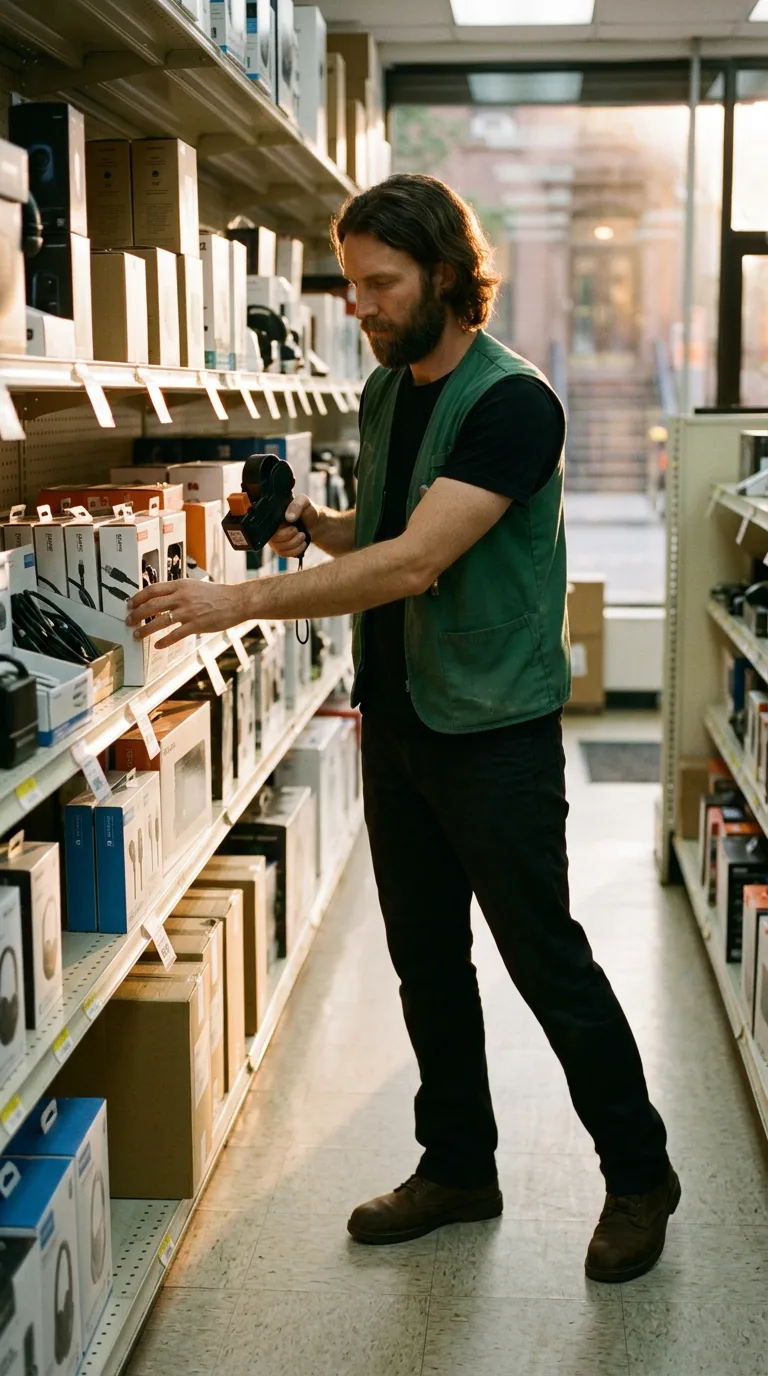
Rarest thing about him: Heavy drinker — common, 1 in 19
Season 1seed 2132485135 · engine v11
Character card
lineage LJL8SV
His body-swap story
@marco.villagrana, wearing Gary Holcomb, rolled the wheel on and woke up as Patrick Novogratz, spent 4 minutes in him, then spun the wheel and woke up as Harold Petrosky
You are Gary Holcomb for the length of a cigarette, and it is already too long.
The porch light across the street flickers on. Somewhere behind you, in an apartment you have never seen the inside of and never will, a phone is buzzing with a delivery that is now nobody's problem. Your — his — shift ended two minutes ago mid-stride, the bag still on the seat, the bike still leaned on its kickstand at an angle that will annoy somebody. You don't care. You never care, not really, not past the first thirty seconds of a new skin, and that is the whole reason you keep going back. Bald head cooling in the evening air, dimples set in an expression that isn't quite anybody's, blue eyes looking at a phone screen that isn't his either — it's the wheel's, open in a browser tab, the page with the spinner already loaded because you loaded it before you even finished becoming him. Two minutes. Long enough to know a courier's Monday has nothing else coming. You spin because there is always more, because Gary Holcomb's evening is a known quantity now — six more stops, cold food, a tip that won't come — and because somewhere out there the wheel owes you something you haven't had yet tonight. You don't examine it harder than that. You never do. Thumb down. Release.
—
The scanner is warm in your hand, mid-beep, and the beep finishes on its own without you.
You are taller now, weight further from the ground, knees different, and for half a second the gun in your grip fires wrong — you tag the box a second time, the machine chirping its little complaint — and you correct, slow and careful, like a man reading his own handwriting for the first time. The next ten scans go the same way: watched, checked, watched again, on hands that have done this ten thousand times and don't need you to watch them at all. Late light is coming gold and low through the window at the end of the aisle, off the brownstones across the street, catching dust in the air over the cardboard. It is warm in the store in a way Atlanta's evening never got to be. Somewhere behind you a vest pocket holds a lanyard that clicks faintly against a button when you shift your weight.
—
The vest comes first — that's what's touching him, so that's what gives first. Green canvas, a chemical smell of dye and old sweat worked into the fabric, and under it: a morning. Not this morning, some morning, all of them folded together — pulling it off a hook by the break room door, the Velcro at the shoulder seam that stopped sticking two years ago, the particular tug of the badge reel catching on the doorframe on the way out every single time, every single day, a small domestic annoyance that never once got fixed. There's a fondness buried in the irritation. This vest has outlasted a marriage.
The scanner's grip gives you the job itself — not one shift but all of them stacked, the aisle in every season, the automatic tilt of the wrist that reads a barcode without the eyes even needing to find it straight on, boxes with corners gone soft from being restacked, the smell of shrink-wrap and the AC unit that's always either too much or not enough. There is no drama in this job. That is what it feels like from inside him — a low hum of okay, going nowhere, paying enough and not more, a thing he stopped resenting around the same time he stopped hoping for something else.
Under his shirt, the fabric worn thin at the collar from years of the same three shirts rotated, there's the body: thirty-eight and still holding most of its shape, shoulders that used to lift boxes for a living before this, a lower back that complains on cold mornings, calves tight from a shift spent standing more than sitting. Strong hands, gone soft at the pads from paper cuts long since healed. A body that runs on coffee until three and something stronger after six.
The ring finger gives you the sharpest thing. Pale banding where gold sat for eleven years, a stripe of untanned skin he still catches himself looking at sometimes, expecting weight that isn't there anymore. Her name arrives without asking permission — Dana — and with it a kitchen that isn't his anymore, a custody schedule taped inside a cabinet door, two kids' names that come with a warmth so specific it nearly buckles you: a boy who likes trains, a girl who is losing her front teeth and finds it hilarious. Weekends. Not enough of them. He loves them the uncomplicated way men love things they see less of than they should, and the missing hits differently now, standing here, than it does at eleven at night with a glass in his hand, which is where he usually lets himself feel it.
The smell of the aisle brings the smoking — not now, no lighter in reach, but the muscle-memory ache for one, a pack a day rationed across the shift like a metronome, first one on the walk in, last one on the walk out. The drink comes in behind it, quieter, a fact more than a feeling: something waiting at the end of the night, reliable in a way not much else has been.
This morning's version of the vest: pulling it over the black tee, the Velcro catching, badge reel clipped, boots already on because he never takes them off between shifts anymore. Ordinary. Unexamined. The kind of morning that doesn't know it's the last one that belongs to him.
—
You look down. The scanner's still in your hand, trigger loose under your finger, and you turn it over once like you've never held one, though he has, ten thousand times.
You say, quiet, to no one in the empty aisle, "Two minutes was never gonna be enough."
You lift your eyes off your own hand and out toward the window, the gold light, the stoop across the street where nobody's sitting yet — and you hold there, not deciding anything, just staying, for now.