Aaron Whitcomb
Fictional. Generated by AI — not a real person, and no likeness of one is intended.
31, farmhand in Los Angeles · rolled by @marco.villagrana · card — no film
History
who has worn him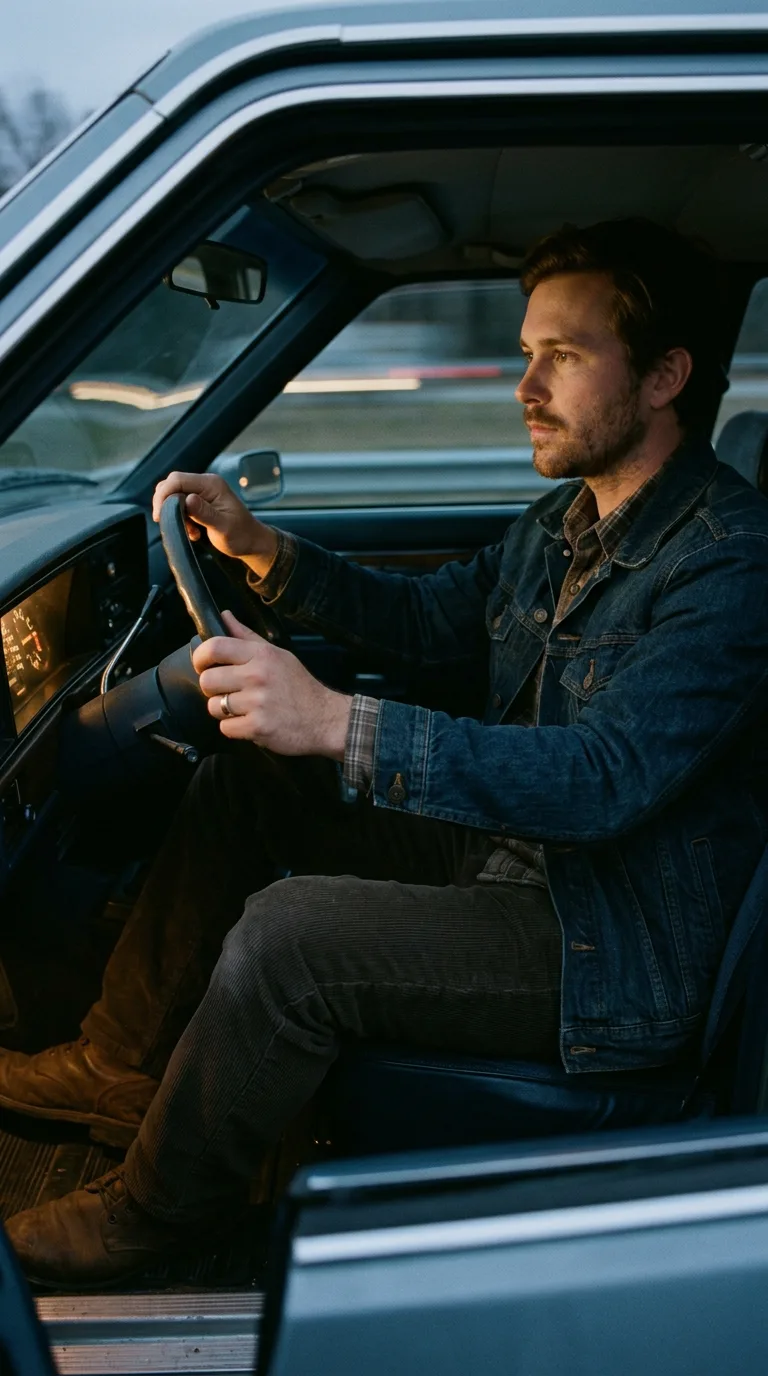
Rarest thing about him: Dip or chew — common, 1 in 31
Season 1seed 1703492756 · engine v11
Character card
lineage LJL8SV
His body-swap story
@marco.villagrana, wearing Kyle Ostrowski, rolled the wheel on and woke up as Aaron Whitcomb, spent 4 minutes in him, then spun the wheel and woke up as Ruben Casillas
Kyle Ostrowski's hand is still shaking a little when you make it do the thing on the laptop trackpad. Four minutes in him and already you know the shape of the problem: he's mid-pitch, phone buzzing on the desk with a client's name on it, and somewhere under the ribs there's a tightness that isn't yours and isn't going away. You didn't take him for this. You took him for the easy warm afternoon light through the office blinds and the good watch on the wrist and none of it is worth sitting inside his particular Monday, waiting on a callback he is dreading in a way that has nothing to do with you. That's the whole reason, really, small as it is: you don't want to be the one who has to make this call. So you open the tab that's already open, because Kyle Ostrowski, bless him, had it open before you ever arrived, and you spin.
The site doesn't ask why. It just gives.
The wheel gives you weight first — more than Kyle's, packed differently, low and solid through the legs — and a smell of cut stalks and hot vinyl before it gives you anything else. Your hands, his hands, are at ten and two. There's a wedding band pressing cold on the left one where it rests on the wheel rim. The dash glow is green-orange across the knuckles. Outside the windshield the highway is a dark seam with landscaping lights strung along it like a rosary somebody dropped, and the exit sign for a road that is not his road is already sliding by, and the turn signal is already ticking, though you didn't reach for it, though nobody reached for it, and the car drifts a foot toward the line and pulls itself straight, smooth as a hand smoothing a sheet.
You are Aaron Whitcomb, and you are three miles from a house you have never seen, in a body that has spent all day bent over a row of something green.
The steering wheel gives you the first of it — worn foam under your palms, a crack in it your thumb finds without being told to find it, and with the crack comes an afternoon: heat coming up off dirt in waves, a crate of carrots and tomatoes going heavy in your left hand while your right hand shakes a boss's hand you don't remember shaking, some visiting buyer from a co-op wanting to see the rows, and you — he — stood there in the straw hat sweating through the band of it, saying yessir, no sir, we don't spray that block, while his knees ached in that low specific way that thirty-one years and thousands of hours bent at the waist put into a man. The clock on this dash says an hour past the wife's supper, and low light is coming sideways through a windshield bug-specked from a summer of it, and you feel the day in the lower back before you feel anything else — a dull banked ache, the kind you get used to and then get old within.
The flannel shirt against your back — its damp, its salt, the collar gone soft from washing — gives you the morning it went on: him standing in the bedroom before six, the wife still a shape under the sheet, him buttoning it one-handed in the dark because the light woke her the one time he tried it, his other hand already reaching for the bandana on the doorknob without looking, tying it loose around his throat by feel, an old habit from a father who did the same, wore the same red cotton, on a farm two states from this one. The jeans, stiff with a day of dirt gone into the knees, remember kneeling in a row, thinning seedlings, a foreman's radio somewhere playing a country station low. The boots remember every uneven furrow they've ever taken a step on without turning an ankle, which is its own kind of knowledge, held in the ankles and not the mind at all.
And under your ring finger, cold band on it, comes the wedding — a backyard, folding chairs, her sister crying more than her, the pastor from the little stucco church two blocks from where you now, tonight, are about to arrive, though you don't know it's about to happen, because nothing tells him it's about to happen, ever. There is a girl before her too, held in the memory the way an old bruise is held in tissue that has otherwise healed — a name you get only the taste of, a screen door, a summer that ended badly and young, something he doesn't touch on purpose, so you only get it because his hand on the wheel brushes too close to the whole shape of him and it comes loose anyway. And there is a girl now, small, four maybe five, whose drawing is taped somewhere in the glovebox because he can't bring himself to throw a single one away; you get her laugh before you get her name, get the weight of her asleep on his chest before you get the actual memory of putting her down.
His jaw itches — stubble, two days of it, and his hand goes to his own face without his permission, the way it always does, thumb along the jawline, checking it the way another man checks his phone. You let it happen. It is the single most him thing you have felt yet.
The tin of dip is in the truck's cupholder, worn ring pressed into the lid from a thousand thumbs. You don't open it. You don't need to. It gives you enough just sitting there — the taste ghosted at the back of the tongue, a habit that isn't a vice to him so much as a fact, the way not drinking isn't a virtue so much as a line he drew once at twenty-two after watching his own father not manage the same and has never once needed to redraw.
The exit sign is behind you now. The turn signal clicks, patient, useless, aimed at a road he was never going to take on his own.
You look down. His hands are on the wheel — thick-knuckled, a callus riding the base of each finger, dirt gone gray into the creases no amount of washing gets out anymore, the band bright and plain and a little too tight after a decade of the same finger swelling and going lean with the seasons. You turn one hand over in the dash light like you're checking it for a wound.
"Okay," you say, out loud, to the empty car, in his voice, which is not a voice you have ever used before tonight. "Okay."
You reach over and click the signal off, and keep driving toward a house you have never stood in front of, not knowing — nobody knowing — how many more evenings this one is going to be yours to drive home in.