Rubén Azpeitia
Fictional. Generated by AI — not a real person, and no likeness of one is intended.
64, retired in Pittsburgh · rolled by @colin.tarwater · card — no film
History
who has worn him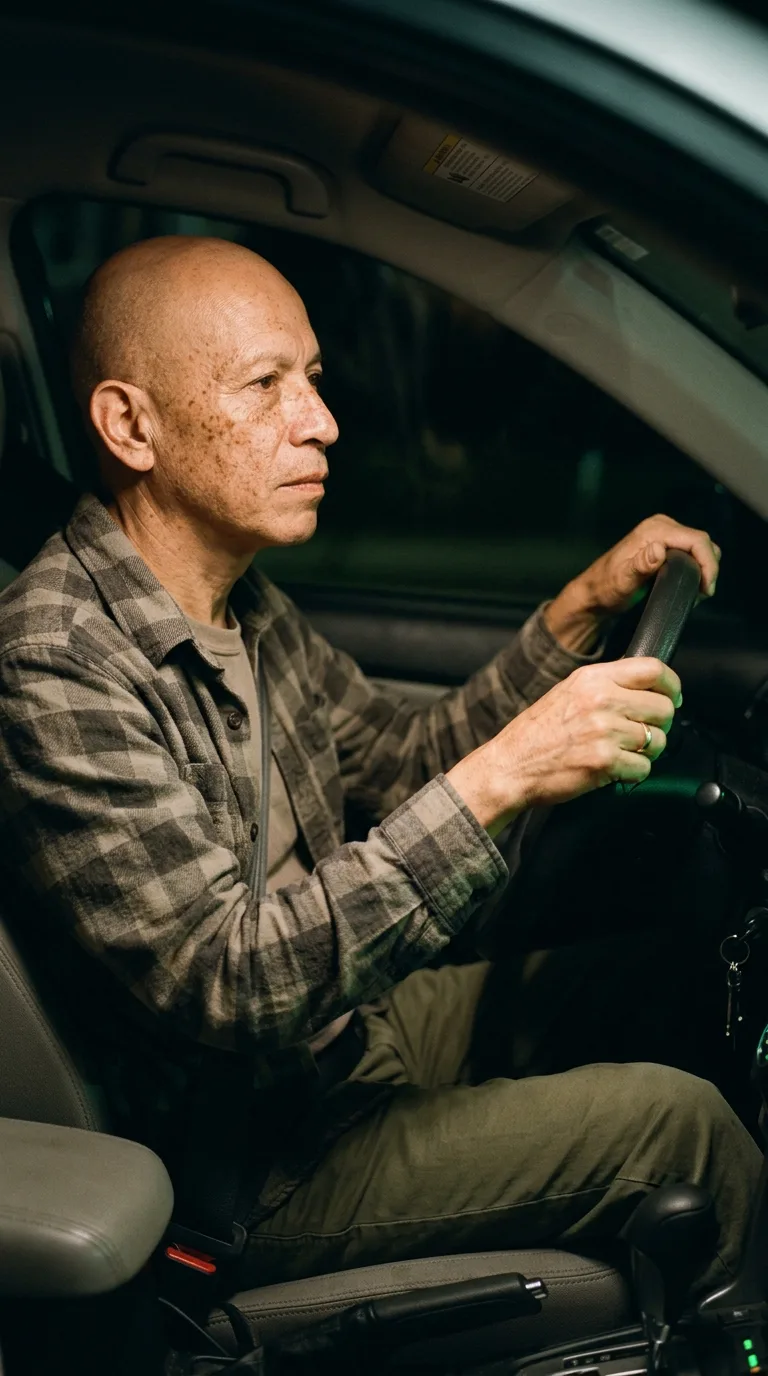
Rarest thing about him: Flips a lighter — rare, 1 in 54
Season 0seed 63943553 · engine v10
Character card
lineage COEU7T
His body-swap story
@colin.tarwater, wearing Walter Krupinski, rolled the wheel on and woke up as Rubén Azpeitia, spent under a minute in him, then spun the wheel and woke up as Gary Thibodeaux
You are standing in Walter Krupinski's kitchen with the fridge light cutting across his knuckles, and you already know you're going back tonight. It's the badge on the counter that decides it — his own badge, the leather worn pale at the fold, sixty-four dollars of pension paperwork sitting under it that you signed this afternoon like it was going to matter to you in twenty years. It won't. Walter is fifty-seven and solid and gray at the temples and none of that is the problem; the problem is that Walter's a cop with a scar through his eyebrow and a mortgage and a partner who calls him "old man" like it's fondness, and none of it is yours, it's just a coat you're wearing well. You've had sixty-five men now. You know the itch by heart. You put your hand on the badge, feel the little give of the leather, and go back to the wheel instead of to bed.
The spin is a color and then it isn't anything, and then you are three miles from a house with your hands at ten and two.
The car drifts a foot toward the line — his line, not yours, you've never seen this line — and comes back in one pull that isn't a correction, it's a habit older than you are. Your hands come off the wheel and land again lower, wider, easier, the way a smaller man holds it, and the turn signal ticks on for an exit you didn't choose and he did, every night, for years. Dash glow lies along freckled knuckles. A wedding band catches it once and is gone. You are short in this seat in a way Walter never was, feet closer to the pedals, shoulders narrow inside a checked flannel shirt that smells like fabric softener and, underneath that, very faintly, like a woman's perfume that isn't your own.
The shirt gives it up first, the collar against your neck, worn soft: a woman's hands buttoning it wrong on purpose that morning, laughing, this button not that one, and him laughing back without meaning to, Marisol, thirty-one years married and she still fixes his collar like he's going somewhere important instead of just to the porch. You feel the whole marriage arrive sideways through a shirt collar — not the wedding, not some anniversary, just this: her fingers, his laugh, the ordinary Tuesday weight of being loved by the same person for three decades and having stopped being surprised by it and never once stopped being glad of it. Underneath that, further down, an older shirt, an older woman — Carla, the first wife, the one whose name still makes something in his chest go quiet and careful, twelve years married and four since divorced and it had ended without a villain in it anywhere, which somehow made it worse to remember and easier to forgive. Two kids came out of that marriage. You feel them too, faint as radio through a wall — a daughter's voice on a phone, a son's hand shaking his at a graduation, both of them grown now and calling on Sundays whether he needs it or not.
The wheel under your palms opens differently — smaller, mundane, certain. Rubén's hands know this wheel the way they know a doorknob, not thinking about the turn, already three miles into a drive they've made ten thousand times. Retired six years now from something with numbers and other men's money, retired well enough that a lighter lives in his jacket pocket though he never smoked a day of his life, just liked the weight of it, liked flicking it open and shut when his hands wanted a job and his mind was somewhere darker than the porch light let on. There's a name for that darker place, a doctor's handwriting for it, a small orange bottle in the bathroom cabinet that Marisol never asks about because she already knows, and Sunday mornings at a church that has known his face for eleven years and never once needed to ask if he was all right, because by Sunday he mostly was.
The seatbelt is tight across a body that runs skinny and always has, freckles crossing the bridge of the nose in a pattern his mother had too, a scalp gone bald so long ago he forgets sometimes and reaches for hair that isn't there. Sixty-four years old and the knees complain on the stairs behind the house, the ones that go down between the yards, wet leaves flattened black on the concrete this time of year — he took those stairs an hour ago, he thinks, though the hour is already going soft and unplaceable, coffee gone cold in a mug on the porch rail, this whole street humming down toward night the way it does when you're not young anymore and you've stopped needing it to hurry.
Your hands come off the wheel at ten and two and settle in your lap, and you look down at them the way a man looks at hands he was told were his and finds, for the first time, believable.
"Okay," you say, out loud, to the dark windshield and the exit sign sliding past that isn't the one he wanted. "Okay. Not yet."
Not yet meaning the wheel, meaning the next one, meaning whatever it is that's still waiting on the other side of a screen in a kitchen that isn't yours anymore either. The turn signal keeps ticking, patient, wrong, and you let it run.