Gary Thibodeaux
Fictional. Generated by AI — not a real person, and no likeness of one is intended.
54, line cook in New York · rolled by @colin.tarwater · card — no film
History
who has worn him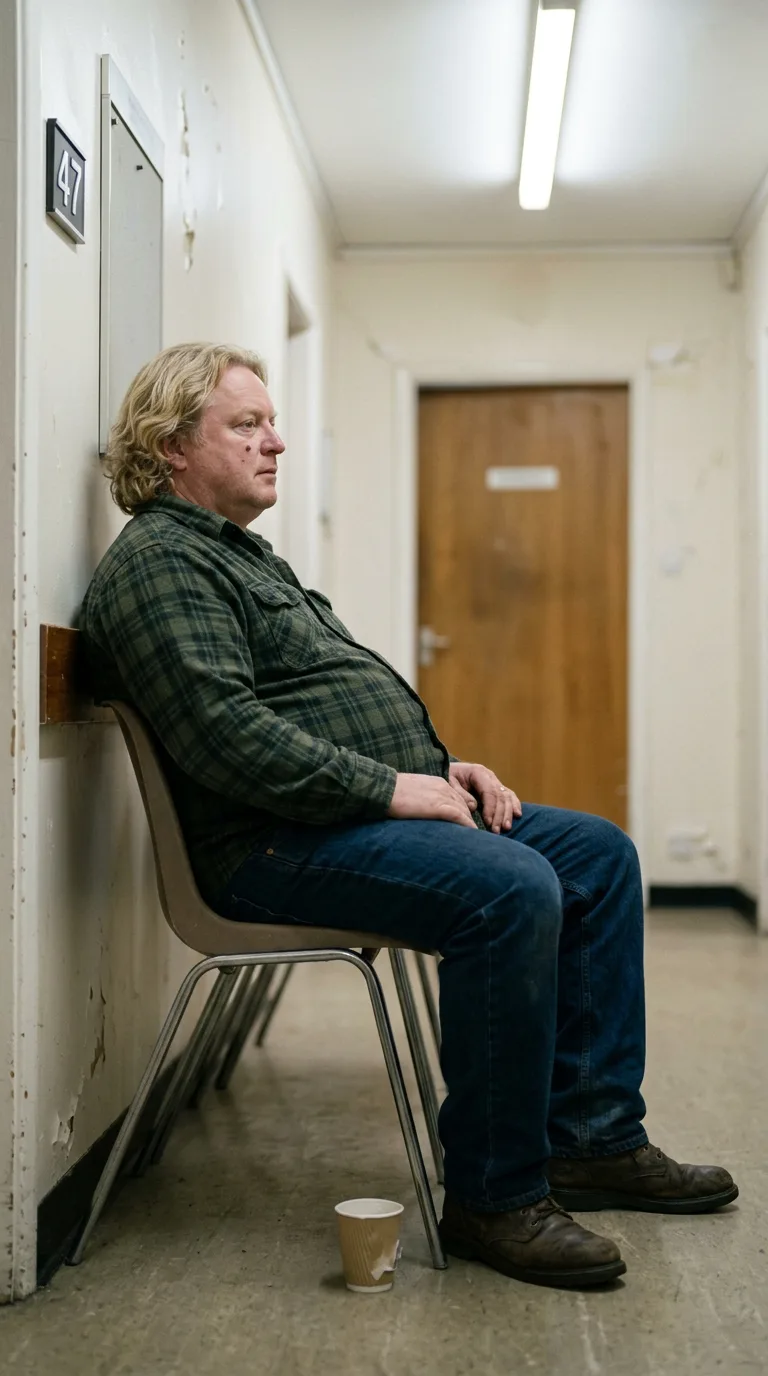
Rarest thing about him: Dip or chew — rare, 1 in 43
Season 0seed 693011998 · engine v10
Character card
lineage COEU7T
His body-swap story
@colin.tarwater, wearing Rubén Azpeitia, rolled the wheel on and woke up as Gary Thibodeaux, spent under a minute in him, then spun the wheel and woke up as Donald Sechrist
---
Rubén Azpeitia's kitchen is quiet at eleven at night, which is the problem. You have been him less than a minute and you already know the whole shape of what's left: a recliner with a worn groove in the cushion, a television turned low, a pill organizer with the days already popped for the week. Your — his — knees ache getting up from nothing. You stood him up out of an old man's chair to walk to the laptop on the kitchen table, and every step told you something about tendons that have given up complaining because complaining never changed anything. Freckled hands. A bald head you keep forgetting to feel for hair on. It isn't the body's fault. It's a fine body, for what it is. But you have had it long enough now to know its whole vocabulary — coffee, television, the ache when it rains — and there is a particular late-Tuesday emptiness that comes from being a man with nowhere left in him to be surprised. You open vessel.cards on his cracked-screen laptop with his thick, freckled thumb already knowing the password, and you do not think of it as leaving him so much as setting down a book you've read.
The wheel spins the way it always spins, bright and stupid and exactly the same regardless of what it's about to hand you.
—
The light comes up through your own skull from the inside, out through your eyes and your open mouth, and then it isn't light anymore, it's a hallway, fluorescent, and a plastic chair holding more of you than you're used to.
You are heavier. That's the first thing — a gut you did not have, weight low and settled, a body that has been carrying itself around for a while and has made a kind of peace with it. Your knee was bouncing and it stops on a click of the number board across the way — 47 sliding over to 48 — and your hand, someone's blunt-fingered hand, comes down and sets a paper cup of water on the floor, square, careful, like precision is a habit even when nothing requires it. Your name gets called from somewhere down the hall. You do not look up.
—
The chair is under you, hard plastic, the wood strip of the backrest pressing a line into your shoulder blades, and that's the first door: a decade of waiting rooms, dentists, the DMV, always the third seat if he could get it, always his back against something solid so nobody could come at him from behind — an old habit from a father who used to come at him from behind, once, more than once, in a kitchen smaller than the one he cooks in now. That door closes as fast as it opened. Doors do, with him. He does not like to stand in them.
The flannel is what gives you the most. Sleeves already a little too warm for indoors, and under your fingers where they rest on your own stomach you feel the memory of buttoning it that morning — no, that's wrong, it wasn't buttoned this morning, it was hanging on the hook by the back door of the apartment when his wife handed it to him because the walk-in at the restaurant runs cold before service and he always forgets a jacket. Dana. Her name arrives whole, the way names do when a shirt was the last thing her hands touched before yours did. Fifty-four years old and he still puts a shirt on like she's still standing there fixing his collar even when she isn't in the room, an old motion left over from twenty-two years of marriage, most of them good, some of them the ordinary bad that just means two people getting older in the same apartment. No kids. There was a stretch in his thirties where that sat on him like a debt, and then it stopped, the way weather stops.
The mole on his cheek you feel not as a mark but as a thing his thumb sometimes finds without meaning to, worrying it during service the way another man might chew a pen — except he does that too, a pen, when his hands aren't busy with a knife, clicking it apart and together in his apron pocket between tickets, a tic so old it isn't even nervous anymore, just idle.
The boots on your feet, laced the particular way he laces them — double-knotted, because the floor by the plancha is always wet and he went down once, years back, hard enough that his knee still complains about rain the way Rubén's did, which strikes you, distantly, as almost funny, that you keep landing in men whose weather-knees have opinions.
And under your back molar, the dip. You didn't reach for it, but the taste is there anyway, the memory of packing a pinch after the lunch rush every day for eleven years because the doctor's lecture about the blood pressure meds only goes so far against a habit that old. He tried quitting twice. Dana asked him to, once, gently, the year they thought they might try for a kid, and he did for four months, and then didn't, and she let it go because she is not a woman who fights the same fight twice.
There's an ex in here too, arriving sideways off the memory of the ring on your finger — Carol, from before Dana, a girlfriend from his twenties he still thinks of at strange hours, not with longing exactly, more the way you'd think of a city you lived in once. No unfinished business. Just a name that surfaces sometimes when he can't sleep.
And under all of it, the line: fourteen years at the same restaurant, a kitchen he complains about and would not leave, the particular ache of standing on it for a ten-hour shift, forearms that know the weight of a hot pan without his brain needing to be consulted, a body that is fifty-four and soft in the middle and still strong exactly where it needs to be strong. High blood pressure humming under all of it like a low fridge noise, present but not loud, not today.
Today he had off. Today was the doctor's office, a check-up he'd been putting off since spring, third seat under the strip light, cup of water going warm, waiting on a number that was never going to be his fast enough.
—
You look down. The hand on your stomach has a plain band on it, and freckles that aren't there anymore, and a mole nowhere on it at all because moles don't move to hands, and you turn it over once like you're checking it's real, which it is, more real than the last one, more real than the one before that.
You lift your eyes off the ring and into the empty hallway, past the number board, past the door that hasn't opened yet, and you say, quiet, mostly to no one —
"Forty-eight. Hell."