Rolando Fierro
Fictional. Generated by AI — not a real person, and no likeness of one is intended.
51, glazier in El Paso · rolled by @brian.okafor.lynch · card — no film
History
who has worn him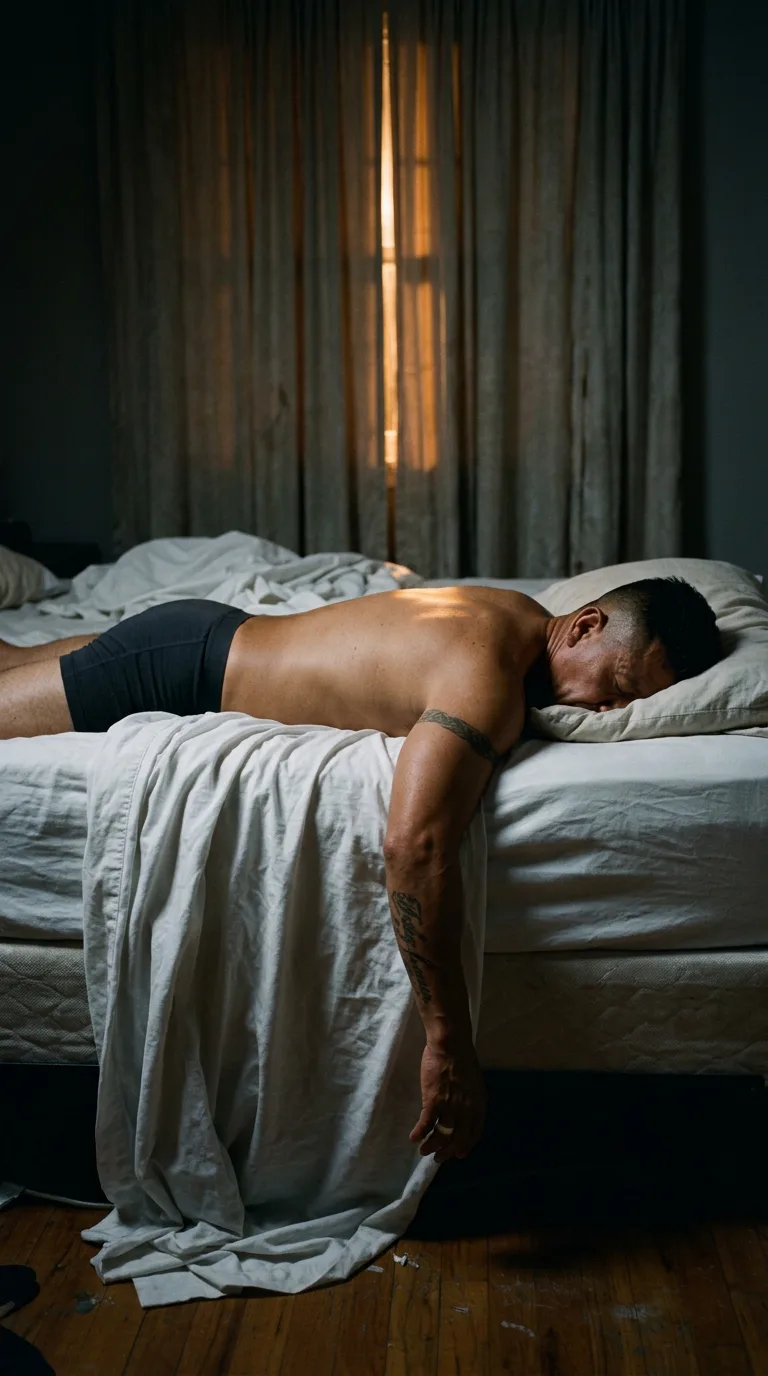
Rarest thing about him: The one who got away — rare, 1 in 20
Season 0seed 142330144 · engine v10
Character card
lineage 79CGDV
His body-swap story
@brian.okafor.lynch, wearing Gregory Pilcher, rolled the wheel on and woke up as Rolando Fierro, spent 1 minute in him, then spun the wheel and woke up as Dominic Achebe
Gregory Pilcher's kitchen smells like burnt coffee and drywall dust, and his knees ache in a way that has nothing to do with age and everything to do with thirty years of kneeling on concrete. You stand at the counter in his heavy body, in the gray dark before a Detroit Monday, and you already know you're not staying. Not because anything's wrong. Because you spun into him last, and less than sixty seconds ago you were a gravedigger named Danilo Reyes — 27, skinny fat, black hair, a house in Chicago with a leak under the sink you never fixed — and before him three others, and before them more, and the wanting is already back, quick as a held breath let go. It always comes back this fast now. You don't examine it. You go to the site instead, because that's what the site is for, and Gregory Pilcher's thick hand is the one that clicks the mouse.
You are face-down in unmade sheets, and your breathing changes before you notice it's yours to change. Ragged, then even. The arm that was hanging off the mattress lifts itself, unasked, and the body you're wearing rolls onto its back and folds its hands over its chest like a man laid out for a viewing. Streetlight comes through a gap in the curtain in one thin gold blade across the ceiling. Somewhere outside, El Paso is doing nothing at all — dogs, distant interstate, a house that used to have more people in it than it does now.
The hands are the first thing. Smaller than Gregory's, than Danilo's, calloused along the pads in a specific pattern you don't recognize yet, and a pale stripe on the ring finger, cooler to the touch than the rest, like a scar that never broke skin. You lie there in him a moment, hands folded, and it starts.
The sheet under you is cheap cotton gone soft with washing, and it gives you a Sunday — him stripping the bed because his daughter was coming to visit and he wanted it to smell like detergent instead of like a man alone, and how she didn't come, and how he remade the bed anyway, badly, corners wrong, and didn't care. The mattress gives you the marriage: seventeen years of it, a woman's laugh that used to fill this exact room, the specific weight of her turning over at three in the morning, and then the absence of that weight, which he still feels some nights like a phantom limb, though he'd never say the word "phantom" or the word "limb" — he'd just say the bed's too big.
The pillow under your face still holds a memory of aftershave, and it drops you into a morning six years back, this exact bedroom, this exact light — him buttoning a work shirt one-handed while balancing a coffee on the dresser with the other, sleeve going over the forearm, collar snapped down, the toolbelt already looped and waiting on the doorknob like a dog wanting a walk. His hands know this motion without him supervising it — twenty-nine years of it, since he was younger than his own son is now. Suction lifter, glass panel, the particular grunt of lining up a pane against a frame so it doesn't crack going in. There's pride in the hands. Actual pride, worn smooth like a stone in a pocket.
The ring-finger stripe gives you almost nothing directly — that's the nature of an absence — but the bed under you fills it in anyway: her name was Marisol, she is the one who got away, not the one who left so much as the one he let go a half-second too slow to stop, and some nights — tonight, maybe, before you arrived — he thinks about calling and doesn't. Two kids somewhere in this city or near it, grown enough now to have their own Mondays. A toothpick, not touched but remembered, back molar worn from thirty years of chewing one down to a splinter while measuring a cut twice before making it once. A breath that hitches sometimes on dust, on cold air, a chest that's learned to manage itself, an inhaler in the drawer six inches from where your folded hands rest. Catholic in the unshowy way — a saint's medal somewhere in this house, not on him now, a few drinks a year and never liked the taste much beyond obligation. A little money saved, quietly, the kind of number he's never told anyone the exact figure of, not even her.
None of it is loud. That's the fact of him you keep bumping into — no single thing to point at, nothing that announces itself, just fifty-one years assembled patiently, glazed pane by glazed pane, into a man who is, on the whole, fine. Divorced, careful with his lungs, decent with his money, a father who worries in a specific quiet register. You lie in his dark house wearing all of it like a coat that fits better than you expected.
You open your eyes. Lift the hand off your chest — his hand, small-knuckled, tan-lined — and turn it over in the thin streetlight, watching it the way you always watch the new ones, checking the seams.
"Rolando," you say out loud, to no one, trying the name in his own voice, tasting it before you decide whether you believe it yet.
Outside, a dog barks twice and quits. You don't know how long you'll wear him. You never do. You lie there another second, turning the hand, and somewhere very far off — in a body you no longer have — a decision you haven't made yet is already waiting for you.