Gregory Pilcher
Fictional. Generated by AI — not a real person, and no likeness of one is intended.
35, contractor in Detroit · rolled by @brian.okafor.lynch · card — no film
History
who has worn him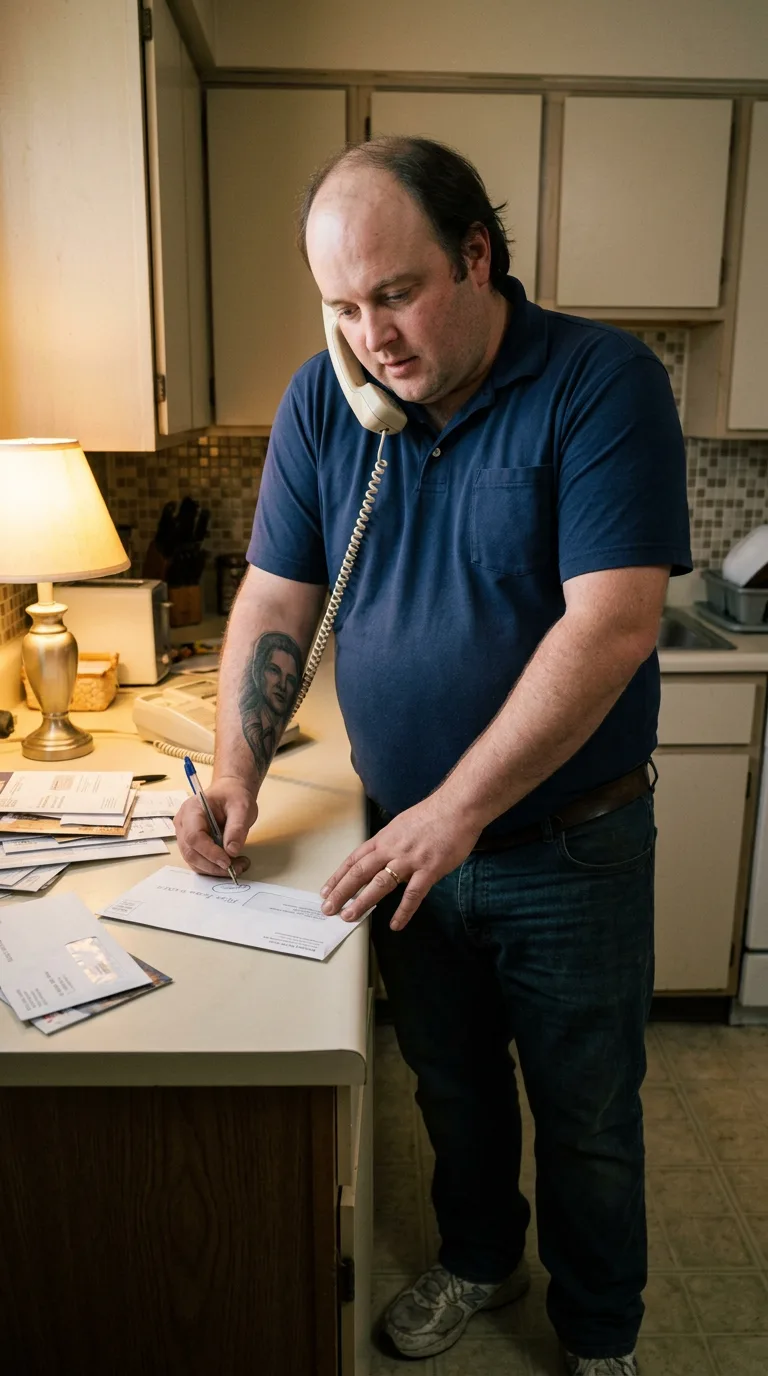
Rarest thing about him: Gay — epic, 1 in 29
Season 0seed 11381517 · engine v10
Character card
lineage 79CGDV
His body-swap story
@brian.okafor.lynch, wearing Danilo Reyes, rolled the wheel on and woke up as Gregory Pilcher, spent 1 minute in him, then spun the wheel and woke up as Rolando Fierro
---
Danilo Reyes's shoulders ache the way they always ache, deep in the traps, two shovels leaned against a headstone that isn't finished yet, and the grave half open under a Chicago sky gone the color of wet cardboard. It is the middle of the night where you're standing, but that is not the hour that matters to this body — this body has been standing in a cemetery for what feels like no time and also forever, waiting, and you are so tired of being small inside it, tired of the give in his belly, tired of hands that fumble the shovel grip, tired most of all of the smallness of everything he is allowed to want. Less than a minute in him and already the wanting is back, that old itch under the sternum that has nothing to do with Danilo and everything to do with you. You did not come back for him. You came back because eleven bodies is not enough and never has been, because there is a wheel that owes you a twelfth, because somewhere a phone is ringing and you already know, the way you always know, that whatever answers will be more interesting than a shovel.
You spin.
—
The hold music loops back to its first bar, tinny and looping through a phone cord curled like a spring, and your shoulder — heavy, round, unfamiliar — drops the receiver into a hand that already knows how to catch it. The pen, mid-loop around a reference number, an 8 becoming a 4, stops on the second digit and does not finish. You are standing at a kitchen counter that is not yours, under a lamp with a gold base too fancy for the mileage on everything else in the room, and the weight of the body settles onto you all at once — heavier through the gut, thick through the shoulders, a body that takes up room and has gotten used to apologizing for it in doorways. Sawdust ghosted into the creases of a shirt you have not yet felt. A wedding band, cool, foreign, already on your left hand before you have decided anything about whose hand it is.
The counter is Formica, printed to look like something it isn't, worn pale in a stripe where forearms have rested a thousand mornings. Your palm is flat on it. The moment it touches you get the first flash — not memory yet, just weather: this counter, early, always early, this house waking up around him before it wakes up for itself.
Then the shirt. Polo, navy, a little tight through the belly where he's grown past the size he bought it in — and touching your own chest through the fabric gives you him getting dressed this morning before the light came up, sitting on the edge of the bed in the dark so as not to wake Marcus, who sleeps like he's rehearsing for a coma, one arm thrown wide across the empty side that used to be Gregory's before it became just his side too. Socked feet finding the floor by feel. The shirt over his head, static crackling faint in that dry apartment air, and the small satisfaction — his, not yours, but you feel it anyway, sharp and clean — of a shirt that still buttons at the top even if it doesn't want to anymore. Boots by the door he didn't put on yet because today starts with the phone, not the job site.
The phone cord against your knuckles gives you more: calling the insurance company about a claim on water damage from the basement, a burst pipe in February that ruined a floor he laid himself two summers ago, cursing under his breath at a hold queue that has told him three times now his call is important. He is not an impatient man by nature — the pen is what he does instead of losing his temper, has been since he was a kid getting yelled at in a house where losing your temper got you hit — and the ring on your finger reminds you the pen wasn't always circling insurance numbers. There was an ex once, Danny, before Marcus, a name that surfaces soft and sore both, six years gone and still capable of ambushing him on slow mornings like this one, standing at a counter that Danny never saw and would have hated anyway.
The tattoo on your forearm — you feel it before you look, a tightness of old ink under skin — is his mother's face, done from the one photo where she's laughing, three years after the funeral, in a shop that smelled like Marcus's cigarettes even though Marcus quit before they married. Touching it brings the funeral itself, briefly, gray and cold and Detroit-flat, and three kids too young to understand why Daddy was crying, and then — fast, warm, overriding it — those same three kids six years old and four and two, weight of them piling onto him on a Saturday morning, the particular ache in a lower back that never fully unclenches anymore, the migraine that's already building faintly behind your left eye the way it does most mornings before coffee he never drinks because caffeine makes the headaches worse, not better.
The pen is still between two fingers. It wants, the way it always wants, to keep clicking, keep circling, some idling engine in his hands that has nothing to do with thought. Framing work today, a job three streets over, joists to set before the crew gets there, and his body already knows the exact heft of a sixteen-ounce hammer the way it knows nothing else so well, knows how to stand on a ladder without thinking about the knee that complains on stairs, knows the particular grunt-lean of picking up a sheet of plywood alone because asking for help feels like admitting something. Heavy hands. Good hands. Tired hands, at thirty-five, in a way he hasn't told Marcus about because Marcus worries enough already.
You look at your hands.
Not his hands. Yours, now — thick-fingered, a paler line where the band has sat so long the skin underneath has forgotten sun, a pen still trapped between them, forgotten mid-turn. You turn the hand over slowly, feeling the whole unfamiliar weight of it, the give of the belly against the counter's edge, the phone against your shoulder still looping the same four bars of hold music like nothing in the world has happened, which, to everyone in it, it hasn't.
You lift your eyes toward the window over the sink, toward the gray coming up outside it, and you say, to no one, in a voice that isn't the one you had eleven minutes ago:
"Okay. Let's see what you've got."