Rolando Cepeda
Fictional. Generated by AI — not a real person, and no likeness of one is intended.
57, undertaker in New York · rolled by @fabian.otero · card — no film
History
who has worn him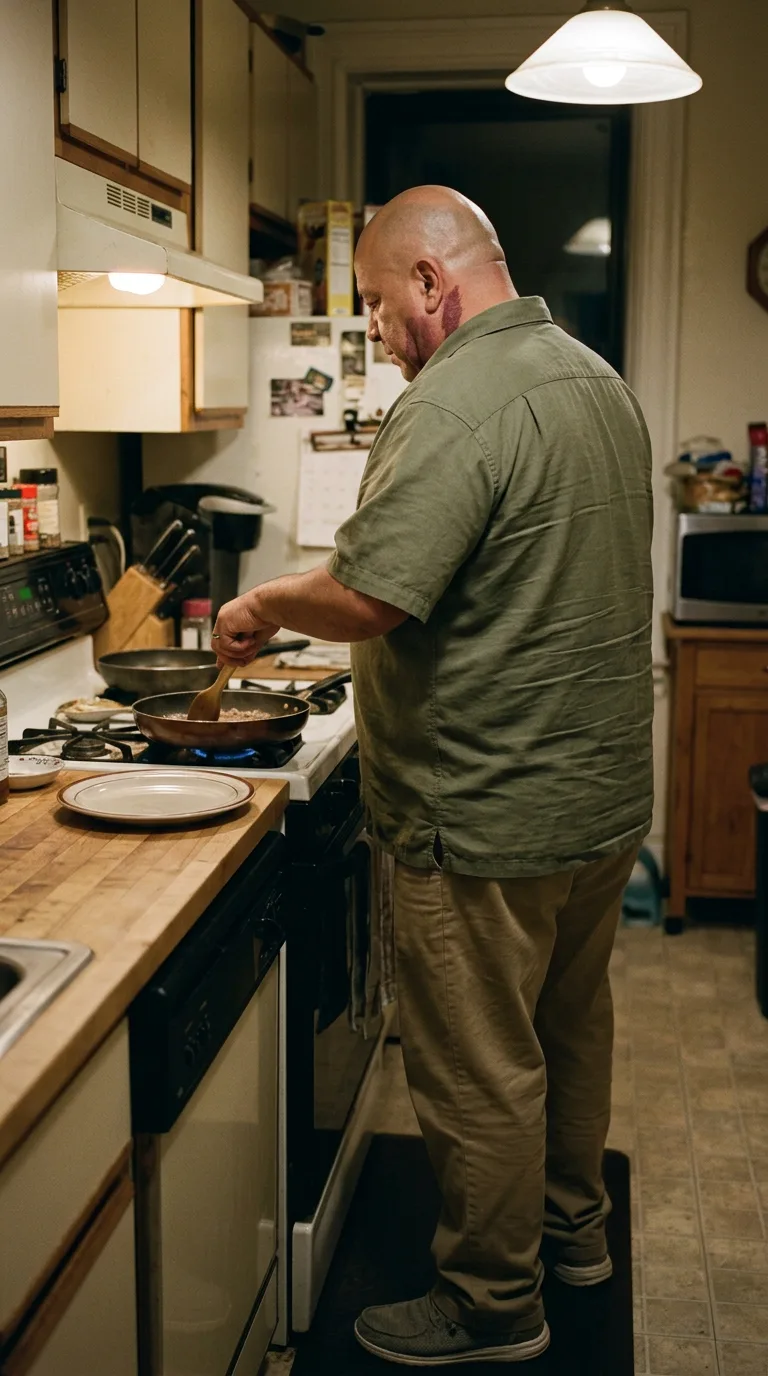
Rarest thing about him: A birthmark on the face — epic, 1 in 99
Season 0seed 2002279141 · engine v10
Character card
lineage HM5MG9
His body-swap story
@fabian.otero, wearing Dwayne Colter, rolled the wheel on and woke up as Rolando Cepeda, spent 1 minute in him, then spun the wheel and woke up as Gerald Yamashiro
Dwayne Colter's kitchen smells like nothing, because Dwayne Colter doesn't cook — Dwayne Colter microwaves, and the body around you right now is soft in a way that has nothing to do with strength, fifty years old and carrying it in the gut, the couch cushions still warm from where you left him at eleven at night with a beer he isn't supposed to have half-finished on the side table. You are standing in his hallway in the dark, everyone in his house long asleep, feeling the carpet under his bare feet and thinking: fifty-two minutes. Fifty-two minutes of being a man who has a corner office and a bad knee and three ex-wives' worth of alimony and absolutely nothing left in him that surprises you. You know already how his hand curls around a glass. You know the exact tired weight of his sigh. There is no mystery left in this one, and mystery is the whole reason you go back to the site, so you take the phone out of Dwayne's pocket, thumb the screen alive by the blue light of it in the black hallway, and you go to vessel.cards, and you spin, already gone before you've finished deciding to be.
The stirring stops mid-circle.
It starts again the other way — your hand, this new heavy hand, correcting a wooden spoon through ground beef and onion in a pan that's been seasoned black for thirty years — and you are standing at a stove in a kitchen that smells like cumin and browning meat, under a hanging lamp that throws a hard yellow circle over a butcher-block counter, and your back is to a room you haven't seen yet. Salt comes down over the pan in a practiced shake, and you don't taste it, because you are not the one who knows this dish, and then this body's hand — thick fingers, a plain gold band snug on the fourth one — reaches up into a cabinet and takes down a second plate and sets it next to the first, side by side on the counter, like it does this every night, like it never stopped doing this even after there was only ever going to be one of him eating.
The shirt is what gives it to you first — a short-sleeved olive thing, worn soft at the collar from a hundred washes, and through the fabric against your shoulders comes a woman's hands smoothing it flat there, years back, saying it brings out your eyes, Rolando, and a laugh that isn't yours but sits in your chest like it belongs. Ex-girlfriend. Before the wife. Before all of it. Her name comes with the shirt, half a name, gone again before you can hold it, the way flashes go.
The apron string against your stomach, the towel over the oven handle — that's the wife. Marisol. Thirty-one years married and asleep four hours from here, or she would be, if this were her night off; there's a shift somewhere in this that you can't place yet, a wrongness about the hour that the body itself doesn't question, doesn't look at a clock and wonder why a man cooking a late meal alone feels this rested, this unhurried — as if two in the morning is simply when Rolando Cepeda's supper happens, some nights, when the funeral home has had a bad week and the last viewing ran until midnight and everyone in his house has long since stopped waiting up.
The spoon handle is the deepest one. Thirty years of a different kind of handle before this one — steel, cold, a gurney's edge, the particular give of a man's shoulder under a suit jacket that will never move again on its own — and your hands, his hands, know things about weight and stillness and the careful arrangement of dignity that no one teaches you, they just accumulate, viewing after viewing, folding chairs in rows, the hush of families who need you to be calm because if you are not calm then no one in the room is. He believes there is a service in it. He believes, plainly, without needing to examine it much, that God asked him to be useful to grieving people, and that this is enough of a reason to have spent a life around the dead.
The wedding band clicks once against the pan handle and that's the marriage — not one memory but a hundred laid on top of each other, a kitchen table with more chairs than tonight, three kids loud around it once, quieter now, one still calling every Sunday, one who doesn't call at all and it sits in him like a stone he doesn't examine either, doesn't examine on purpose, the same way he doesn't examine the ache low in his back tonight that isn't muscle, that he already half-recognizes and is already dreading, an old visitor, kidney stones, and there's a bottle of water he should be drinking more of on the counter that he's ignoring.
Somewhere under all of it, steady as a second pulse: no drink in the house anymore, hasn't been in years, he set it down quiet without a program or a scene, just stopped, the way this whole body has an economy to it, a man who does not waste motion or spend more than he has. Under $5,000 to his name and he has never once, in all these memories flooding warm and fast through your borrowed nerves, seemed to notice that as a lack.
The second plate sits there under the lamp, waiting for a person who was maybe never coming tonight anyway, wife on a shift, kids grown and gone, and something in him set it out from muscle memory, from three decades of a table that used to be full.
You look down at his hands — thick, scarred faint across two knuckles, a plain band catching the light — and you turn the near one over slow, like you don't trust it yet.
"Not mine," you say, to the empty second plate, and you don't know if you mean the hand or the meal or the fifty-some years stacked up behind this face, and you don't know either, not yet, how long you get to keep wondering.