Ricardo Nava
Fictional. Generated by AI — not a real person, and no likeness of one is intended.
35, miner in New York · rolled by @colin.hasbrook · card — no film
History
who has worn him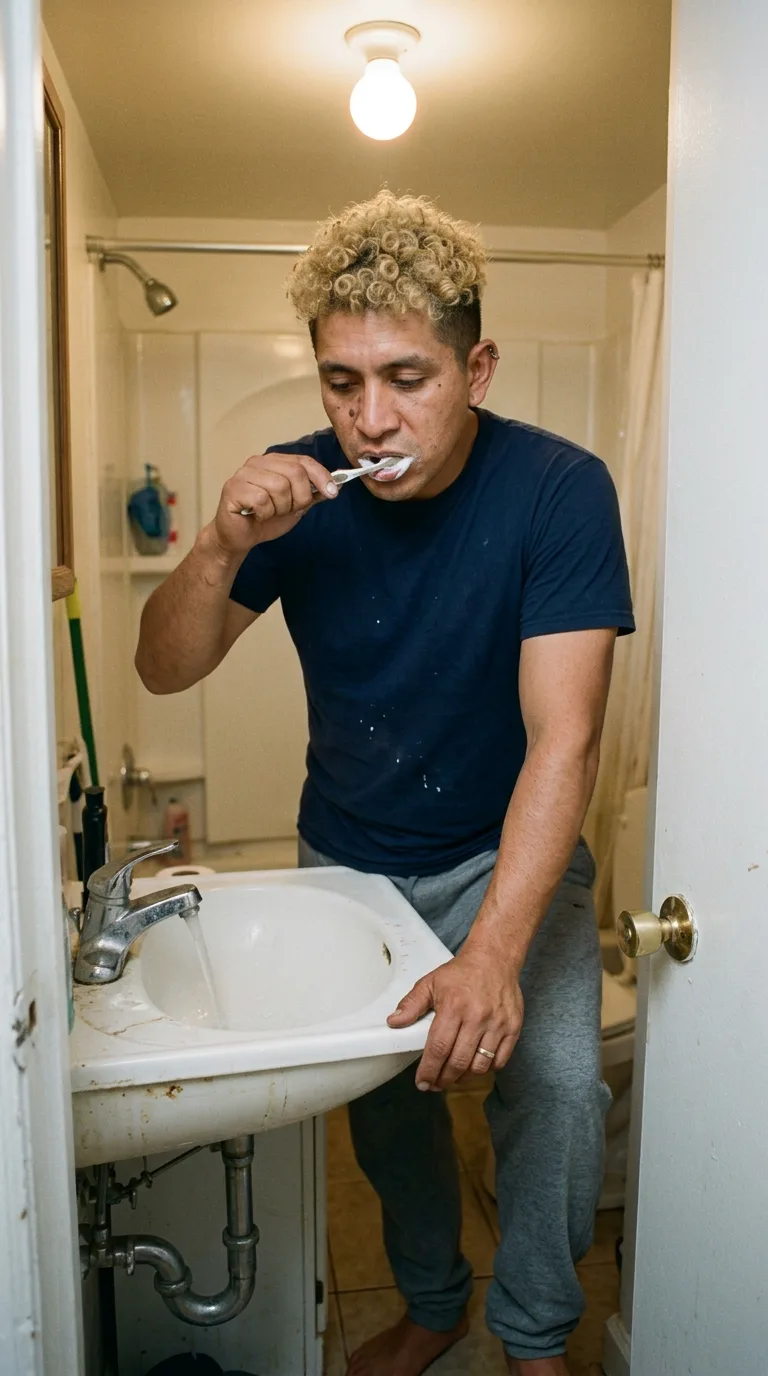
Rarest thing about him: Ear cartilage — epic, 1 in 69
Season 0seed 1488825625 · engine v10
Character card
lineage 2NZHHJ
His body-swap story
@colin.hasbrook, wearing Kalani Freitas, rolled the wheel on and woke up as Ricardo Nava, spent under a minute in him, then spun the wheel and woke up as Paul Sekulski
You are standing in a rehearsal room in Honolulu that smells like WD-40 and somebody's cold coffee, and Kalani Freitas's hands — gray-haired, callused at the fingertips from forty years of strings — are not doing what you tell them. The chord won't sit right. It hasn't sat right in eleven days. You have been him less than a minute, technically, by the wheel's clock, but you have also been him long enough to know his shoulder aches in a way that has a name you don't want, and that the name is the reason you are already reaching for your phone, already typing the address into the browser you bookmarked the very first night you ever became somebody. Kalani would not do this. Kalani has a gig Thursday. You are not Kalani. You are just wearing him, the way you wear all of them, and the shoulder is a door you'd rather not walk through, so you spin the wheel instead, because it is Monday afternoon and easier to be someone else than to be sore.
The card comes up ordinary and that is exactly what you want.
The stroke of the toothbrush stops on the left side, back molars, and starts again on the right, slower now, working carefully, foam gone thin and gray in the basin. The tap keeps running. You feel the weight arrive all at once and settle wrong for a second — shorter than you were, thicker through the shoulders, feet flat and sure on cold tile instead of Kalani's rehearsal-room rug. A bare bulb overhead. A ring on your left hand, hard against the toothbrush handle. You rinse twice, the way he always does, and stand the brush up bristles-first in water that has clearly sat in that groove of porcelain for years, and something in you already knows this bathroom the way you know nothing yet about the man.
Then his shirt — thin cotton, a size loosened by washing — comes back first, because it's already on your skin, and it brings a Tuesday with it: him pulling it over his head in a bedroom with the blinds half down, his wife Marisol still asleep with one arm thrown over the baby monitor she doesn't need anymore because the youngest is four now, and him standing there a second longer than necessary just watching her breathe before the alarm on his phone buzzed and broke it. He does this every morning he's not underground. There were three kids' voices somewhere down the hall even in the memory, already awake, already fighting over cereal.
The sweatpants at your hips remember a different day entirely — three years back, moving day, boxes labeled in Sharpie in handwriting that wasn't his, a fight with Yesenia, the ex, about whose name went on the lease when they split, and how strange it had felt afterward, folding these exact sweatpants into a drawer in a new apartment alone before Marisol was even a shape in his future. That ache is old and settled now, filed away like a bill already paid, but it still has weight when you touch the waistband.
The mole on your cheek you can't see but you can feel him being aware of it — a small thing his mother used to touch when he was little, saying it was luck, and Marisol kisses it sometimes without meaning anything by it, just a habit of her mouth finding a landmark in the dark.
The cartilage piercing at the top of your ear catches faintly against the mirror's angle of light, and that's a whole year by itself: nineteen years old, a dare from a cousin, infected twice, kept anyway out of stubbornness that never really left him — the same stubbornness that got him three thousand feet underground for a paycheck instead of somewhere safer, easier, closer to the sun. The wedding band on the other hand is heavier than it looks, scratched dull on one side from gloves, from rock, from fourteen years of a job that has taken pieces off men he's worked beside and somehow, so far, left him whole.
Your body is thirty-five and built like something used for its actual purpose — compact, solid through the forearms, the specific tiredness of shift work sitting low in the lower back where it always sits, a callus map across both palms that has nothing to do with a wedding ring and everything to do with a drill you can feel the memory of without ever having held it. Your fingers, when you're not asking anything of them, want to drum against the porcelain edge of the sink — an old habit, nervous energy with nowhere else to go, and you let them, once, twice, feeling how natural it is, how little permission it needs.
Outside this bathroom is a Brooklyn evening he isn't thinking about yet — kids fed, wife somewhere down the hall folding laundry she folds every night at this hour, a life sturdy enough that he stands here running the tap a little longer than needed just to have five minutes that are only his.
You look down at the hand on the edge of the sink — his hand, ring and all — and turn it over slowly, watching the callus lines catch the bare bulb's light.
"Almost forgot to rinse," you say to the mirror, in his voice, to no one, and you don't know yet if you'll still be behind those eyes tomorrow.