Paul Sekulski
Fictional. Generated by AI — not a real person, and no likeness of one is intended.
58, tow truck driver in Boston · rolled by @colin.hasbrook · card — no film
History
who has worn him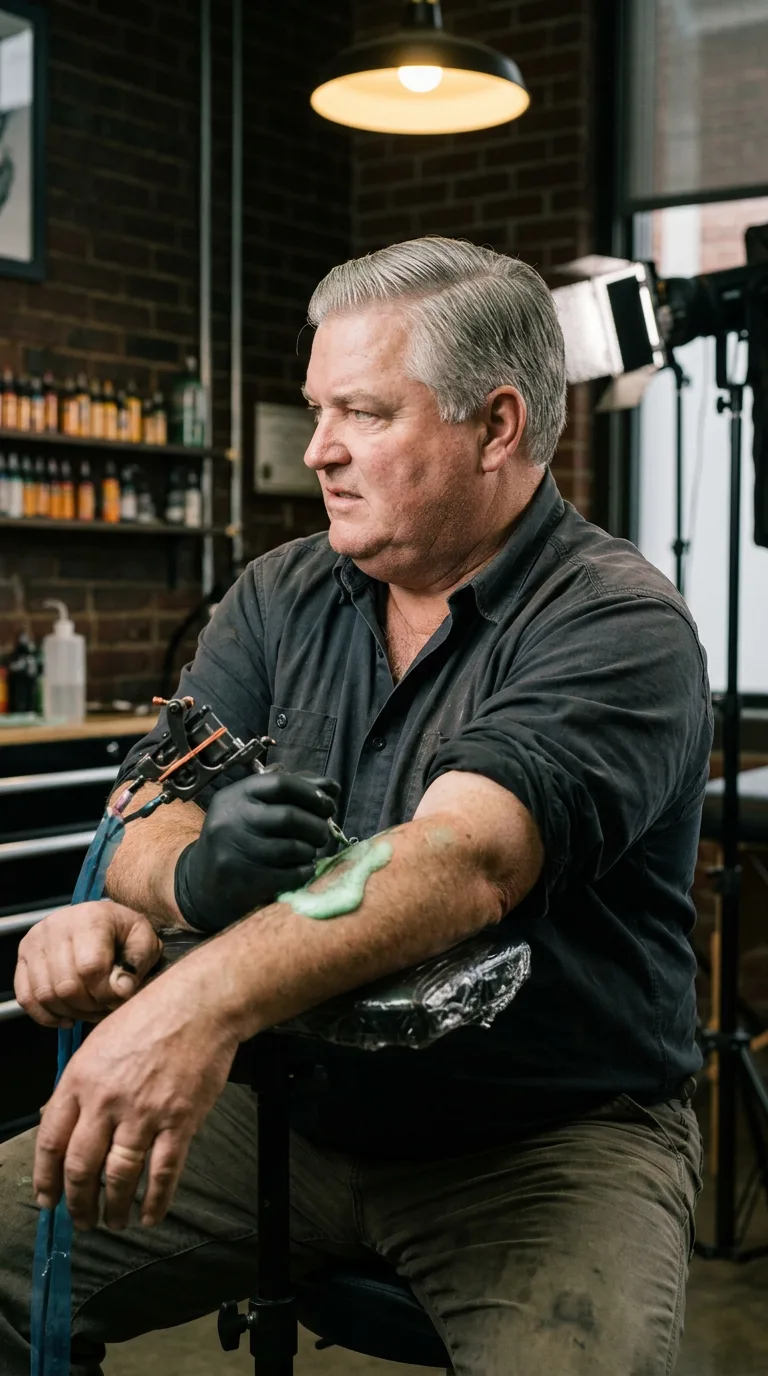
Rarest thing about him: Getting a tattoo — rare, 1 in 246
Season 0seed 196756831 · engine v10
Character card
lineage 2NZHHJ
His body-swap story
@colin.hasbrook, wearing Ricardo Nava, rolled the wheel on and woke up as Paul Sekulski, spent under a minute in him, then spun the wheel and woke up as Roger Kesselman
You have been Ricardo Nava for less than a minute, and already it is unbearable.
You feel it in the lungs first — how small they are, how the mine dust from some previous shift still sits at the bottom of them like silt. Thirty-five years old, five-seven, a body built for crawling into places, not for standing over anything. Ricardo Nava is a good body, an honest body, but you did not spin four hundred and sixteen times to end up compact and average and tired at the end of somebody else's double shift, blond hair damp against a stranger's forehead, a beauty mark on a cheek you did not choose. You spun for range. You spun to feel what it is to fill a doorway. This body does not fill anything. It fits into things. That is the whole complaint, small as it sounds, and it is enough. Whoever sends you back never needs a better reason than that — the wanting doesn't explain itself, it just gets up off the couch and opens the site again, phone light against Ricardo's face, thumb that isn't yours moving toward the wheel out of something closer to hunger than boredom.
The site loads the way it always does, patient, gray, a wheel and a price and no promises. You pay. You spin.
—
The light comes back after two seconds of nothing, and you are enormous.
That is the first thing, before a name, before a room: the sheer geography of him. Shoulders that block a doorway. A gut that has settled into itself over decades of diner breakfasts. A forearm braced flat and heavy under a chair-arm, skin shining with a smear of green soap, and against it — not painful exactly, more like weather — the needle going in and out, in and out, a machine buzzing at a pitch that should mean something to a body and doesn't, not to you, not yet. The head that was turned away from the work is still turned away. The jaw that was clenched has gone loose in your borrowing of it. You watch the needle from the corner of one brown eye like it belongs to someone else's arm, because for one more second, it does.
Then the room arrives. Brick wall, hanging bulb, bottles of ink lined up like a spice rack. A tattoo shop that smells of green soap and Barbicide and, underneath it, this man's own sweat, which is not sharp, which is the sweat of somebody who has stopped being afraid of his own body a long time ago.
—
His hands are what open first, because his hands are what's touching everything — the vinyl armrest of the chair, worn soft under one palm, and it comes back in a rush of highway shoulder, hazard lights strobing orange across wet asphalt, chain-hooks cold enough to bite through gloves, a Peterbilt jackknifed across two lanes and Paul Sekulski's forearms doing the math his eyes already did. Twenty-six years of that. Tow hooks and diesel and 3 a.m. radio traffic, dispatch calling him "Sek" like it's a name. His body knows winch cable the way other men know their own signatures — the exact drag of it paying out, the exact grunt required to walk a flatbed ramp under a dead Buick. That's in the shoulders. That's in the low ready stance he doesn't even have to think into.
The shirt against your back — his back — gives up something else: a Sunday morning, sleeves rolled to the elbow, buttoning it slow in front of a mirror in a Dorchester triple-decker that used to have somebody else's coffee mug in the sink and doesn't anymore. Diane's mug. Gone eleven years now, and the porch storm door still sticks in the cold the way it did when she used to complain about it. Two kids, grown, a boy in Worcester and a girl who calls on Sundays whether he answers or not. The ring finger — you feel it now, a pale strip of skin no sun ever touched, smooth and slightly different from the rest of the hand, worn down not by labor but by twenty-two years of a band that isn't there anymore. He still turns it sometimes, the way a man checks a pocket for keys already in his hand.
Under the collar, a rasp when he breathes — not now, not with the machine chattering along his skin and adrenaline keeping the airway open, but you know it anyway, some sediment of him that surfaces sideways: motels on long runs, the CPAP mask packed in a gym bag, the particular loneliness of sleeping alone and still not sleeping well. He quit drinking somewhere in there too, quietly, without a program, just stopped wanting it around the time the divorce papers stopped being new. Church most Sundays now. Not because anyone made him. Because the silence in the pew is better than the silence in the truck.
And under all of it, the tattoo itself, the reason his arm is braced and his jaw was set before you arrived: a name going into his skin, in the kind of plain lettering a man picks because he doesn't trust himself with anything fancier. He is fifty-eight years old and getting his first ink for a reason the body remembers even if you can't yet read the letters — grandkid, maybe, or the ex-wife's name he never let himself finish saying out loud until now, or his own mother's, gone longer than the marriage. Whatever it says, his flinching had stopped by the time you got here. You feel why: he'd already decided. This one he was going to sit through.
The needle keeps going. It doesn't hurt the way it should. Nothing about him does yet.
—
You lift the hand that isn't under the needle and turn it over in the shop light — thick fingers, a burn scar along one knuckle you didn't put there, the tan line on the ring finger pale as a scar of its own.
The tattoo artist glances up, waiting on him to wince, and Paul Sekulski's mouth — your mouth, for now, for however long now turns out to be — opens instead into something almost like a laugh.
"Feels like somebody else's arm," you say, and let him keep working.