Kalani Freitas
Fictional. Generated by AI — not a real person, and no likeness of one is intended.
41, musician in Honolulu · rolled by @colin.hasbrook · card — no film
History
who has worn him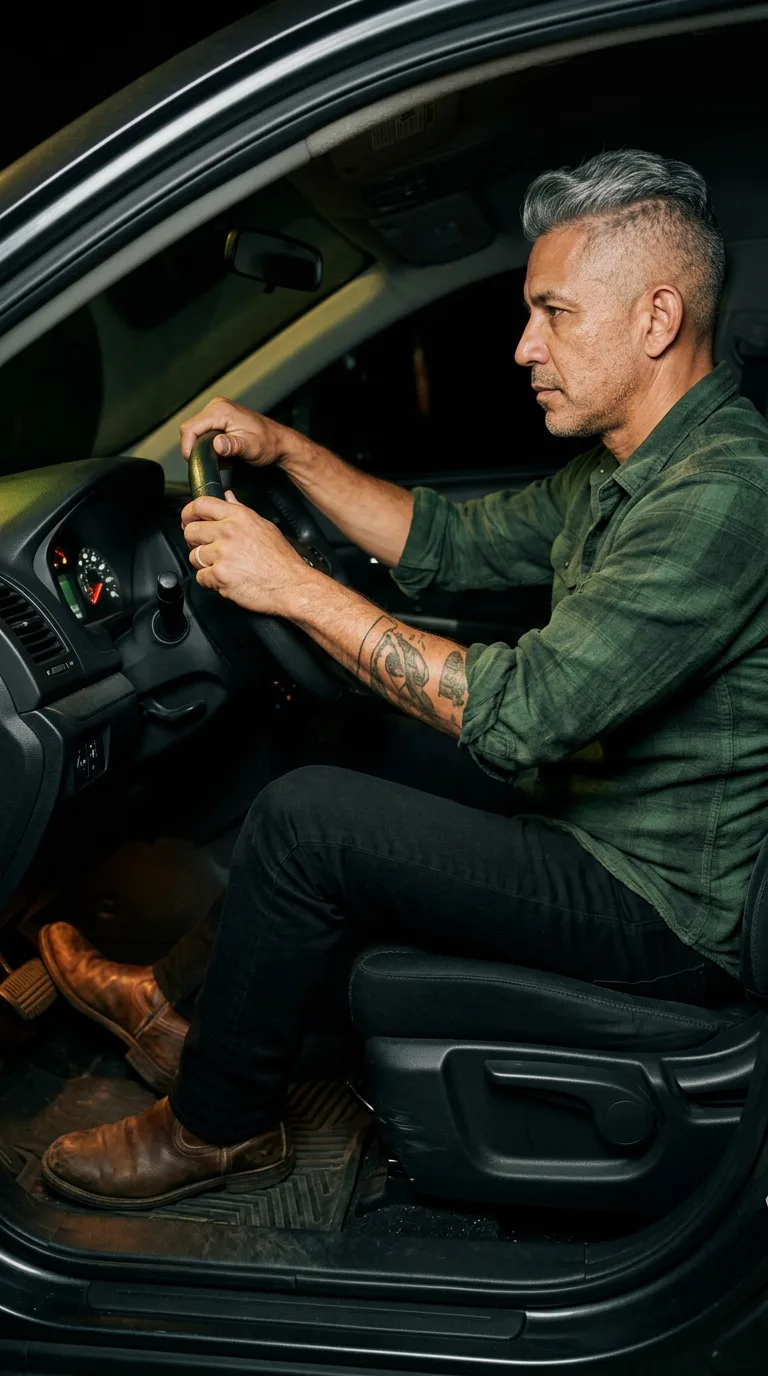
Rarest thing about him: Cigars only — rare, 1 in 28
Season 0seed 1488738412 · engine v10
Character card
lineage 2NZHHJ
His body-swap story
@colin.hasbrook, wearing Javier Lozoya, rolled the wheel on and woke up as Kalani Freitas, spent under a minute in him, then spun the wheel and woke up as Ricardo Nava
---
Javier Lozoya's kitchen smells like burnt coffee and pipe dope, and you have been him for forty seconds when you already know you're done with him. It's evening in Houston, that gray hour after work when the light goes flat, and you're standing at his counter looking at a bald head reflected in a dead microwave door, a scar cutting through one eyebrow like a change in weather. Somewhere in the muscle of this arm is thirty years of running conduit, kneeling in attics, getting yelled at by contractors named Big Ronnie. It's a fine body. It is not an interesting one. You spun for a foreman and got a man who alphabetizes his wire nuts. Boredom sent you back, plain as that — the itch of a Monday with nothing in it, and four hundred and fourteen men behind you who all, eventually, stopped being enough. You open the laptop on his kitchen table, already thinking of him in the past tense, and you go to the page with the wheel on it.
You pay. You spin.
The wheel is still spinning somewhere behind your eyes when the highway comes up out of the dark like a wall — not headlights, not glass, just road, close and specific, three miles of it left to go. Your hands are on a wheel that is not the one you just clicked away from. They come off it on their own, low, easy, and reset wider, like a man settling into a chair he's sat in ten thousand times. A turn signal ticks on, blinking for an exit that does not belong to this drive. The dash light lies along a ring finger with no ring on it. You are shorter in this body — you feel it right away, the seat closer than a tall man keeps it, the pedals nearer — and you are stronger through the shoulders than Javier ever let you be. Somewhere behind you the ocean is doing something enormous in the dark, though you can't see it yet, only feel the idea of it, salt riding in through a cracked window.
The shirt gets you first. It's a green plaid, sleeves rolled, worn soft in the way of something washed two hundred times, and the moment your back settles into it a whole morning arrives, sleeve by sleeve — Kalani standing in front of a mirror nailed to a bathroom door that doesn't quite close, buttoning this shirt one-handed while his other hand holds a lukewarm mug of Kona blend, the tin roof already ticking with heat two hours after sunrise. He almost wore the black shirt with the skulls on it, the one with the band's name half-scoured off from wear, but the black one was for the gig tonight, sweated through twice already this month, and he'd promised himself he'd keep at least one shirt smelling like a person and not a stage. He'd stood there a second longer than he needed to, looking at the gray coming in thick at his temples, thinking he looked like his father, thinking that wasn't the worst thing a man could look like.
The steering wheel under these hands gives you the drive itself, worn into the muscle long before tonight — soundcheck two hours ago, a stage the size of a pool table in the back room of a bar that used to be a shave-ice stand, the bass player's amp buzzing on a bad cable nobody's fixed since March. Kalani plugging in, adjusting a strap, running four bars of something old just to hear the room, nodding at the sound guy, a whole language passing between two men who've done this seven hundred times together. There is a callus on the pad of this thumb that has nothing to do with any tool but a pick, worn into a groove that will outlast the man.
The rest comes in slower, in pieces you have to sit still and let arrive. A house on posts, red dirt yard gone to white glare at noon, a rusted tin roof that turns every rain into a drum solo he's played along to since he was a boy. A marriage that had good years in it — plenty, actually, more than the divorce papers ever let on — a woman he still calls when something goes wrong with one of the kids, still can't quite call an ex without the word catching. Two kids who are past needing him for anything but money and rides, and somehow that's worse than being needed for everything. A ring worn on this finger for sixteen years and gone now three, but the tan line is stubborn, a pale ghost of a promise, and his thumb finds it sometimes without permission, out of habit more than grief, though there's grief in it too, filed down smooth from handling. A rosary he doesn't say the whole thing of anymore, but crosses himself before every gig anyway, an old reflex older than his faith in it. Nights that end with a cigar on the steps and a beer or two, never three, watching the neighbor's dog patrol the dirt road under a sky so full of stars it looks unserious, like a movie set.
None of it is dramatic. That's the thing that surprises you, coming in through his hands on this wheel, his back against this seat, his boots — worn soft, the leather gone the color of an old baseball glove — planted on the floor mats: he is not unhappy. He is not anything you spun for. He is a man driving home from a gig that went fine, in a body that's stronger than it has any right to be at forty-one, hands that still know four hundred chords without thinking, knuckles that crack themselves out of nervous habit whenever he's not paying attention to them, the way they're doing right now, one two three, an old tic surfacing in borrowed fingers.
You bring the hands up off the wheel — his hands, yours now, nobody's for very much longer than that — and you turn them over in the dash light, front and back, like you're checking them for something you already know isn't there. Tattoos run up one forearm in old green ink, a script you can't quite read at this angle and don't try to. The signal is still ticking for an exit three miles early. You reach over without deciding to and switch it off.
"Okay," you say, out loud, to no one, in a voice with an island in it you didn't put there.
The highway keeps unspooling toward a house on posts you have never seen except in someone else's memory of rain on a tin roof, and somewhere back in Houston a laptop is still open on a table, the wheel done spinning, waiting on nothing, the way it always is until you go back to it.