Reginald Boykins
Fictional. Generated by AI — not a real person, and no likeness of one is intended.
50, bus driver in Las Vegas · rolled by @colin.hasbrook · card — no film
History
who has worn him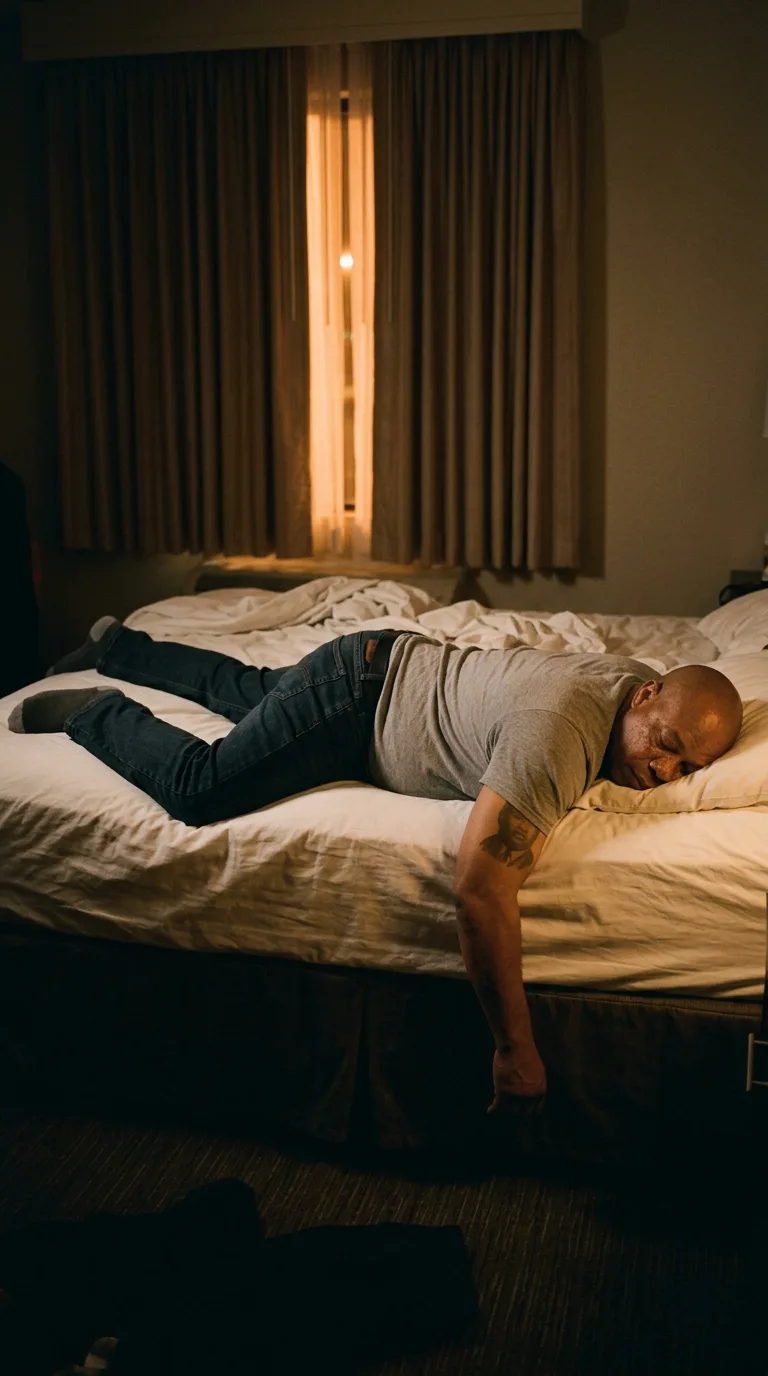
Rarest thing about him: One, upper arm — rare, 1 in 20
Season 0seed 768138202 · engine v10
Character card
lineage 2NZHHJ
His body-swap story
@colin.hasbrook, wearing Marco Tapia, rolled the wheel on and woke up as Reginald Boykins, spent under a minute in him, then spun the wheel and woke up as Adrián Solórzano
The wrench slips in your fingers before you even decide to put it down.
You are thirty, Latino, heavy through the middle, standing under a compressor unit in a walk-in freezer bay in Anchorage, and the unibrow itches with sweat even though the room around you is forty degrees. This body has been yours for less than a minute and you already know you are done with it — not because anything is wrong, but because nothing is. The freon lines are fine. The job is fine. The apartment waiting for this man tonight is fine, small, a little sad, a woman's coffee mug still in the drying rack from a visit two months back that didn't go anywhere. You didn't come back to the wheel because of him. You came back because eleven o'clock on a Monday in a freezer room is not a place a person is supposed to still be thinking about a spin, and you were thinking about it anyway, the itch of it worse than the compressor noise, worse than the cold. Fifty-eight men and you still felt that itch. You set the wrench on the shelf, take out your phone with his cold-stiff fingers, and open the page with the wheel on it.
You spin.
There is no falling, no tunnel, no in-between. There is only breath — his breath — going from a ragged, catching drag to something even and deep in the space of one inhale, and your arm, which a moment ago was hanging off the edge of a mattress into empty hotel-room air, drawing itself up on its own, elbow bending, wrist folding warm against your chest, other hand coming to rest beside it without you asking it to. You are on your back now. You were not on your back. The body did that before you had a name for wanting it to.
Streetlight comes through a gap in heavy curtains, amber, thin as a knife blade, and it is the only light in the room, and it tells you nothing about what time it actually is out there, only that in here it might as well be any hour at all. The room smells like hotel: recycled air, faint bleach, the ghost of somebody's cologne from housekeeping's last pass. Under your back, the mattress is too firm, hotel-firm, and your shoulders are wide across it, wider than you are used to carrying, and there is a soft heaviness at your stomach that presses gently against the waistband of jeans you are still wearing, and your scalp, when the pillow shifts against it, is bare, no hair to catch, just warm bald skin and the cool seam of the pillowcase.
The shirt is what opens him first. Gray cotton, thin from washing, damp at the small of the back where sweat has dried and dried again — and through it comes a hand, not yours, pulling this same shirt on over this same head hours and hours ago, in a locker room that smells like rubber floor mats and burnt coffee, a row of blue uniform shirts on hangers three feet away, TRANSIT DRIVER stitched above a pocket that isn't the one you're wearing now, because today is a day off from that shirt, today he dressed for himself. Reginald. The name comes up out of the shirt like heat off asphalt. Reginald Boykins, fifty years old, forty minutes off a graveyard route that ended at four in the morning with the casino's employee doors sliding shut behind the last stragglers, and then a shuttle to a hotel because Vegas hotel rooms by the day are cheaper than most people think if you know which desk clerk to ask, and this is what graveyard does to a life — turns eleven in the morning into midnight, turns the room dark at an hour when the strip outside is already boiling under real daylight.
The jeans give you his knees, aching a little, the specific ache of forty years of standing and thirty years of a driver's seat holding one position, gas, brake, gas, brake, mirrors, mirrors, mirrors. The tattoo on the arm — you feel it before you understand it, an old itch under skin that isn't itching, just remembered — a face, black and gray, inked in careful lines: his father, three years gone, a portrait taken to a shop on Fremont because Reginald wanted him somewhere he couldn't leave again. The freckles across your nose come alive last, a hundred small points of feeling you didn't know skin could report separately, and with them a whole childhood of aunties saying he got that from his mother's people, and his mother's people are gone too now, mostly, and this body has learned to carry gone people quietly, the way it carries the leg that starts bouncing under the sheet even now, a tremor with no permission asked, an old habit older than the two rounds of chemo that live in him like a debt paid off but never quite forgotten. He goes to church on the Sundays graveyard gives him off, and he thanked God out loud in a waiting room once, and he doesn't drink except once or twice a month when the shift schedule and his own quiet allow it, and there was a wife, and there isn't now, and the ring finger under your palm has a pale groove that outlasted the ring by four years.
The dressing memory comes clearest of all, because the shirt is still on you: him alone in this same room hours ago, pulling denim up over thighs that don't move like they used to, buttoning the shirt one-handed out of habit from bus doors and steering wheels, catching his own bald head and freckled face in the bathroom mirror and thinking, not unkindly, there he is, before he lay down meaning to nap through the worst of the daylight and instead went under hard, face-first, one arm slipping off the mattress into the gap between the bed and the dark.
You lift that arm now. It's heavy in a way your last body never was, meat and history both, and you turn the hand over slowly in the amber light, freckled knuckles, a callus map you didn't put there, and something in your chest — his chest, wide and going soft at the middle, a leg still ticking away under the sheet like a struck clock — does not slow down.
You sit up. Streetlight cuts across your bald head, your face, and you look at the hand a second longer before you say it out loud, to the empty room, in his voice and nobody else's:
"Whose bed is this."