Adrián Solórzano
Fictional. Generated by AI — not a real person, and no likeness of one is intended.
21, farmer in Los Angeles · rolled by @colin.hasbrook · card — no film
History
who has worn him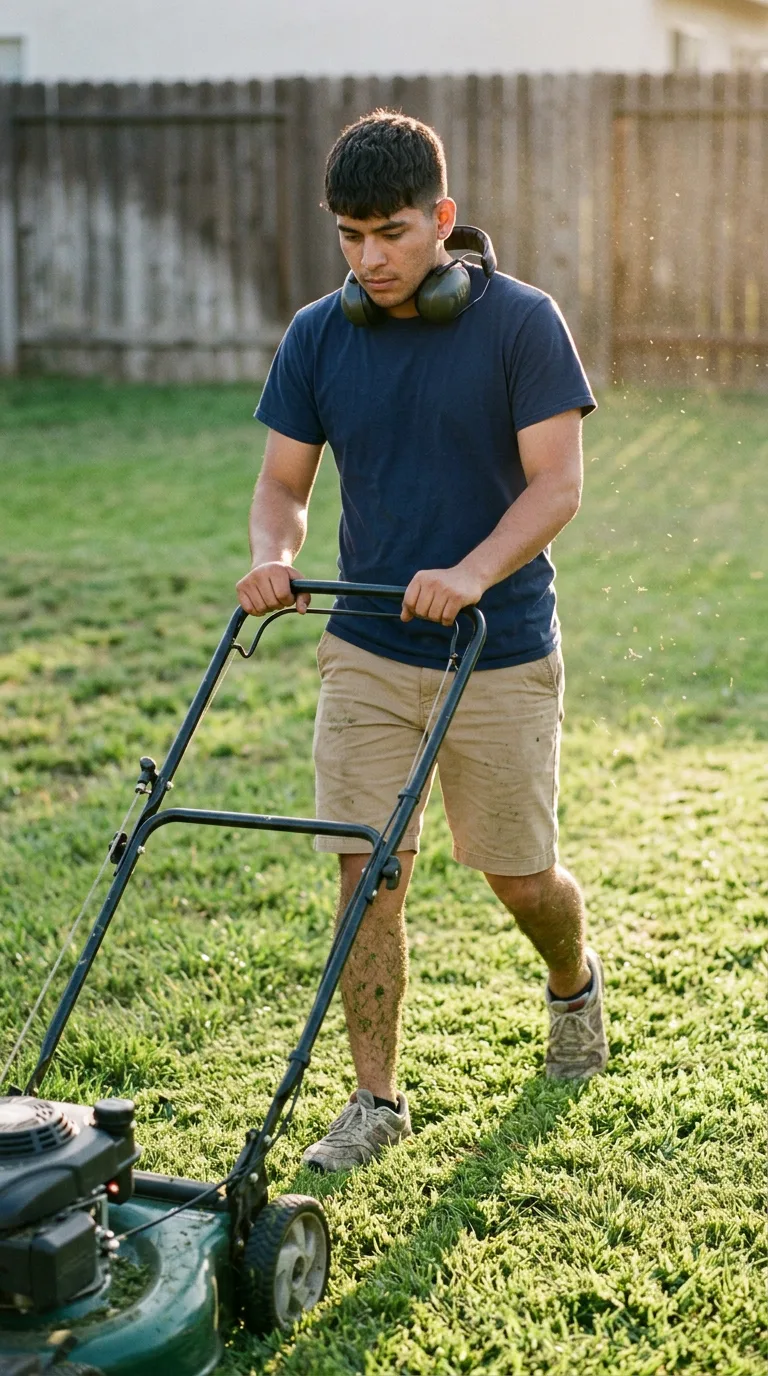
Rarest thing about him: Chronic back or joint pain — rare, 1 in 21
Season 0seed 1810861804 · engine v10
Character card
lineage 2NZHHJ
His body-swap story
@colin.hasbrook, wearing Reginald Boykins, rolled the wheel on and woke up as Adrián Solórzano, spent 1 minute in him, then spun the wheel and woke up as Chris Delvecchio
The bus is empty at the last stop of the loop, engine ticking, and Reginald's knees ache the way they always ache when the AC's been running too cold on his lower back for six hours straight. You feel that ache like it's furniture — it came with him, same as the freckles, same as the height. You've been him for eleven months of spins-that-weren't, technically less than a minute of lived time since you climbed into him, but the body remembers itself instantly whether you've earned it or not. That's the thing nobody warns you when you start: the body always knows more than you do. Reginald knew how to feather the brake at a crosswalk. Reginald had a knee that clicked. You just steer.
It isn't boredom that sends you back to the site on your phone, thumb hovering over vessel.cards in the dead dashboard light. It's that Reginald's back has started talking to you in a language you don't want to keep translating — a dull line of fire from L4 down into the hip, worse at day's end, and some nights it doesn't quit even lying flat. Fifty-nine men and you've learned you don't have to keep any of their pain. You spin because the ache is there, small and stupid and completely optional, and because there is always the same underneath-thought, quieter than the ache: someone new. Someone you haven't been.
You spin.
The mower catches on a stone under the blade — a half-second stumble in the note of the engine, a stutter-cough — and your hands are already on the crossbar before you finish becoming him. Grass clippings needle both shins. One earmuff has slid half off, warm rubber cupping only the top of your ear, and the afternoon sun is coming in low and gold across a chain-link fence and a stand of dry palms beyond it. The engine catches its breath and steadies. Your hand — his hand, tanned across the knuckles, a thin white worry-line where a class ring never was because there was no class ring — reaches up without being told and reseats the earmuff. The next pass runs dead straight, and you can feel, distantly, faint disapproval at all the crooked rows behind it, like the body is embarrassed on someone's behalf and hasn't caught up yet to whose.
Then it starts arriving.
The push bar is old-painted metal, grip tape worn shiny in two hand-shaped patches, and the moment your palms close on it something rises off the metal the way heat rises off asphalt: a hundred other times pushing this exact mower across this exact width of grass, weekend after weekend, for the woman who owns the courtyard building and pays him in twenty-dollar bills folded into quarters. Adrián. The name comes with the memory instead of before it. Twenty-one years old, and this lawn is not his work — his work is fifty miles east, before dawn, rows of strawberries and peppers under shade cloth that goes up before the heat does, a foreman named Osvaldo who calls him "flaco" though he isn't thin anymore, hasn't been since he filled out at nineteen. The mowing is the side money, the thing he does for the landlady on his one weekday off because his body still wants to be moving even when it's had enough of moving.
The shirt isn't on you now — he's in a t-shirt and shorts for this, the denim work shirt hanging on a hook back in his apartment — but the memory of it comes anyway, riding in on the same muscle memory as the mower's push-pull: mornings at four-forty, dark still pressing on the window, pulling that chambray shirt on sleeve by sleeve while his eyes are barely open, the fabric gone soft and pale at the elbows from bleach-water and years, two front pockets that always hold a folding knife and a rubber band for nothing in particular. His mother ironed shirts like that for his father once, a long time ago, in a kitchen that doesn't exist anymore in the shape it existed in. He never irons his own. He likes them a little rough. It feels more like the work.
The boots — not on now, but the memory of them comes with the ache in his lower back that never fully leaves, present in this body the way Reginald's ache was present in that one, except younger, sharper at the edges, a thing he's already learned to work around at twenty-one because eight hours bent at the waist over a row does that to anybody, no matter how strong the legs are. And the legs are strong — you can feel that immediately, the difference between Reginald's soft, settled weight and this: compact power in the thighs, a back that can still take the bend but complains by four every afternoon, hands that know a dozen different grips — mower bar, hoe handle, the particular careful cradle for a flat of seedlings — without you asking them to know anything.
A girlfriend arrives through nothing you're touching, just proximity to the yard, the kind of ambient love a place holds: her name is Marisol, she works at a pharmacy counter in Bell, she laughs with her whole head tipped back, and last week he drove forty minutes after work smelling like fertilizer just to sit in her kitchen and eat rice she'd kept warm for him. He was embarrassed about the smell. She said she didn't care. He believed her, mostly.
There's a specific afternoon underneath all of it — an early one, sixteen or seventeen, his father teaching him to walk a straight line behind an old rear-drive mower on a lawn much like this one, saying something about how a crooked row means you weren't paying attention to anything, not the grass, not your feet, not the two seconds ahead of you. Adrián has tried to mow straight ever since, out of something that isn't quite obedience and isn't quite grief, just a habit that outlived the reason for it.
Your — his — hands are on the bar. The engine note is even now. The sun is doing the thing it does at this hour in this yard, laying itself flat and orange along the fence boards, and somewhere behind you a screen door claps shut two courtyards over. None of it is remarkable. That's the whole of what there is to notice about him: nothing remarkable, a good straight line of cut grass, calluses instead of a single memorable feature, a face made of ordinary weather and ordinary work.
You stop the mower. Look down at your hands — his hands, brown-knuckled, a thin pale scrape healing across two fingers from a wire fence last week, grass dust ground into the creases.
You turn one hand over, then the other, the way you always do, first thing, in every one of them.
"Straight line," you say, out loud, to no one, in a voice that isn't Reginald's and hasn't fully finished being Adrián's either — and behind it, underneath it, already, the small and familiar itch of wondering how long the sixtieth one gets to keep the wheel from your thumb.