Reginald Aycock
Fictional. Generated by AI — not a real person, and no likeness of one is intended.
58, mail carrier in New York · rolled by @brian.okafor.lynch · card — no film
History
who has worn him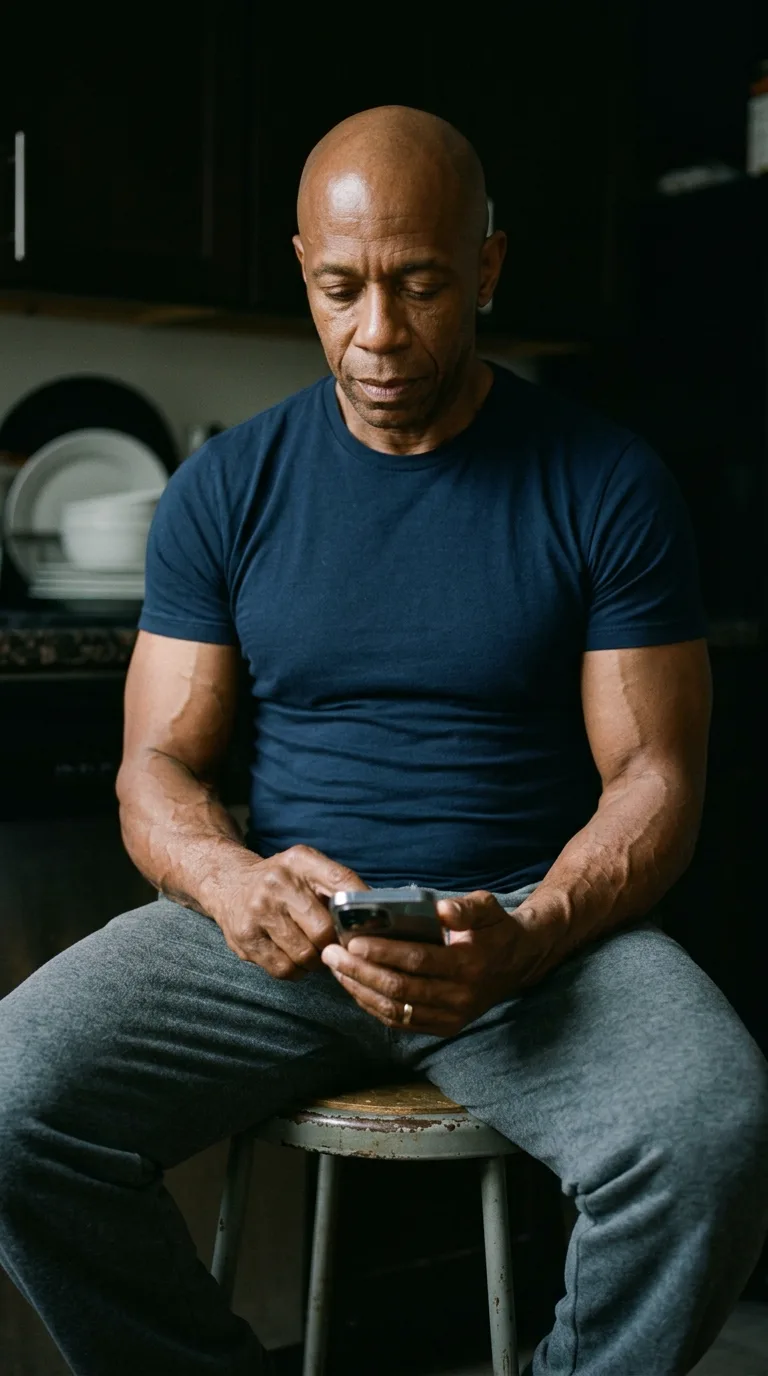
Rarest thing about him: Muscular — rare, 1 in 27
Season 0seed 1939706117 · engine v10
Character card
lineage 79CGDV
His body-swap story
@brian.okafor.lynch, wearing Trent Beauchamp, rolled the wheel on and woke up as Reginald Aycock, spent 1 minute in him, then spun the wheel and woke up as Devon Marchetti-Cole
You are thirty seconds into being Trent Beauchamp before you decide he isn't worth it — a Nashville delivery driver, skinny wrists, a beauty mark you keep catching in the dark kitchen window like it belongs to someone else. It is the middle of the night. The house is asleep around a man who isn't yours. You spun into him and he did nothing, said nothing, felt like standing in a coat two sizes off. Your leg is bouncing under the table before you've even chosen — not your habit, his, some leftover static from the last body still ringing in the nerves. That's the itch. Five minutes ago you were Marcus Delahaye, and something about wearing his coworker next, a man whose whole life you already half-know from having stood in his kitchen, in his truck, in his silences — it isn't want exactly. It's curiosity with its coat on. You open the site. The wheel is already spinning by the time you've talked yourself out of stopping it.
The scroll stops on a price. Your — his — thumb lifts off the glass and hangs there a half-second too long, and then it's not your hand anymore, it's a hand with a wedding band and a stillness in the knuckles that Trent's fingers never had. The phone turns face-down on the counter. You do not pick it back up. You are standing in a kitchen with no light on, weight low and wide through the hips, feet planted like they've stood a hundred thousand versions of this floor. Somewhere above the ceiling a pipe knocks. It is not the middle of the night here. It is too early for a kitchen this dark to feel wrong, and it does — the body under you knows it, some clockwork in the shoulders already leaning toward a door.
The T-shirt is the first thing that gives you anything — navy cotton gone soft at the collar, and under it a flash: him buttoning a uniform shirt at 4:40 in a bedroom with the blinds still down, his wife's breathing steady behind him, not waking her, doing the sleeves by feel because he's done it eleven thousand mornings and doesn't need the light. Reginald. The name comes up out of the shirt like it was folded into the seam. Reginald Aycock, and a mail route in Brooklyn he's carried for twenty-two years, four blocks in one direction and back, brownstones he could draw blind. The sweatpants under your palms remember the couch, an argument two nights ago with his daughter about money that wasn't really about money, and under that a longer, warmer thing — his wife's hand finding his in a dark theater in 1994, a movie neither of them can name now, only the hand.
Your — his — leg is already going, knee jumping against the stool leg, a motor that runs whether he's thinking or not. The stool under you is his, cold and a little rusted at the rim, kitchen chair he keeps meaning to replace. Barefoot on linoleum, and the linoleum gives you a whole kitchen: a wife's voice from upstairs calling down that the coffee's going to be cold if he keeps sitting there, two grown children's photos on the fridge held with magnets shaped like fruit, a church bulletin from Sunday still on the counter, folded to the hymn numbers. His chest is dense with old work, forearms roped from twenty years of a mailbag's strap cutting the same groove into the same shoulder. His blood pressure medication is in the cabinet behind you and his body already half-braces for the pill before you've told it to. He does not smoke anymore — nine years quit, and the fingers still sometimes ask.
He was not doing anything wrong. He was doing the thing everyone does at 5 a.m. before a shift, scrolling a thing he'd never buy, a watch worth more than his mortgage, feeling the particular tiredness of a man who has done everything right for fifty-eight years and is still doing math in his head at dawn. That ache is the last thing to arrive, low and constant under the ribs, older than the phone, older than tonight.
You look down. The hand on the counter has a wedding band on it and a leg still bouncing under the table like it never got the message that its owner is gone. You turn the hand over once, feeling how thick it is, how sure, nothing at all like the last one.
"Morning," you say, to no one, in his voice, and it comes out steadier than you expected.
You don't know yet how long you'll let this one run.