Devon Marchetti-Cole
Fictional. Generated by AI — not a real person, and no likeness of one is intended.
23, student in Boston · rolled by @brian.okafor.lynch · card — no film
History
who has worn him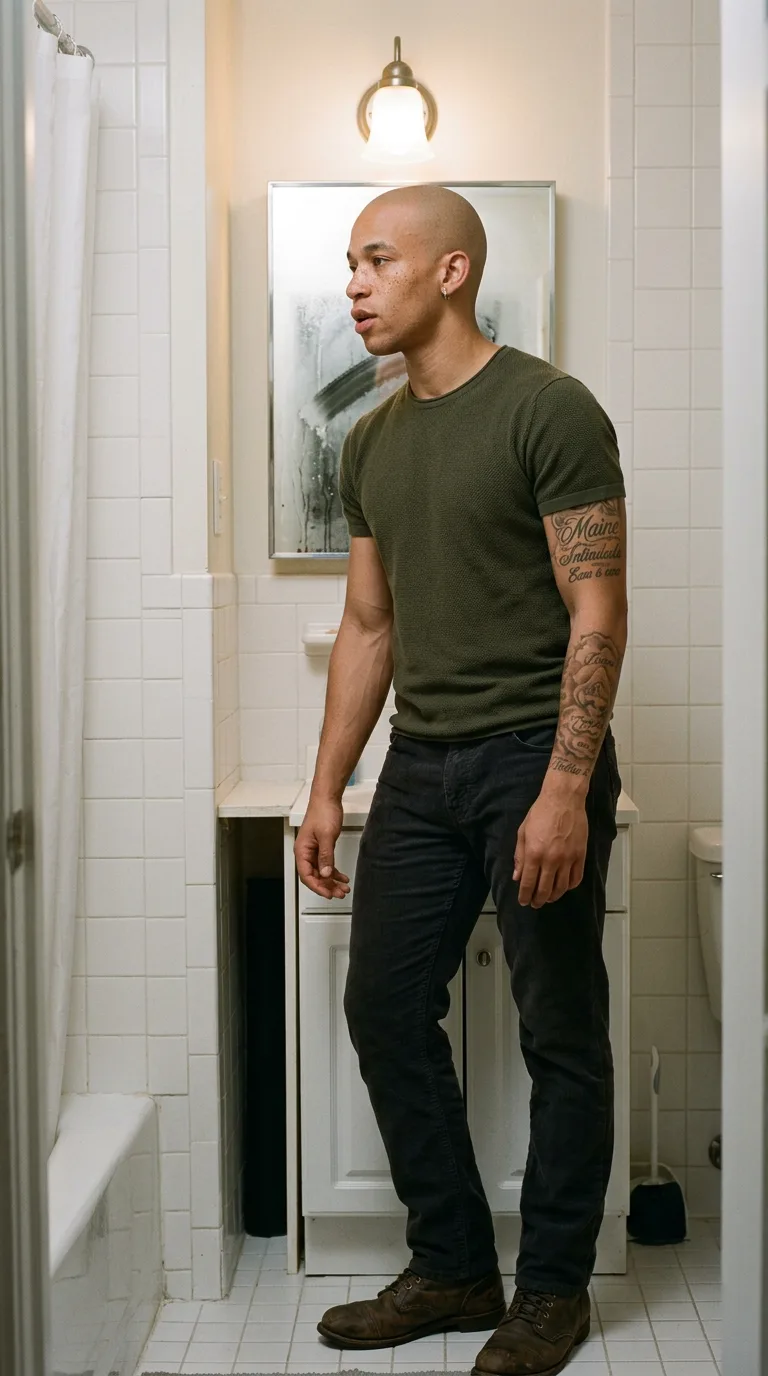
Rarest thing about him: Bald (shaved) — epic, 1 in 44
Season 0seed 151031944 · engine v10
Character card
lineage 79CGDV
His body-swap story
@brian.okafor.lynch, wearing Reginald Aycock, rolled the wheel on and woke up as Devon Marchetti-Cole, spent under a minute in him, then spun the wheel and woke up as Gary Vantrease
You have been Reginald Aycock for one minute, and one minute is enough to know he is not what you wanted. He's fifty-eight, standing in the gray dark of a Bronx kitchen with a mail satchel already staged by the door, and his knees announce themselves before his mind does — a dull grinding complaint in both, old news to him and news to you. You paid for this. You spun expecting something with more road left in it, and got a man already counting down to a pension. That's the whole reason, plain as that: not cruelty, just impatience, the particular impatience of someone who has learned that the wheel owes you nothing and the only remedy is to spin again. His hand — your hand, for one more second — is on the doorknob. You let go of it and open the site instead.
The mirror is the last thing he sees as himself: a hand-wide stripe wiped clear in the fog, his own face in it saying the last word of a wish he made from habit more than hope. His lips close on it. The word keeps going a half-beat longer than his mouth does, hanging in the tiled air of a bathroom that smells like drugstore soap, and then it's you behind his eyes, in a body that is not counting down anything, twenty-three years old and warm all the way through.
You look yourself over from the collar down, the way he was already doing, except now it's you doing the looking. Olive t-shirt, dark jeans, boots he must have laced blind because you can feel — already, faintly, like a radio catching a station — the memory of tugging them on a half hour ago without turning on the big light so he wouldn't wake anyone. Freckles across the nose in the fogged glass. A small silver hoop catching the bulb overhead. None of it is yours yet. All of it is about to be.
The shirt is the first key. It's soft through overwashing, and touching the hem gives you a Sunday — him lying on a bed that isn't his in an apartment on Beacon Hill, a guy named Theo tracing the sleeve tattoo with one finger, asking what "hundreds count as cure" means, and him not answering because the answer is his mother's handwriting on a card and a date that isn't a birthday. That relationship ended eight weeks ago over something that, in this instant, still feels unfinished rather than closed — a fight about distance that neither of them was talking about literally. You feel the ghost of missing someone, immediate and undirected, like a phantom limb.
The ink itself, when your eyes drop to it without meaning to: a tattoo artist in Dorchester, nineteen years old and terrified of the pain, gritting through four hours because his mother had said once, dying, that hope was a discipline and not a feeling, and he'd wanted it on him permanently before he could talk himself out of believing her.
Your feet on the tile — cold through white cotton socks, boots not yet on — bring back the walk from bed to bathroom, sock feet on floorboards that a superintendent keeps promising to fix, the porch-front triple-decker's radiator clanking two floors down like it does every morning whether anyone's awake to hear it or not. He is awake at an hour that is, if you let yourself notice, wrong for a day-in-the-life on a campus lawn — but there's a paper due and he never sleeps right before deadlines, hasn't since undergrad started, and last night was one vape pen and three hours of a documentary he doesn't remember the name of, and getting up before dawn felt less like insomnia and more like giving up on pretending to sleep.
Your hand finds the counter edge — cold laminate — and that single point of contact drags up a whole freshman year: a scholarship he almost lost, a therapist's office with a rug the color of weak tea, six months of Tuesdays that made the difference between surviving and not, a prescription bottle now three years old in the cabinet behind the mirror you are looking into. The relief of that gets folded into a smaller, present thing — his own fingers, without him ever deciding to, drifting to the cuticle of his thumb and picking at it, an old tic surfacing the second there's nothing else to do with his hands.
The mirror gives you nothing back — mirrors never do — but the wish is still dissolving in the room like breath, and some instinct that isn't yours and is entirely his supplies what it was for, or near enough: something about the paper, about Theo, about money stretching thin this semester, about wanting, generally, for once, an easy year.
He doesn't get one. You do, maybe, or maybe four minutes of one — there's no way to know from in here, and that not-knowing has its own small thrill, familiar after twenty-three other men.
You lift your hands from the counter and look at them — his hands, freckleless, the nails bitten shorter on the thumbs than anywhere else — turning them front to back like they might answer for themselves.
"Okay," you say to the mirror, to nobody, in a voice you have never used before and already like better than the last one. "Let's see what you've got."