Reginald Askew
Fictional. Generated by AI — not a real person, and no likeness of one is intended.
64, accountant in Small-town Ohio · rolled by @colin.hasbrook · card — no film
History
who has worn him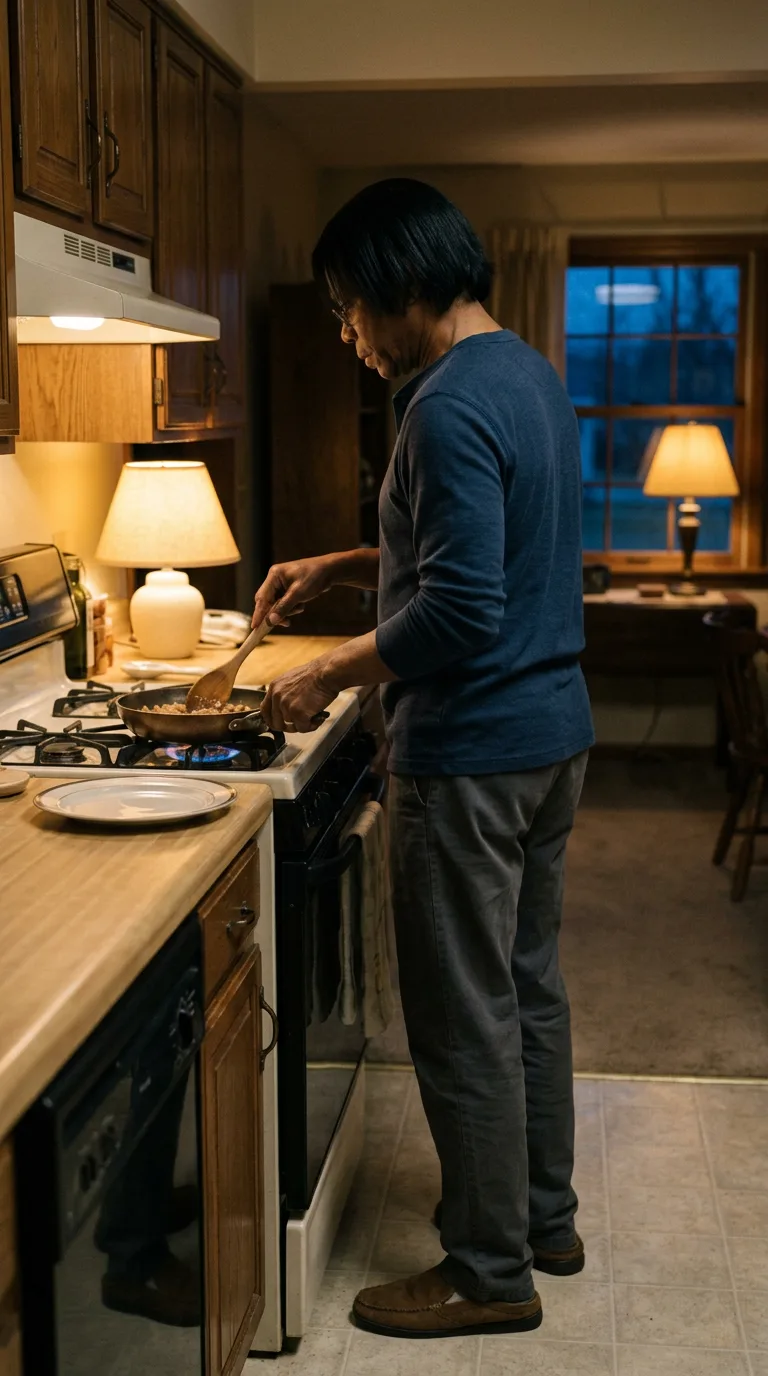
Rarest thing about him: Smokes when he drinks — common, 1 in 42
Season 1seed 91436922 · engine v11
Character card
lineage 2NZHHJ
His body-swap story
@colin.hasbrook, wearing Danny Okafor-Reyes, rolled the wheel on and woke up as Reginald Askew, spent under a minute in him, then spun the wheel and woke up as Peter Nishikawa
You are standing in a stranger's kitchen wearing the beard you grew on purpose, and it isn't enough.
You've been Danny Okafor-Reyes for maybe forty seconds — a rodeo cowboy, 42, short beard, the smell of leather and horse still fresh in a memory that isn't yours yet — and already you know this body was a mistake. Not because it's ugly or weak. Because you can feel, underneath his skin, the ghost of a bull rope biting into a palm that has never actually held one, an inheritance of muscle memory with no morning behind it. The wheel gives you the man but the 849 times have taught you the truth it doesn't advertise: the first minute in someone new is a rush, and the rush always ends, and this one ended before you finished standing up. You are bored of a man you have not even learned yet. That, more than anything, is the whole appetite. You are on your phone before your new hands have stopped trembling from the last spin, thumb finding the wheel on vessel.cards like a tongue finding a chipped tooth.
You spin.
The kitchen arrives around you mid-stir, warm and yellow-lit, a lamp burning somewhere behind you and a window gone the deep flat blue of a Ohio evening. Your hand — his hand, dark-knuckled, the wooden spoon warm from the pan — is going in a slow circle through something browning in butter. It stops. It reverses, circling the other way, as if some other cook has taken the wheel. Salt falls from your other hand over the pan in a practiced arc you did not aim. You do not taste it. You already know, somehow, in your fingers and not your mind yet, that he never tastes it until it's plated — a habit, not a mistake.
You reach up without deciding to and take down a second plate.
You set it beside the first.
And that's when it starts coming in, the way it always does, through what you're touching and nowhere else — the spoon first, worn smooth on one edge from a thousand stirrings, and with it a flood of Tuesday evenings, alone, the radio low, a voice inside saying *just cook for one, Reggie, it's fine, it's just food* — and then the second plate under your fingers, cool stoneware, wedding china really, cheap wedding china from a registry thirty-six years old, and a name comes with it unbidden: Carletta. Not here anymore. Been gone eleven years from this house and four from his ring finger, which itches now under a tan line the sun never got to erase because the metal sat there for three decades doing its job. You feel the absence of the ring like a missing tooth you keep touching with your tongue.
The shirt against your back — flannel, soft with washing, buttoned by his own hands not forty minutes ago — gives you that morning whole: standing in front of the closet, choosing this shirt because it was Carletta's favorite once, a habit that outlived the marriage the way habits do, cardigan over it because the house runs cold even in April, corduroys because they're what's clean, loafers because bending for laces isn't what it used to be at sixty-four. You feel his knees complain faintly as you shift weight at the stove, an old man's ache set into a small solid body, 5'5" and never an inch more, average build going soft in the belly the way desk life does to a man who used to be quick. Two monitors, fluorescent hum, tax season just behind him and another one always coming — that life sits in your forearms like a low current, patient, competent, thirty years of columns that always had to balance.
And under the plate-setting, quieter, a whole marriage: two kids raised in this house, grown now and gone to Columbus and Atlanta, phone calls on Sundays that are warm and a little sad. A big night out once or twice a month, a cigarette he only wants when there's whiskey in him, the taste of it linked so tight to Carletta's laugh across a bar top that he can't have one without half-wanting the other. Church on Sundays he mostly still keeps, an old hymn that comes up out of nowhere when he's alone in this kitchen, half-hummed. Money enough — plenty, more than plenty, a number he doesn't think about because thinking about it doesn't fix what it's for — sitting quiet in accounts he manages for other men all day and forgets to enjoy himself.
The second plate sits there gleaming, waiting for nobody, set down by a hand that has done this before and will keep doing it, some nights, without noticing.
You look down at that hand — his hand, cleft chin catching lamp light when you tip your face toward the window's black glass — and turn it over slowly, palm up, like you're checking it for a tremor that isn't there.
"Two plates," you say to the empty kitchen, and almost laugh, because you don't know yet if that's grief or just a man's tired custom, and you have all the time in the world to find out, or none at all, depending on when the wanting comes back.