Peter Nishikawa
Fictional. Generated by AI — not a real person, and no likeness of one is intended.
20, student in Coastal Maine · rolled by @colin.hasbrook · card — no film
History
who has worn him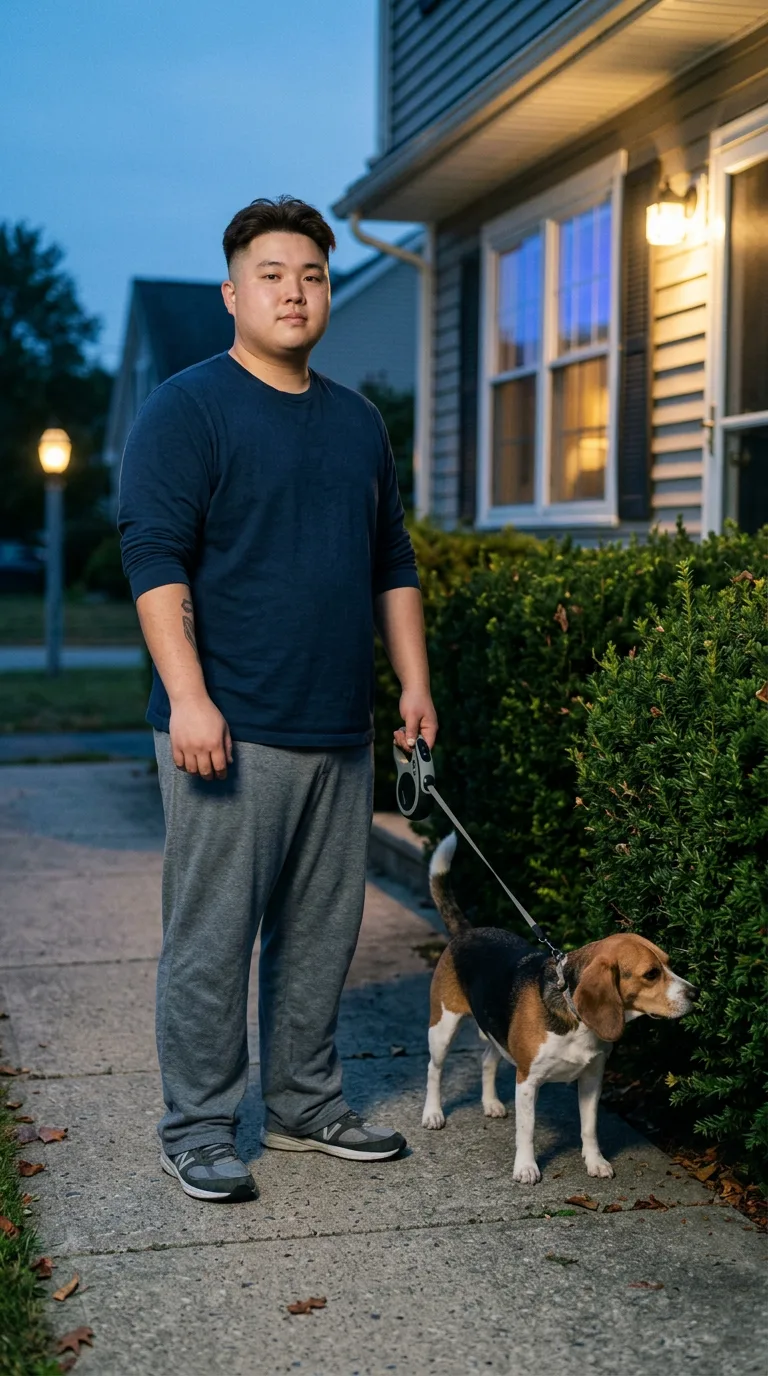
Rarest thing about him: Walking the dog — common, 1 in 35
Season 1seed 842230075 · engine v11
Character card
lineage 2NZHHJ
His body-swap story
@colin.hasbrook, wearing Reginald Askew, rolled the wheel on and woke up as Peter Nishikawa, spent under a minute in him, then spun the wheel and woke up as Julian Marrufo
Reginald's chair had a crack in the vinyl that pinched you every time you shifted weight, and you had shifted weight eight hundred and forty-nine times before today without minding it, but tonight the office is empty and the ledger is closed out and the cleft in his chin is starting to feel like a groove worn by somebody else's whole life, not yours, never yours, sixty-four years of somebody else's small good habits sitting on you like a coat you didn't buy. You spun into him after a man in Nevada who lasted eleven days and you liked the quiet of Reginald, the routine, the way nobody expected anything electric from him — but quiet curdles. You want, tonight, to not know how a thing is going to go. That's the whole reason, if you're honest, and you are, a little, alone in the office: not unhappiness, just the itch under eight hundred and fifty spins that says *again*. You open the laptop. The wheel is already loading before you've admitted you're doing it.
The leash is warm plastic in your hand and it stops being his hand between one heartbeat and the next. Your — his — weight lands on you all at once, heavier than Reginald by eighty pounds and lower to the ground, a body built close and solid, and the dog's ears go back like it heard something change in the air. Streetlight. Hedge. Cold coming up off the sidewalk in a state Reginald's body never once stood in. The leash has gone slack in your fist. You wind it twice, out of some reflex that isn't yours yet, and take a step the dog has to scramble to match.
The sweatshirt against your back is what opens first — not the one from the portrait, a different one, thinner, worn soft at the elbows from sitting cross-legged on library floors — no, wait, this is the one under the jacket, and touch gives it up in pieces: Peter buying it at a campus bookstore his freshman year, too big on purpose because everything felt too big on purpose then, the whole business of being nineteen and heavy and away from home for the first time. The name arrives with the shirt, plain as a tag: Peter Nishikawa. Sophomore. Not far into it. A dog he loves more uncomplicatedly than he has loved almost anything, a beagle named Miso that his mother back in Maine sends photos of every day whether he asks or not.
The leash handle again, gripped right, and it gives you the whole walk before this second of it — how he does this every evening at his parents' place when he's home between semesters, how the shingles of the house behind you have gone the color of a nickel left in rain, how the traps stacked in the dooryard smell like brine even dry, even in October. His mother's kitchen light is on behind that window and there's a smell of something with garlic that isn't finished yet. You feel, secondhand, how much he does not want to go back in yet, how the ten minutes with the dog are the only ten minutes of his day nobody is asking him for anything.
The forearm tattoo is under a sleeve you can't get to right now but the arm still tells you: a cross, praying hands, done cheap at nineteen with a friend from his church group, the two of them solemn about it in a way that embarrasses him now and doesn't, both. His faith sits in him quieter than it used to, church on the calendar more than in the chest, but the ink stays, and stayed on purpose, because taking it off would mean admitting something he's not ready to admit about that year.
His jaw is smooth under your palm when your hand drifts up without meaning to — shaved this morning, a blade dragged twice against a grain that comes in dark and stubborn, a habit from before eight a.m. classes he still hasn't dropped even with none this semester. The weight of him settles in through the soles of his shoes: heavier steps than you're used to, a leg that starts bouncing the second you're not paying attention to it, an old tell from exam rooms and job interviews and, once, a hospital waiting room he doesn't like to remember, his grandfather, two years back. Cash worries live low in his stomach, a number in an account that never quite grows the way the tuition bills do, a laptop held together with electrical tape at one hinge. No drink in him — quit, or never really got going, one bad night sophomore year that scared him straighter than any lecture could. No cigarettes ever. Just the leg, going.
The dog finishes with the hedge and looks back up at you, ears still faintly wrong, waiting to see which direction this walk has decided to be.
You look down and turn the hand over, this stranger's broad hand, freckled at the knuckles same as the nose above it, and something in your chest — his chest, now — goes tight and unplaceable, the leash cutting a thin white line across your palm.
"Miso," you say, out loud, testing the name like it might answer you back, "let's go home," and you don't know yet if you mean his, or how long you'll be the one saying it.