Julian Marrufo
Fictional. Generated by AI — not a real person, and no likeness of one is intended.
31, shop owner in Pittsburgh · rolled by @colin.hasbrook · card — no film
History
who has worn him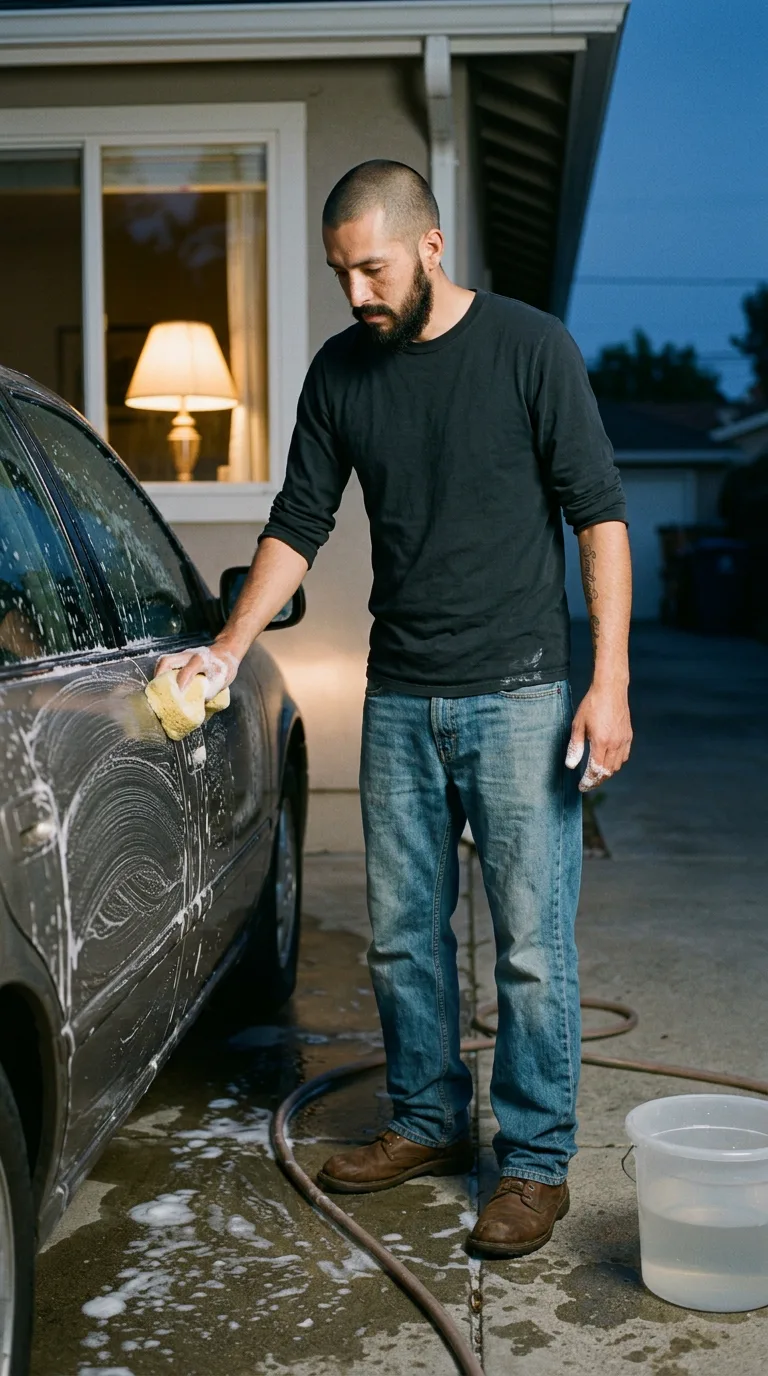
Rarest thing about him: Full sleeve — common, 1 in 53
Season 1seed 1665180322 · engine v11
Character card
lineage 2NZHHJ
His body-swap story
@colin.hasbrook, wearing Peter Nishikawa, rolled the wheel on and woke up as Julian Marrufo
You are heavy in this body, and that's the whole problem with it. Peter Nishikawa's fingers are stubby and soft, and they are, tonight, holding a can of ginger ale that has gone warm on the arm of a dorm futon while a roommate's video game clatters through the wall. Twenty years old, five-eight, heavy through the middle in a way that makes stairs a small negotiation, brown hair, brown eyes, freckles you didn't ask for and have stopped noticing. You've been him fifty-one minutes. He was deciding, before you arrived in him completely, whether to text a girl back or not, and that small ordinary stalling is somehow the thing that finally does it — the sheer smallness of being twenty and undecided in Maine on a Thursday, when you have eight hundred and fifty other lives folded up behind your eyes and none of them are this one. It isn't dislike. It's just that the can is warm and the room smells like feet and you are so tired, suddenly, of waiting rooms. You set the ginger ale down without drinking it and open the laptop and go to the page with the wheel on it, the way you always do, the way you have done eight hundred and fifty times, and you do not let yourself think about why this time, tonight, of all his boring nights, except that wanting doesn't wait for a good reason and neither do you. You pay. You spin.
The soap is already on the door in a wide gray arc when you land, and your hand — his hand — is inside it, sponge dragging, water sheeting off in a fan that catches the porch light gold before it drops. Your grip changes without your permission: thumb tucking under, wrist rolling in two small useless circles, tracing a swirl that was already finished. Behind you the last of the streaked panel just sits there, undisturbed, the only clean rectangle on the whole car. A hose lies coiled at your feet, running, hissing quietly against the concrete. It is that hour when the sky hasn't decided between blue and dark yet, and a lamp is burning in a window behind you that you did not turn on and do not remember buying.
The shirt is what gives you the first of it — long-sleeved, black, damp at the cuff where you didn't roll it far enough — and through the cotton against your back comes a whole morning: him standing in front of a mirror over a dresser that used to be his tía's, pulling this same shirt down over his head because the plaid one was still in the wash from the shop, thinking he'd change before he did the car and then not bothering, because who was going to see him. The freckles in the mirror. The two inches of beard he trims every ten days over the sink, never shorter, because a girl told him once it made him look like somebody's uncle if he went too short and somebody's saint if he let it go, and he'd rather be neither, exactly, just be Julian.
The jeans come next, worn soft at the knee from kneeling on concrete stocking bottom shelves, and they bring the store — Marrufo Hardware, his father's sign repainted only enough to change the first name, the bell over the door that sticks in humidity, the register drawer that only opens if you lift and pull at once, a trick his hands do automatically, the way they do everything at the counter now: measuring rope by eye, cutting keys blind, counting screws in fistfuls that always come out right. Six years behind that counter. He is good at it and it is not what he pictured at twenty-two, standing where you are now more or less, and there was a stretch — eighteen months, a woman named Dana, a ring he'd priced out twice and never bought — where he pictured something else entirely, and it ended the way those things end, quietly, on a Tuesday, with no one left to still matter afterward. He goes to church on Sundays and means it, mostly, and does not smoke, and drinks a beer at a cousin's cookout and calls it even.
The right sleeve is rolled and it's touching the door frame of the car, cold enamel under warm skin, and that's where the tattoo comes up loudest of all: *Santiago — Oct. 2018*, script joined at the down-stroke, a brother's name and a date that isn't a birthday, and grief comes through it thick and wordless the way it always does when it isn't asked for directly, a whole year folded into eleven letters and four numbers, and you let it move through this body without trying to own it, because it isn't yours to own, only his to have brought you.
Skinny frame, thirty-one years worn into it lightly — a low ache low in the back from lifting lumber wrong for a decade, forearms wire-strong from turning a register crank nobody else can work, fingers that go, even now, even mid-motion, to the cuticle of the thumb, picking without being told to. Freckled nose. Buzzed scalp cooling in the evening air. Brown eyes that have been looking down at soap suds for however long this has taken and are about to look somewhere else entirely.
You lift the hand — his hand — out of the gray arc of water on the door and hold it up in the failing light, sponge still in it, suds sliding down the wrist in a thin white rope, and you turn it over once like you're checking it's real, like you're checking whose it is.
"There you are," you say, to no one, to the empty driveway, and you don't mean the hand.