Raymond Acosta
Fictional. Generated by AI — not a real person, and no likeness of one is intended.
61, power lineman in Boston · rolled by @connor.waskiewicz · card — no film
History
who has worn him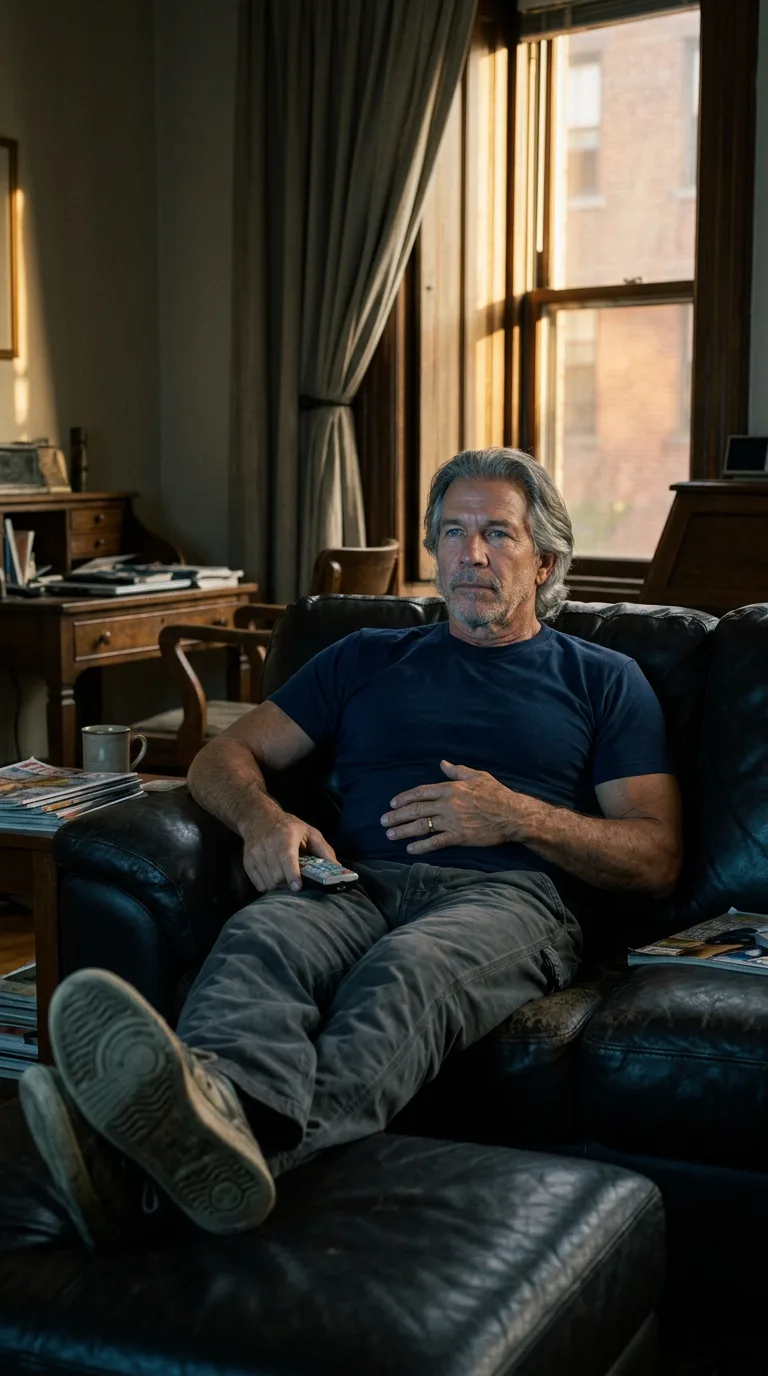
Rarest thing about him: Power lineman — uncommon, 1 in 674
Season 1seed 1770223221 · engine v11
Character card
lineage 2NZHHJ
His body-swap story
@connor.waskiewicz, wearing Raúl Esparza, rolled the wheel on and woke up as Raymond Acosta, spent under a minute in him, then spun the wheel and woke up as Marcus Alvarado
You are behind the desk you built yourself, in the office you gave your name to, and it is a Wednesday afternoon in El Paso, and you are so tired of this man's voice. Not his life — his life is fine, better than fine, the house, the board seat, the wife who calls him "mijo" like he's still twenty-eight. You've had him three weeks. Long enough to sit through two dinners where he talked about margins and you nodded with his mouth. Long enough to know the exact flavor of the boredom that comes with a body that never has to struggle for anything. You open the laptop under the desk, the one he thinks is for invoices, and the wheel is already loaded, spinning lazy colors, waiting, the way it always waits, patient as a slot machine that never says no. You do not decide so much as notice your hand has already clicked.
The room does not go dark. It goes bright — a television screen mid-cut, a burst of white light replacing whatever was on, and you are sitting upright on a leather couch with your spine suddenly straighter than a second ago, a remote set down on the couch arm by a hand that is not the hand you had, knuckles thick, skin browned and creased, a wedding band biting slightly at the base of the ring finger. The room is going blue-dark around a window where the light outside is failing, not the flat fluorescent of an office at two in the afternoon but the long amber collapse of evening. You feel a couch under you that gives differently, older, softer in the cushions, worn to a shape that isn't yours yet. A show plays on. Something in it must have been funny a second ago. You do not laugh.
The shirt is what opens first — plain cotton, soft with washing, and through it comes the memory of a body that's been rained on more times than it's been dry: shoulders that ache in a specific, permanent way, a strain low in the back that's thirty years old, forearms corded and sun-cured under sleeves that used to be short and now, off the clock, are just a T-shirt, worn loose over muscle that still works harder than it has to. Raymond Acosta. The name comes with the wedding band, comes with the smell of rubber gloves and ozone that never quite leaves a lineman's skin even after the shower. He climbed a pole this morning in the rain — you feel the specific cold of it, water finding the collar, the bucket swaying, the particular calm of hands that know exactly how much give a line has before it doesn't. Forty years of that calm. His father wanted him in an office. His father has been dead eleven years and Raymond still feels a small flare of something like guilt every time he clips into a harness instead of a necktie.
The couch gives more: this apartment, this triple-decker, the porch he re-screwed the storm door onto last spring because Marisol said the wind kept catching it. Marisol — the name arrives whole, warm, thirty-one years of her, her voice reading scripture out loud on Sunday mornings in a kitchen that smells like her coffee and his toast, the two of them never having had children and having long ago stopped grieving it out loud, having built instead a marriage shaped like two people who chose each other on purpose every single day since. He does not drink. He remembers why without remembering the worst of it — just the clean relief of thirty years sober, church on Sundays, an AA coin in a drawer he touches sometimes without opening. He never smoked. His lungs, when you notice them, are clean the way a lineman's lungs have no business being.
This morning — you get it in pieces, the shirt giving up its sleeve, the jeans giving up their denim — he'd dressed in the gray dark of five a.m., pulling this same soft henley over his head, stepping into worn jeans gone pale at the knees, lacing boots that have been resoled twice, the leather remembering his feet better than any new pair ever would. Rain was already on the window. He'd kissed Marisol's hair before she woke fully, the way he does every morning, and gone out to stand in a bucket forty feet up while the sky came down on him, hands sure on wire that could kill him wrong and never once has.
The remote is still warm from his palm. The television light moves over a face you haven't seen yet from this side. He has gray-silver hair he hasn't cut in too long, stubble he means to shave and doesn't, and a marriage he has never once regretted, and you are standing in all of it uninvited, feeling how comfortable it is, how undramatic, how thoroughly good in a way your last body, with all its money, was not.
You look down. The hand is broad, scarred faintly at two knuckles, the wedding band scratched dull with years of gloves going on over it and coming off again. You turn it over once, slow, the way a man checks a tool he's about to trust his weight to.
"Not laughing tonight, huh," you say, to no one, in his voice, and you don't know yet if you'll still be sitting in this room tomorrow, or somewhere else entirely, in someone you haven't spun yet.