Randall Kessick
Fictional. Generated by AI — not a real person, and no likeness of one is intended.
62, roofer in Houston · rolled by @colin.hasbrook · card — no film
History
who has worn him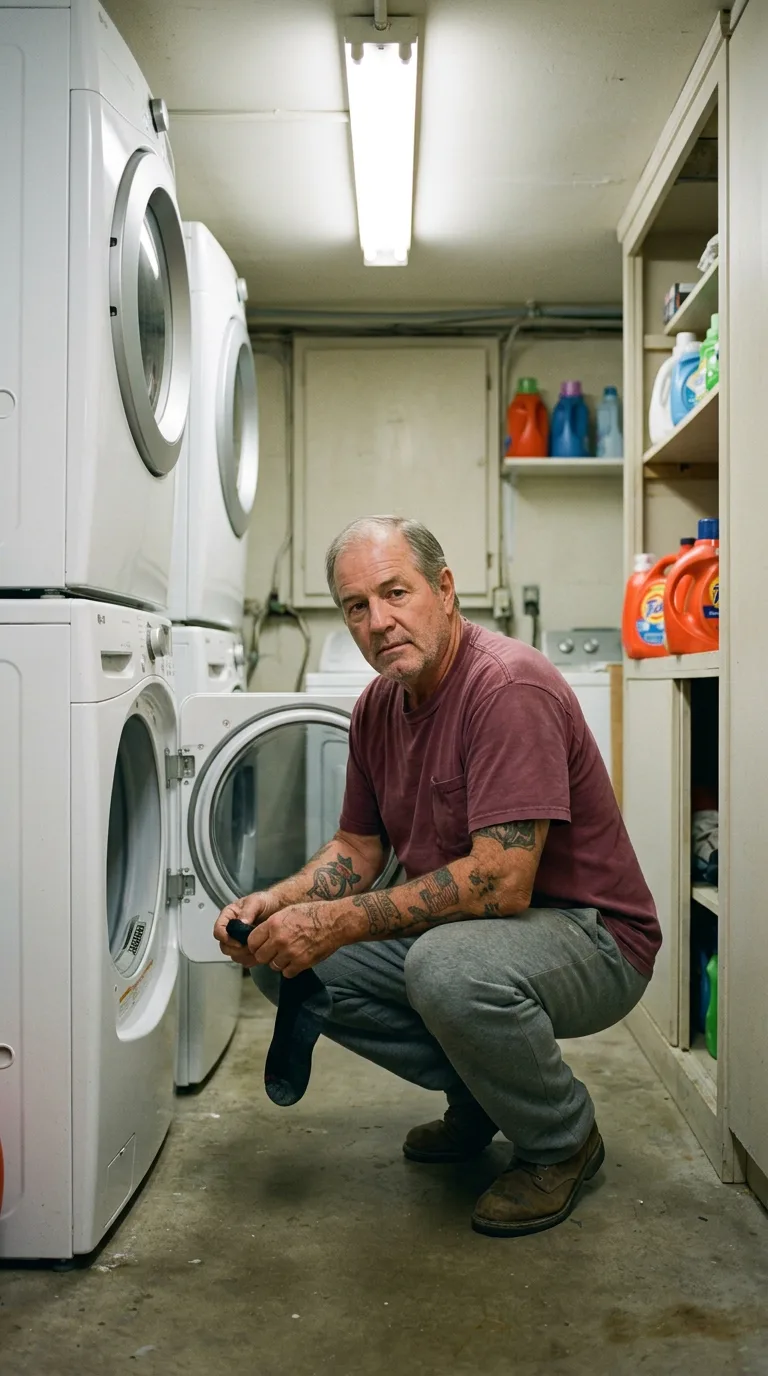
Rarest thing about him: Roofer — rare, 1 in 106
Season 0seed 1625946031 · engine v10
Character card
lineage 2NZHHJ
His body-swap story
@colin.hasbrook, wearing Cody Endicott, rolled the wheel on and woke up as Randall Kessick, spent under a minute in him, then spun the wheel and woke up as Andre Villalobos
---
The lazy eye is the problem. You keep catching it in the truck's side mirror, that little drift outward like the eye's trying to leave before you do, and something about watching yourself not quite look at yourself is worse than anything that happened in the other hundred and thirty-six. You are sitting in Cody Endicott's truck in a gravel lot off some two-lane in Eastern Kentucky, engine off, a service call half-finished behind you, and his hands — thin, chapped, a burn scar across two knuckles you didn't put there — are shaking a little on the wheel. Two minutes. That's all you gave him. You didn't even learn the customer's name before you were back on your phone, on the site, because nineteen and average and a bad eye is not a body you want to keep being, and the wheel doesn't care that you just spun it, it only cares that you pay again. So you pay again.
The wheel spins the way it always spins, a color wash and a sound like a slot machine dying, and it lands, and there is no in-between.
You are crouching. Concrete under a pair of knees that ache already, low and deep, older than any ache Cody's knees ever offered you. Fluorescent light. A sock in your hand, damp-warm, and the smell of fabric softener so strong it's practically a taste. Your back — his back — is a wide soft weight you did not have a second ago, and it settles into you like a suitcase set down. A dryer door hangs open in front of you, drum still turning down to a stop, ticking. Somewhere above you, a house breathes: a Monday, a Houston Monday, but the wrong hour of it, because the light through the little basement window is the flat gray-gold of late afternoon nothing and your body — his body — knows in its marrow that it should be sleeping.
That's the first thing that arrives, before any memory does: the tired. Bone tired, job tired. Up-since-four tired.
The sock is what opens him.
*Twelve years of socks,* something in you says, not a sentence so much as a texture, *twelve years of finding out which ones survived the ladder and which ones came home with a hole from a nail head.* You feel the callus on the sole of a foot that isn't touching anything right now, feel it anyway, a phantom ridge of hardened skin built one shingle at a time. The shirt against your back — his back, still getting used to the pronoun — is a maroon pocket tee, and the second your shoulders roll inside it you get a flash of this morning, him pulling it over his head in a bedroom with the blinds already up, his wife's shape still denting the far side of the bed, empty because she leaves for the school at six-forty and he doesn't, not anymore, not since the roofing company started letting him take afternoon jobs on account of the treatments wearing him down some mornings. *Remission,* the word arrives whole, unasked, riding in on the smell of the shirt's detergent, and with it a memory of a waiting room, a doctor's flat kind voice, Sherry's hand gripping his so hard the wedding band bit in. That was two years ago. He still checks his own throat in the mirror some nights without meaning to.
The tool belt isn't on him now — that's a different set of hours, up on a pitch with the town spread out flat and hazy below, nail gun heavier than people think, the particular vertigo of a 62-year-old dad-bod frame planting itself sure-footed on a 6/12 slope because the legs, whatever else has gone soft, still know exactly where the edge is. That memory comes anyway, off nothing but the belt hook grooved into the belt loop of the jeans folded in the basket three feet away — a flash of morning sun, a coworker half his age hollering something about the Astros, his own laugh coming up easy from someplace that doesn't hurt yet.
The wedding band is the one that goes long. Left hand, plain, worn thin on the underside where it rubs the shirt cuff. Sherry at twenty-four in a church basement with folding chairs. Sherry screaming at him over money the year the second roof job fell through. Sherry's hand on the back of his neck in the hospital parking lot, saying *we're not doing this alone,* and meaning it, and him believing her, and it working out to be true. Three kids born into that, then a fourth nobody talks about needing as much help as he still sends quiet, unasked, because that's just what a father does even when the ex-girlfriend who raised him half-right calls it charity and he calls it nothing, calls it nothing at all, just a check.
And under it, further down, an old ex — Denise, nineteen-eighty-something, a girl he almost didn't leave for Sherry, whose name still surfaces sometimes on a slow drive with the radio on the wrong station, not longing exactly, just a door in the house he doesn't open, just knowing it's there.
You feel all of it arrive the way water finds a low place — not chosen, just settling.
Your knees are killing you in a way that has nothing to do with fear. The load comes out of the dryer warm against your — his — forearms, tattoos flexing, faded ink of something floral and something with a flag going soft and blue-green with forty years of sun, and you fold on some instinct that isn't yours yet but moves through the hands like it's always been there: corners squared, sleeves crossed, fast, precise, a roofer's hands doing something small and exact because that's the only way his hands know how to do anything.
You look down at them anyway. At the left one, ring catching the fluorescent tube, knuckles thick, one crooked where something broke on a job in 1994 and set wrong and never bothered him enough to fix.
You turn it over once, like it might be somebody else's, and lift your eyes to nothing — the machines, the shelf of orange detergent jugs, the small stale room that is somehow, right now, the whole entire world.
"Well," you say, in his voice, low and a little rough with cigarettes that aren't even lit, "guess I ain't done yet."