Cody Endicott
Fictional. Generated by AI — not a real person, and no likeness of one is intended.
19, plumber in Eastern Kentucky · rolled by @colin.hasbrook · card — no film
History
who has worn him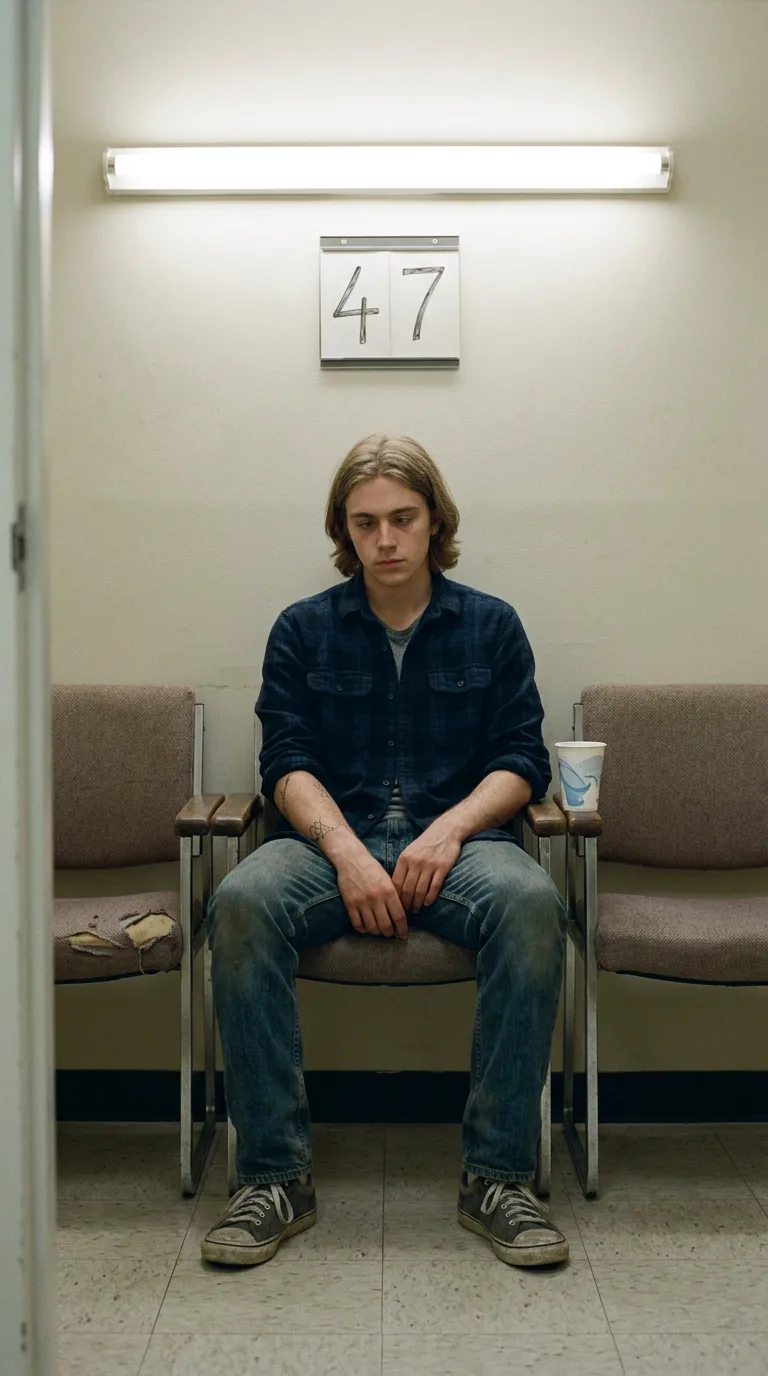
Rarest thing about him: A lazy eye — rare, 1 in 68
Season 0seed 742458324 · engine v10
Character card
lineage 2NZHHJ
His body-swap story
@colin.hasbrook, wearing Gerald Pruszynski, rolled the wheel on and woke up as Cody Endicott, spent 2 minutes in him, then spun the wheel and woke up as Randall Kessick
Gerald Pruszynski's knees ache standing on a concrete dock in the middle of a Monday that does not belong to him. That is the first thing you notice, before you notice anything else: the knees, fifty-eight years of them, the cartilage gone thin as paper. You have been him less than a minute and already you know you don't want the rest of the shift. A crane groans somewhere behind you. Your — his — back is tight from something that happened years before you arrived in him, and there's a itch in that history you can't reach because you haven't touched anything of his yet, haven't picked up his thermos or his gloves, and so he is still mostly a stranger wearing you as much as you wear him. That's the thing about the wheel nobody tells you until you've spun it a hundred and thirty-five times: the good bodies get old on you fast, right there in the doing of it, and the boredom isn't of the man, it's of the ache. Somewhere a foreman is yelling about a container. You are already gone before your hand finds the phone in your coat pocket, thumb moving toward vessel.cards out of something that isn't quite decision, more like appetite remembering itself.
The board clicks from 47 to 48 and your knee stops bouncing on the exact same click, like a held breath let go, and you are sitting down instead of standing, young instead of old, cool plastic chair instead of cold concrete. A paper cup sweats against your knuckles. Somewhere close a voice says a name — his name, not yours yet — and you do not look up. You set the cup down, square on the little shelf of the chair arm, and fold your hands the way he had already been about to.
The flannel is what opens first. It's soft in the way of a shirt washed too many times, and through it comes a gray morning, cold enough that the windows of the truck fogged, him standing in a room with a twin bed and a poster he'd had since he was fourteen and kept meaning to take down, pulling this same shirt off a hook on the back of the door. Cody. That's what comes with it, plain, the way your own name never announces itself — Cody Endicott, and a kitchen downstairs with his mother already gone to work and a note about eggs in the icebox, and the particular ordinary ache of getting dressed for a job he was decent at and didn't hate, the buttons done up one-handed because his other hand was already looking for his boots.
The jeans bring the knees — his knees, young, nothing wrong with them, but tired anyway in the specific way of a body that spends its days folded under sinks. There's a callus at the heel of his right palm from a wrench handle, and it hums faintly now, phantom, remembering Tuesday under a stranger's bathroom vanity, the smell of old pipe dope and mildew, a woman upstairs running water she shouldn't have been running while he worked, and him calling up not too sharp, just "ma'am, hold off a second," because his mother raised him not to snap even when snapping was earned. The forearm tattoo — fine lines, a little geometric star, done on a whim at nineteen with a friend who is not a friend anymore for reasons that come through faint and unwilling, something about the friend's girlfriend, something Cody has decided not to think about, so you don't get all of it, only the edges, only the shame shaped like a door he keeps shut.
There's a girl in it too, most of it soft-focus except one memory that comes sharp and unwelcome through the touch of his own folded hands: her name was Brianne and she left in the spring, and the missing of her sits in his chest like a low note that hasn't finished. He does not look up when his name is called, because some small stubborn part of him is still deciding whether it wants to be looked at today at all.
Under your tongue there's a phantom shape, a memory of wood — a toothpick, worn down, chewed to nothing, a habit his hands fall into without him, the way some men smoke. You feel his jaw wanting one now.
Church pews come through the cotton of the shirt too, an early memory, a boy in a clip-on tie who believed hard and easy the way kids do, and grew into a young man who still believes, quieter now, folds his hands like this — like now — in more places than pews. The chairs under you are a doctor's office, nothing dramatic, a look-see about a shoulder that's been catching when he reaches overhead on the job, nothing he's told his mother, nothing he'd bring up if you asked him, which you can't, because there's no him left in here to ask.
You look down. His hands, tan at the wrist and pale above where the sleeve usually sits, the small star of ink catching the strip light. You turn one over, slow, like checking it's real, and one eye drifts a little outward as you do, off toward the number board without meaning to, an old and permanent thing that isn't yours and is now.
You lift your eyes to the empty doorway where a nurse is still holding the chart, waiting on a Cody Endicott who isn't going to answer the way she expects.
"Sorry," you say, standing, "wrong Cody, I think" — and step past her into the hall like you've got somewhere better to be.