Gerald Pruszynski
Fictional. Generated by AI — not a real person, and no likeness of one is intended.
58, longshoreman in Seattle · rolled by @colin.hasbrook · card — no film
History
who has worn him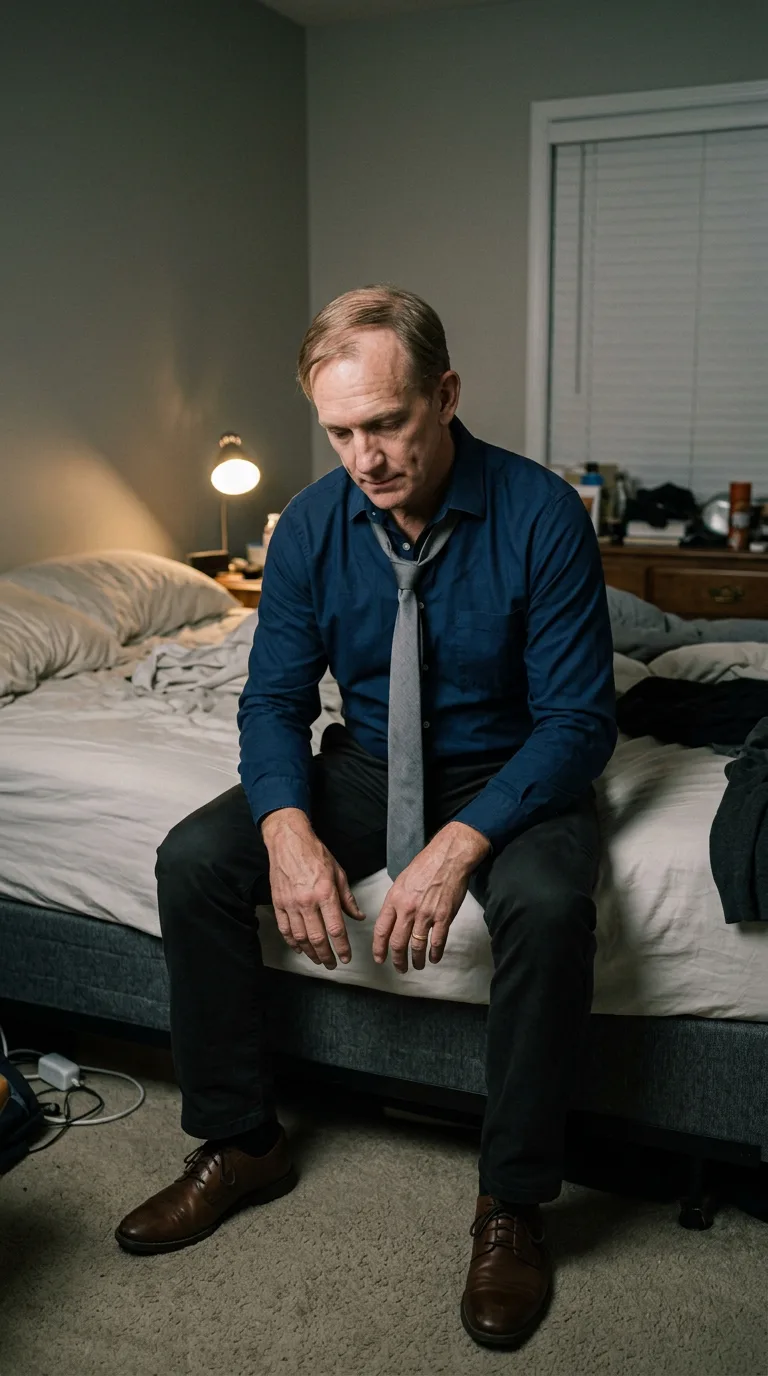
Rarest thing about him: Light brown — rare, 1 in 21
Season 0seed 1289060674 · engine v10
Character card
lineage 2NZHHJ
His body-swap story
@colin.hasbrook, wearing Cody Hutnik, rolled the wheel on and woke up as Gerald Pruszynski, spent under a minute in him, then spun the wheel and woke up as Cody Endicott
The knife is still in the wall behind the counter when it happens — you'd just set it down, still humming with the weight of Cody Hutnik's forearm, twenty years old and strong as a hydraulic press, blood under the nails that isn't yours and never was. Two minutes in this one. Two minutes of a body that could probably bench three of you and a jaw you kept catching in the steel of the walk-in cooler, admiring it like a car you hadn't paid for. That's the trouble, actually. That's why you're leaving. Two minutes and already the itch is back, the specific boredom of a body that has nothing wrong with it, nothing asking to be solved. You didn't spin 134 times to sit still in a good one. You want the part where a stranger's ache tells you where you are.
So you go back to the site with his hands, spin with his thumb, and somewhere a wheel turns and a man in Seattle reaches for a button.
You arrive mid-motion, which is the only way you ever arrive. His hand is flat on his own chest and under it you feel ribs that click faintly when he breathes deep, a floating rib that's been wrong since a pallet shifted on him nine years back. The shirt is buttoned crooked, one hole low, and your — his — fingers go to work without being told, undo, redo, correct, while a tie hangs against the collar in a knot the room has apparently never seen, because your hands tie a four-in-hand out of some other life, some office you've never stood in, and this hand does it now out of nothing but habit that isn't its own anymore.
Then the shirt gives you the first of it. Cotton, worn soft at the elbows from twenty years of forearms braced on rails and container edges, and there's a whole morning folded into the weave of it — not this morning, an old one, the two of you (him, whoever he was, and a woman whose ring is gone from his finger but not from this memory) fighting quietly in a kitchen about a Tuesday shift swap, her hand smoothing this exact collar down afterward, apologizing with her fingers instead of her mouth. The dimples were there even then, even mid-argument, an accident of his face that never asked permission to look kind.
The floor under his feet is the real thing, though — cold along the arch, because the socks aren't on yet, and thirty years of standing on steel deck comes up through both heels at once: the specific, permanent argument between his lower back and every morning of his life. You know this ache like you know none of the others. It sits low, left of the spine, and it has opinions about how fast a man may sit down. He is fifty-eight and every year of the docks is filed in that one hinge. There's a tin of something in his coat pocket on the chair — you can feel its shape without touching it, the memory arriving anyway off the cloth, a wintergreen bite behind his back teeth so familiar his tongue moves for it out of pure absence. He never touches a drink; touched enough of it, once, watching a father do the touching for him. There's a Rosary somewhere in a drawer he hasn't opened in months and still knows exactly where it is.
The tie's silk is cool where his fingers finish the knot, and here's the crane cab, here's the gantry groaning at six a.m. under a sky the color of wet cardboard, here's a boy — his boy, his only one — small on the dock rail once during a family day, hard hat sliding down over his eyes, both of them laughing so hard the foreman had to come tell them to knock it off. The boy is grown now, calls on Sundays, mostly. The wife who is not a wife anymore left the ring-shaped pale stripe on the finger and nothing else behind that you can find in the cloth, just an absence with a shape to it, like the knot in the tie is holding the place of something else that used to get straightened for him.
His right leg, without either of you deciding it, has started bouncing against the mattress frame — a motor that runs whether the man driving it wants it to or not, keeping time with nothing, the tin in the pocket, the ache in the back, thirty years of getting up in the dark for a boat that doesn't wait.
You look down. The hands are broader than Cody's, scarred faintly white across two knuckles, a naked stripe where a ring sat for a marriage that ended somewhere you haven't been shown yet and don't need to be. You turn one over, study the calluses like they're a language you're only now being handed the alphabet for.
Then you lift your eyes to find whatever passes for a mirror in this room, and you say, out loud, in a voice with more gravel in it than the one you walked in with:
"Tie's not supposed to look like that."