Andre Villalobos
Fictional. Generated by AI — not a real person, and no likeness of one is intended.
21, contractor in Dallas · rolled by @colin.hasbrook · card — no film
History
who has worn him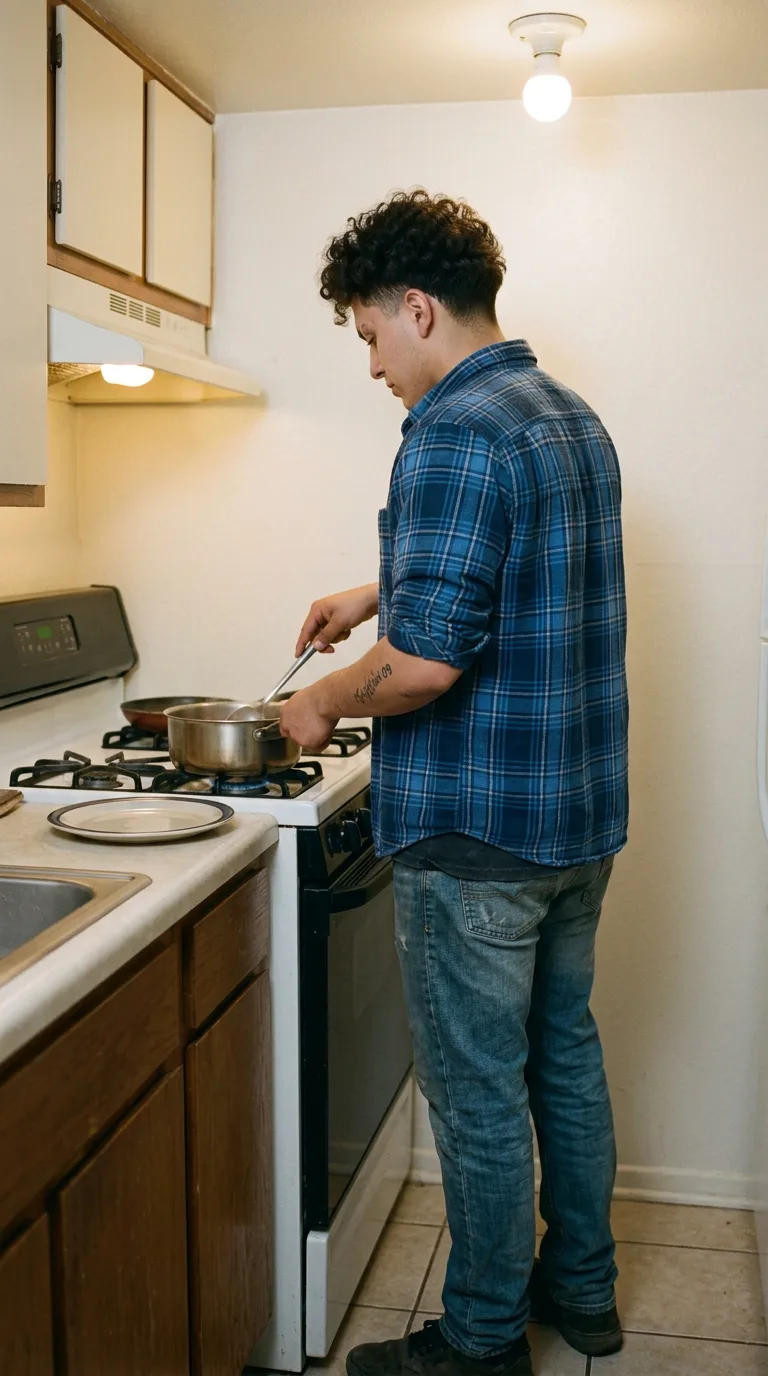
Rarest thing about him: Asthma — rare, 1 in 26
Season 0seed 1518588052 · engine v10
Character card
lineage 2NZHHJ
His body-swap story
@colin.hasbrook, wearing Randall Kessick, rolled the wheel on and woke up as Andre Villalobos, spent 2 minutes in him, then spun the wheel and woke up as Marcus Denby
You are Randall Kessick for the length of a breath in a Houston garage, and it is not enough time to even resent it — sixty-some years of somebody else's knees and somebody else's cleft chin, gray hair still smelling like the last man's shampoo, and you already know you are not staying. You spun and got him and stood there a few seconds behind his eyes, and that was the whole tenancy. Not boredom exactly. More like recognizing a hallway you've walked before and not wanting the room at the end of it. Roofer's shoulders, ache already starting in the lower back before you've done anything to earn it. You catalog it the way you catalog all of them now — a body is a body, a hundred and thirty-seven ago you might have lingered, but the lingering wore off around the fortieth one. The itch that sends you back is not even hunger anymore. It's closer to checking a phone you know is empty. You go back to the site with Randall's thick fingers, Randall's afternoon light coming sideways through a garage window, and you spin again before the door of him has even finished closing behind you.
The kitchen arrives around you mid-stir, and it is smaller than the garage, warmer, close with the smell of garlic going soft in oil. Your hand — his hand — is turning a wooden spoon through a pan, and something in you that is not you keeps the motion going for one more full circle before it reverses, spoon dragging backward through the same rice, and you don't know yet why it reversed, only that it did. You salt the pan without tasting it. You reach up into the cabinet, past a coffee mug with a chip on the handle, and bring down a second plate, and you set it beside the first one on the counter, and neither hand knows why it did that either, not yet.
It comes in through the shirt first. Flannel, worn soft at the elbows, sleeves rolled twice and not once, and the second the fabric registers against your forearms you get a flash of a closet door that doesn't close all the way, a dozen shirts just like this one on wire hangers, and a morning — this morning — pulling it on over a gray tee still warm from the dryer, rolling the left sleeve up careful, past the elbow, to keep it clear of the tattoo he never quite decided whether to hide or not. *Sofía '09.* His mother's name, the year she came up from Reynosa with him strapped to her in a carrier too small even then. He got it at nineteen without telling her, and when she saw it she cried in the good way, and he has never once told the story to a girlfriend without leaving that part out, the crying, because it's not theirs.
The spoon in your hand keeps talking. Twenty-one years old and his palm already knows the weight of a hammer better than it knows anything soft — calluses across the base of his fingers, a burn scar the size of a dime on the inside of his wrist from a exhaust pipe two summers ago, the eyebrow scar from a fall off scaffolding at nineteen that could have been so much worse and instead just left this one pale line that his mother touches sometimes without asking. You feel the asthma before you understand it's there — a tightness that lives low in the chest, waiting for cold air or drywall dust or a long day of both, an inhaler somewhere in a truck console he isn't thinking about right now because right now his lungs are fine, right now there's only the smell of onions and the particular loneliness of setting a table for two out of habit and not company.
The second plate is the thing that breaks it open. Sabrina. Nine months, give or take, ending six weeks ago over something that started small and got big the way those things do — money, mostly, and her wanting a version of him that clocked out at five and didn't smell like sawdust at dinner. He cooked for her on Sundays. Arroz con pollo, her favorite, the recipe his mother's, the second plate a reflex built over thirty-some Sundays and not yet unbuilt. His hand keeps reaching for habits his life has already cancelled. He hasn't told his mother they broke up. He hasn't told the guys on the crew either, not really, though Marcus asked once and Andre said something short and Marcus let it go, because that's what the crew does, they let things go, they hand you a tool and don't ask why your hands are shaking a little on a Tuesday.
You feel the job in his shoulders before you feel anything else about it — two years framing houses in subdivisions that all have the same six floor plans, dust in his teeth by ten a.m., the particular satisfaction of a wall going up true and square, of Todd across the plywood calling out a measurement and Andre already knowing the number before Todd finishes saying it, because they've worked enough houses together now that the numbers just arrive. Todd, forty-five, dad-bod solid, scar through his own eyebrow like they're matched somehow though neither of them has ever said it out loud, a guy from Ohio who talks about his ex-wife too much and tips too well at lunch and once drove Andre home when his truck wouldn't start, no questions, just drove. You know things about Todd that Andre doesn't know you know — you were him, seven spins back, five minutes of him, this exact scar over this exact eye, and it lands strange and warm and a little vertiginous, like meeting someone at a party you've already dreamed about.
His nails are bitten down past comfortable, and you feel the want to do it now, standing at the stove, some tension in this body reaching for his mouth out of pure habit before the hand catches itself and goes back to the spoon. Twenty-one and already carrying a chest that gets tight and a heart that got a little broken and a mother he calls on Sundays now that there's no one else at the table, and none of that shows on him standing here in a rented kitchen with bad cabinet paint and one bulb doing all the work of lighting the room, on a Monday evening after a day of hammering that never let up, going through the motions of a dinner built for a life he doesn't have this month.
You look down. The hand is small compared to Randall's, browner, the knuckles scraped fresh pink in one spot, a tattoo just visible at the rolled edge of the sleeve, half a name in careful script. You turn it over once, like checking it's real, and something in the wrist twinges — asthma-tight chest, or just a body twenty-one years young remembering it can move fast if it wants to.
"Okay," you say, to the empty second plate, to no one. "Just you and me tonight."