Ramiro Escalante
Fictional. Generated by AI — not a real person, and no likeness of one is intended.
53, trucker in Rural Texas · rolled by @colin.hasbrook · card — no film
History
who has worn him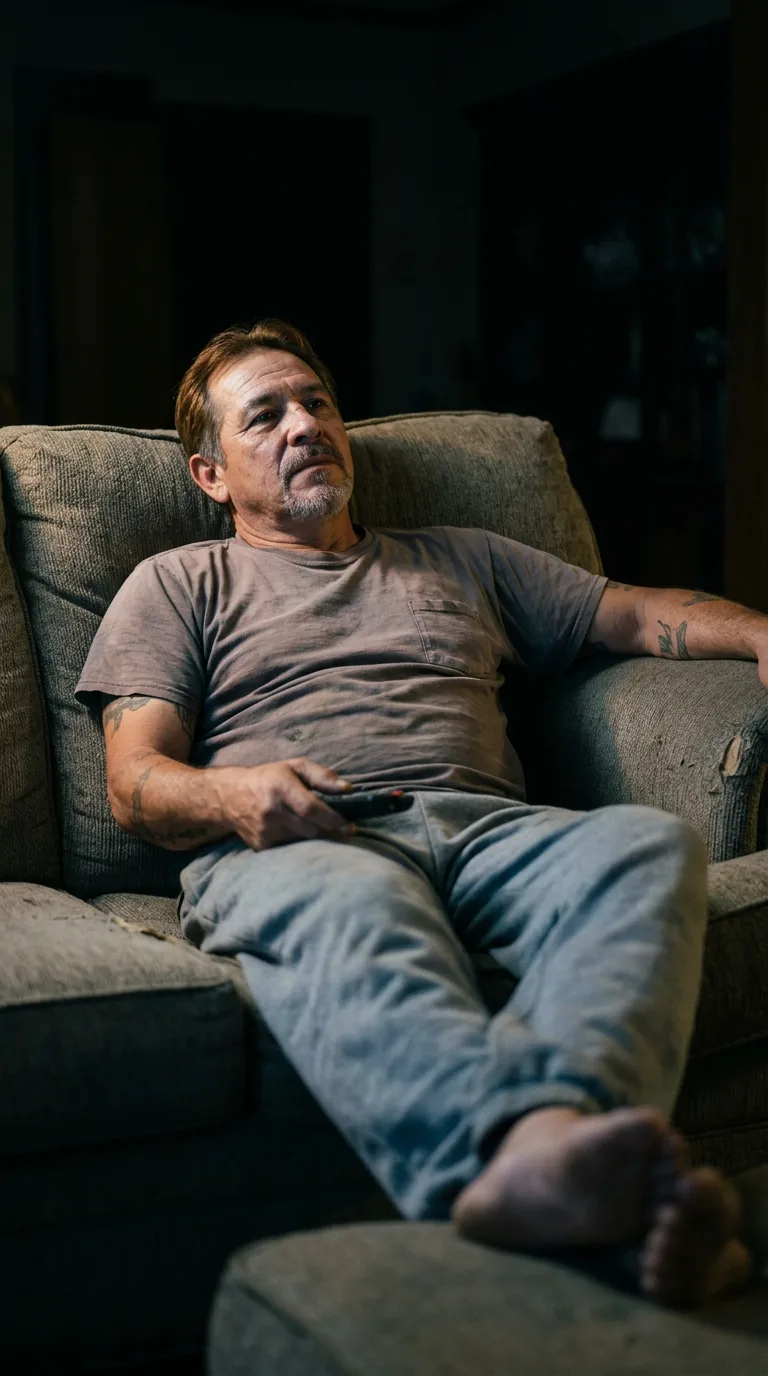
Rarest thing about him: Picks at his cuticles — common, 1 in 34
Season 1seed 37556725 · engine v11
Character card
lineage 2NZHHJ
His body-swap story
@colin.hasbrook, wearing Dale Benavidez, rolled the wheel on and woke up as Ramiro Escalante, spent under a minute in him, then spun the wheel and woke up as Grant Hollembeck
You are Dale Benavidez for less than a minute, and already you know it was a mistake.
It's the knees. Sixty-one years of them, and this new weight riding on top like wet sand, and you're standing in his kitchen in Houston with a beer sweating in your hand and a job tomorrow that will have you pouring concrete in July heat until your shirt is a second skin. You did that today, decided the wheel again, before you'd even set the beer down. Not boredom exactly. Just that Dale's hands ached when he made a fist, and you remembered — from some other body, some other spin, eight hundred and some ago — a version of tired that didn't feel like this. You want to feel like something else feels. That's the whole reason, and it's enough.
You open the site on a phone that isn't going to matter anymore. You spin.
—
The room is dark and moving with blue light, and you are sitting instead of standing, weight settled backward into cushions that know your shape better than you do, and there's a remote loose and warm in your hand. Somewhere behind your sternum there is a caught breath that was going to be a laugh — the show says something and the timing is right for it, the setup was good — and it doesn't come. You sit up straight instead. You set the remote on the arm of the couch, deliberate, like a man putting something down before he stands, except you don't stand.
You are fifty-three years old and there's a low, deep-tissue ache riding both shoulders and down into the lumbar, the specific ache of eleven hours in a seat shaped for a body forty pounds lighter, and you know without being told that this is not new, this is Tuesday-Wednesday-Thursday, this is the shape of a life.
—
The couch keeps talking first, because your back is against it — a slow warm bloom of familiarity, hundreds of evenings pressed into these cushions, this exact dent his exact spine has worn into cheap batting over nine years of a lease neither of them ever bothered to buy their way out of. Marisol will come in from her shift in twenty minutes, still smelling of the diner's fry oil, and she'll ask if he ate, and he'll say he did even on the nights he didn't, because saying no starts a conversation about money and he's tired in the specific way that makes conversations feel like weather you'd rather not stand in.
The remote in your palm gives you almost nothing — a dumb black rectangle, sticky at one corner from something spilled two winters ago — but the T-shirt against your back opens up wide. Gray cotton, thin at the shoulder blades from being balled into a duffel a thousand times, and under it: the smell of the cab, diesel and pine air-freshener and his own sweat gone stale-sweet, three days of it because he's four days into a five-day loop and this is the one night home in the middle, a mercy the dispatcher granted him almost by accident. He remembers pulling this exact shirt over his head this morning in a truck stop bathroom outside Amarillo, cold water, fluorescent buzz, his reflection a stranger's for half a second the way it always is now — thinner on top than his father ever went, gray coming in at the goatee no matter what he does to the hair, and that nose, canted a half-inch left since a bar fight in 1994 he doesn't tell people about because there's no good story attached, just a bad Tuesday and a man named Coy who doesn't matter anymore.
The jeans against your legs remember being pulled on in the dark of the sleeper cab at four-thirty this morning, one leg braced against the wheel well, the small bright pain in both knees that he doesn't mention to the doctor because the doctor would tell him to stop driving and driving is the only thing he knows how to do that anyone will pay him for. The boots by the door — you can feel where they are without looking, the way you feel a phone in a room — remember eleven years of a loading dock in Lubbock, the particular give of the sole where his weight always lands crooked.
And under all of it, further back: two kids, grown now, one in Austin who calls on Sundays and one in San Antonio who mostly doesn't, and a wedding that ended the long slow way, papers not fists, and years alone in motels with the television for company before Marisol, who works doubles and doesn't ask him to be anything he isn't, and Mass some Sundays when the route allows it, a rosary in the truck's glovebox he touches more than he prays with, and a small stubborn habit, thumbnail worrying at the cuticle of his first finger, worrying it right now, an old tell nobody's ever called him on.
He was almost laughing a second ago. Something on the screen. You can feel the shape of the joke still dissolving, ownerless.
—
You look down at your own hand — his hand, thick-knuckled, a chip out of one nail from a chain hook last Tuesday, thumbnail already gone to the cuticle of the index finger out of habit you didn't start — and you turn it over slow, like it might be somebody else's.
"Huh," you say, to the dark room and the blue light and nobody.
Outside, past a window you haven't looked through yet, there's a gravel road going quiet and a water tower holding the last of the light, and somewhere down the road, in the same swallowed second, a woman is finishing a shift she doesn't know is about to walk into a stranger.