Preston Iwata
Fictional. Generated by AI — not a real person, and no likeness of one is intended.
45, finance director in Coastal Maine · rolled by @marco.villagrana · card — no film
History
who has worn him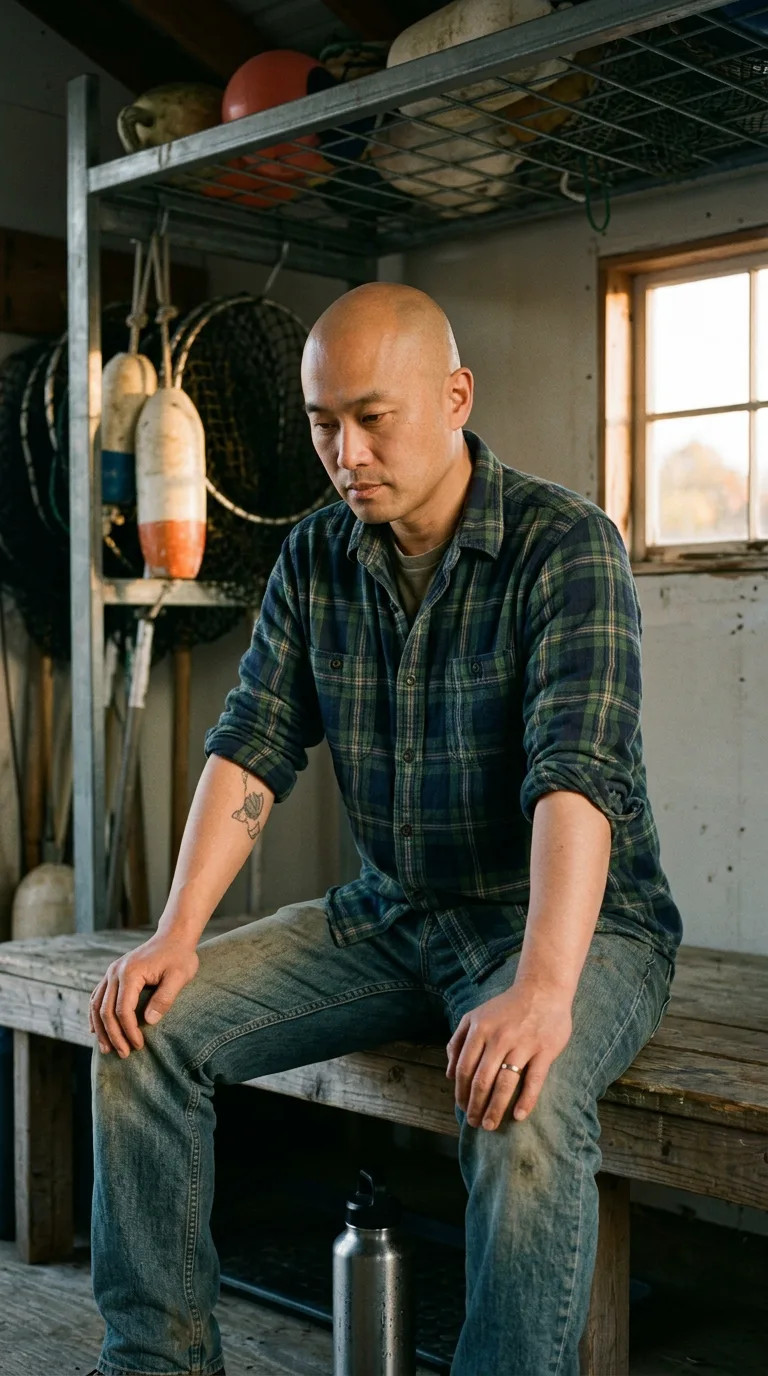
Rarest thing about him: Seriously rich — $3M to $10M — common, 1 in 88
Season 1seed 200488996 · engine v11
Character card
lineage LJL8SV
His body-swap story
@marco.villagrana, wearing David Kanemoto, rolled the wheel on and woke up as Preston Iwata, spent 3 minutes in him, then spun the wheel and woke up as Danny Escareño
—
David Kanemoto's hand is on the mouse and it has been on the mouse, unmoving, for eleven minutes.
It is Friday, end of the day, Small-town Ohio, and the blinds in the study are doing that thing where the low sun comes through the slats and lays itself in stripes across the desk. Sixty-two years old. Gray hair combed the way he has combed it every day for forty years. Dad bod under a cardigan he did not need to put on, because nobody is coming, because the house is quiet in the particular way a house gets quiet when the person who used to make noise in it doesn't live there anymore.
Less than a minute ago you decided to spin again. You know exactly why, even if David wouldn't have. There was a knee replacement this afternoon that went fine, that went the way it always goes now, competent and small and over, and somewhere in the middle of it you thought: I have done this exact motion in this exact body one hundred and forty times and I already know how the rest of it goes. That is the whole reason. Not tragedy. Not a fight. Just the particular boredom of a life that fits too well, worn soft in all the places a life gets worn soft, so that there's nothing left to catch on.
You open vessel.cards on the study computer with David Kanemoto's hand, which is a good hand, a surgeon's hand, steady even now. The wheel loads. You pay. You spin.
—
The bar is two inches wider under your palms than it was a set ago, and you don't decide that — it just is, your grip already changed, already someone else's idea of where the hands go. You are on your back on a bench, under a rack, in a gym that smells like rubber matting and somebody's citrus deodorant, and the last rep of a set that isn't yours to finish is already most of the way up. Your arms are shorter than you expect them to be. Your chest is doing something efficient and unspectacular. There is no getting used to this — there is only the weight, coming down anyway, and lungs that are already blowing air out through clenched teeth on a schedule you didn't set. You grind it out. The face in whatever glass is nearby is doing none of the things a last rep does — no strain written into it, no wince — just work, absorbed and calm, like a man finishing a sentence he started before you got here.
The bar goes back into the rack with a sound that isn't loud. You sit up. Forearms find your knees on their own, like they've done it ten thousand times, because they have. A water bottle sweats on the floor by your foot. Your foot is small. Everything about this body runs smaller and denser than the one you left, and it is standing — sitting — in Coastal Maine, in the deep blue tail end of a Friday that is hours behind the one you just walked out of, gym lights flat and white overhead instead of a study lamp through venetian stripes.
The shirt is not on you yet — it's folded in a gym bag by the bench, but your hand brushes the strap of the bag reaching for the water bottle, and that's enough. Flannel, green and navy plaid, comes back to you in the feeling of an elbow pushing through a sleeve this morning, in a mudroom that smelled like low tide and coffee, a wife's voice from another room asking if he'd already fed the dog, a dog that doesn't strictly need feeding twice but gets it anyway because the routine is the marriage as much as anything spoken is. Preston Iwata. The name arrives with the shirt-memory, attached to nothing dramatic, just there, the way your own name is there when you're not thinking about it.
The water bottle in your palm is heavier than the memory it opens: mornings on the dock as a kid, before any of this, before the money, a grandfather's hand on the back of his neck guiding him toward a boat he was afraid of. That fear never fully left him — it just got a corner office to live in instead of a boat. Boardroom, blinds half down, a bound report he has read forty times because reading it the forty-first time is easier than looking up and saying the number out loud to people who are about to lose their bonuses over it. He is good at his job. He hates a clean forty percent of every day he spends doing it, and loves the other sixty in a way he's never said aloud to anyone, including his wife, including himself in a mirror.
The tattoo. Your palm finds the ghost of it on your own left arm without meaning to — some koi thing, badly inked, blue-green and blown out at the edges, done at twenty-three in a shop that smelled like a gas station, on a night that ended in a friendship that didn't last and a design he has spent twenty-two years meaning to get covered and never has, partly out of laziness and partly because his wife, the one time she saw it properly, laughed so hard she had to sit down, and some part of him has kept it since then the way you keep a bad joke that still gets a laugh.
The wedding band is small and plain and it comes with the whole marriage folded into it at once, too much to hold: her hand on the porch rail; the two kids, one of them at college now, texting him memes he pretends not to find funny; her voice, low, telling him after his father's funeral that grief was allowed to look like nothing, that it didn't have to be dramatic to be real; the fact that he has never once, in nineteen years, wanted anyone else, which he understands is either the plainest or the rarest thing about him, and has stopped trying to decide which.
Under all of it, the body: forty-five and honest about it, a little tightness low in the back that thirty minutes of lifting either helps or worsens depending on the day, a jaw he ran the razor over this morning with the efficient boredom of a man who has shaved every day for thirty years, hands that know, without asking, how to grip a bar, how to hold a pen over a signature line, how to find a toothpick in a shirt pocket and set it in the corner of his mouth without looking. He isn't chewing one now. His jaw wants one anyway, some low hum of habit with nothing to land on.
You sit there a second longer than the moment asks for, forearms on your knees, breathing a stranger's easy breath in a stranger's compact body, and you turn your hand over in front of your face like you've never seen the back of it. The tattoo sits half under the rolled sleeve, badly drawn and permanent and his.
"Whose life is this," you say, quiet, to no one, and it isn't really a question — it's the sound of deciding to keep it, for now, for exactly as long as you decide to keep it, which is a length of time nobody standing in this gym, least of all the man who used to be the only one home in here, could possibly guess.